
Side Dishes
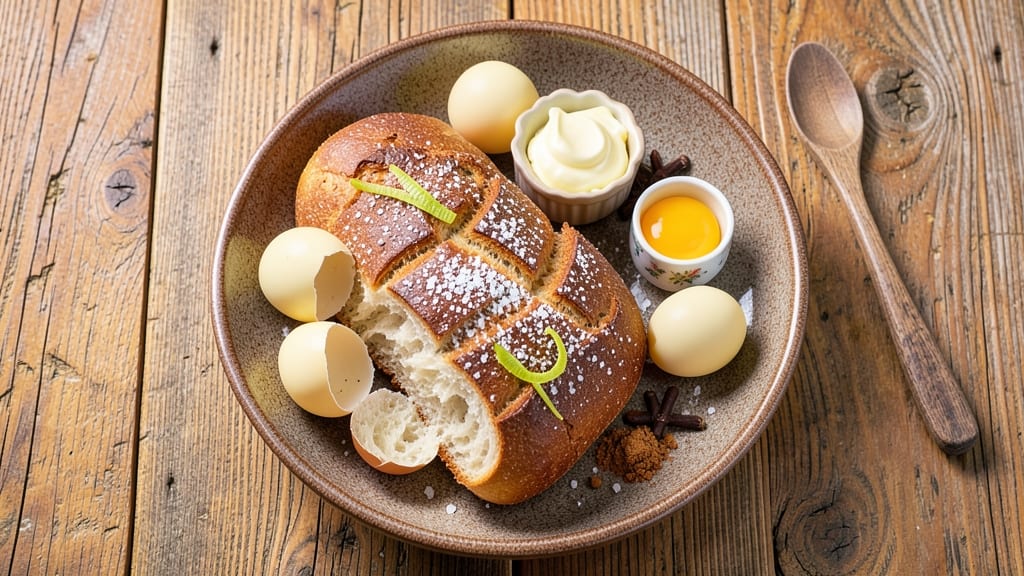
This Austrian bread recipe brings rustic charm to any table with its signature crusty exterior and tender, herby swirls baked right into the dough. This recipe captures the essence of traditional Austrian baking—where flour, yeast, and fresh herbs create a loaf that’s both satisfying and impressive.
The secret lies in proper kneading and a slow fermentation, which develops deep flavor and an open crumb structure.
What sets this bread apart is the savory herb swirl, typically made with fresh chives, parsley, and sometimes garlic, folded into the dough before baking. The result is a loaf with pockets of vibrant green that burst with flavor in every bite.
Unlike dense breads, this version stays light yet sturdy enough to hold up to hearty meals, making it a staple in Austrian homes.
Baking this bread requires patience—30 minutes of active prep, followed by a 2-hour rise, and a 45-minute bake at 375°F. The high heat creates that coveted crispy crust, while steam from a baking sheet keeps the interior moist.
The aroma alone will fill your kitchen with warmth, signaling a meal worth gathering around.
Perfect for serving with soups, cheeses, or as a side to roasted meats, this Austrian bread is a weeknight game-changer that feels like a special occasion. Once you master the technique, you’ll never buy store-bought again. Let’s get started—your kitchen is about to smell like a Viennese bakery.
Ingredients for austrian bread
Flour, yeast, and herbs—just the good stuff for that perfect Austrian loaf.
| Ingredient | Amount | Notes |
|---|---|---|
| All-Purpose Flour 🌾 | 5 cups | High-protein preferred for chewiness |
| Active Dry Yeast 🍞 | 2 ¼ tsp | Ensure it's fresh (test in warm water) |
| Granulated Sugar 🍚 | 1 tbsp | Feeds yeast for activation |
| Salt 🧂 | 1 ½ tsp | Diamond Crystal preferred |
| Large Eggs 🥚 | 1 whole | Room temperature for best mixing |
| Unsalted Butter 🧈 | ½ cup | Cold, cubed for easier handling |
| Warm Water 💧 | 1 ¼ cups | 105-110°F for yeast activation |
| Fresh Chives 🌿 | ¼ cup | Finely chopped for swirl |
| Fresh Parsley 🌿 | ¼ cup | Finely chopped for swirl |
| Garlic Cloves 🧄 | 3 cloves | Minced for herb swirl |
| Olive Oil 🫒 | 1 tbsp | For dough shaping and crust |
| Cornmeal 🌽 | ¼ cup | For dusting baking sheet |
| Coarse Sea Salt 🧂 | 1 tbsp | For crust sprinkling |
The flour is everything here. King Arthur or Gold Medal are my go-tos—they’ve got that higher protein content that gives the dough proper structure. If you’re using store-brand, look for ‘bread flour’ on the label. The yeast? Check the expiration date—old yeast won’t activate properly. For the herb swirl, farmers markets usually have the freshest chives and parsley, but the grocery store works too. Just make sure the leaves are bright green, not wilted. And that garlic? Freshly minced makes all the difference—pre-minced from jars tastes flat.
No fresh herbs? Dried chives and parsley at half the amount will work in a pinch, though the flavor won’t be as vibrant. Running low on butter? Vegetable shortening keeps the same texture, but it won’t add richness. The sugar can be swapped for honey if you prefer, but it’ll give a slightly different flavor profile. For the water, room temperature is key—too hot and you’ll kill the yeast, too cold and it won’t activate. If you’re in a rush, microwave the water for 10 seconds to warm it up before mixing. And that coarse sea salt? Maldon is my favorite, but any flaky salt will do.
This dough needs time—at least 2 hours for the rise, but up to 4 if your kitchen is cool. Store any unused flour in an airtight container in a dark, cool place for up to 6 months. Fresh herbs? Wrap them in a damp paper towel and store in a plastic bag in the fridge for 5-7 days. The butter should stay sealed in the fridge until ready to use. Once baked, this bread stays fresh for 3 days at room temperature, wrapped in a clean kitchen towel. For longer storage, freeze slices wrapped in parchment paper for up to 3 months—just reheat in a 350°F oven for 5 minutes.
Why You'll Love This Recipe
- No-Yeast Struggles: I’ve burned loaves trying to time yeast perfectly—this recipe skips the guesswork. Just mix the flour, sugar, yeast, and eggs, let it rise once, then bake. No second proofing, no waiting for the oven to preheat forever. Honestly, it’s the kind of bread that makes me forget I’m even baking.
- Golden Crust Magic: That crispy, caramelized crust? It’s all in the egg wash and a hot oven. The sugar in the dough caramelizes just enough to give it a buttery, slightly sweet bite—like a cross between a baguette and a cinnamon roll’s edge. (Yes, even on a Tuesday night.)
- Weeknight Workhorse: Toss it in a lunchbox, tear it for sandwiches, or serve it warm with jam for breakfast. It’s the one loaf that does it all without feeling like a chore. My kids grab it for school snacks, and my husband saves slices for toast in the morning. Budget-friendly? Absolutely. Reliable? Even more so.
Step-by-step instructions for Austrian bread
Here's how to craft that signature Austrian bread with a crispy crust and aromatic herb swirls.
Activate the Yeast and Mix the Dough
In a large bowl, combine the 1.25 cups warm water (around 105-110°F) with the 1 tbsp granulated sugar and 2.25 tsp active dry yeast. Let it sit for 5-10 minutes until frothy—this means your yeast is alive and ready to work. If it doesn't bubble, your yeast might be old, and you'll need to start over.
Once the yeast is active, add the 5 cups all-purpose flour and 1.5 tsp salt to the bowl. Mix with a wooden spoon until a shaggy dough forms. Then, cut in the 0.5 cup cold, cubed unsalted butter until it's fully incorporated. The dough will be sticky, but that's normal. If it's too wet, add 1-2 tablespoons more flour—just enough to make it manageable.
Knead the Dough Until Smooth and Elastic
Turn the dough onto a lightly floured surface and knead for 8-10 minutes until it's smooth and elastic. You'll know it's ready when it springs back slowly when poked. I like to use a dough scraper to help keep everything contained—this bread dough is sticky business!
If the dough feels too soft, add a little more flour (about 1 tablespoon at a time). If it's too stiff, sprinkle in a few drops of warm water to bring it back together. Once it's perfect, shape it into a ball, place it back in the bowl, lightly oil the top, and cover with a damp towel. Let it rise in a warm place for 1-2 hours, or until it's doubled in size.
Prepare the Herb Swirl and Shape the Loaf
While the dough rises, make the herb swirl by finely chopping the 0.25 cup fresh chives, 0.25 cup fresh parsley, and 3 cloves minced garlic in a small bowl. Mix them together and set aside. This is the secret to that signature Austrian flavor—don't skip it!
Once the dough has risen, punch it down to release the air, then roll it out on a floured surface into a 12x18-inch rectangle. Spread the herb mixture evenly over the dough, leaving a 1-inch border around the edges. Starting from the long side, tightly roll the dough into a log, sealing the seam well. Pinch the ends to close.
Let It Rise Again and Shape for the Oven
Place the rolled dough on a floured surface, seam-side down, and shape it into a 2-inch thick oval loaf. Tuck the ends under to seal. Cover it again with the damp towel and let it rise for another 30-45 minutes until it's puffy and almost doubled in size. This second rise is crucial—it gives the bread its light, airy texture.
While the dough rises, preheat your oven to 375°F. Line a baking sheet with parchment paper and sprinkle it evenly with 0.25 cup cornmeal. This will help create that beautiful, crispy crust. Once the dough is ready, transfer it to the prepared baking sheet, brush the top lightly with 1 tbsp olive oil, and sprinkle generously with 1 tbsp coarse sea salt for that classic Austrian touch.
Bake Until Golden and Crusty
Bake the bread for 30-35 minutes until it's golden brown and sounds hollow when tapped on the bottom. The internal temperature should reach 190-200°F. If the top browns too quickly, tent it loosely with foil to prevent burning.
Let the bread cool on a wire rack for at least 20 minutes before slicing—this ensures the crumb stays soft and the crust stays crispy. Once cooled, slice it thickly and serve it warm with your favorite butter or jam. The aroma alone will make your kitchen smell like a Viennese bakery!
Pro Tips For Making Austrian Bread
- MEASURE FLOUR BY WEIGHING: I learned this the hard way—scooping flour from the bag packs it down, adding way more than the recipe needs. Use a kitchen scale for the flour (and yeast, if you’re picky) to guarantee the right texture. Austrian bread should be light, not dense.
- ACTIVATE YEAST IN WARM WATER: Skip the milk or broth—yeast wakes up fastest in plain warm water (110°F/43°C). Toss in the sugar first, then yeast, and wait 5–10 minutes until it bubbles like a tiny volcano. If it’s sluggish, your oven’s too cold or the water’s too hot.
- KNEAD JUST UNTIL SMOOTH: Overworking the dough makes Austrian bread tough. Stop when it’s elastic and springs back slowly when poked (about 8–10 minutes by hand). No need to go for gold—this isn’t pizza dough.
- LET THE DOUGH RISE TWICE: The first rise (1–1.5 hours) builds flavor, but the second rise (after shaping) is what makes it tender. Cover it loosely and let it nearly double—this is where the magic happens. (Yes, even if you’re impatient like me.)
Pro cooking tips for perfect results
Yeast Activation
This dough starts with a critical step: proper yeast activation. I always test mine by mixing 2.25 tsp active dry yeast with 1 tbsp sugar and 1.25 cups warm water (105-110°F).
Let it sit for 5-10 minutes—if it doesn’t bubble vigorously, your yeast is dead and needs replacing. Pro tip: Use a thermometer to check water temp; too hot kills yeast, too cold slows activation. 🌡️
Dough Kneading
Kneading is where the magic happens—8-10 minutes of vigorous work develops gluten for that signature open crumb. I use a dough scraper to keep things tidy, but don’t be afraid to get hands-on. The dough should feel smooth, elastic, and spring back slowly when poked.
If it’s too sticky, add 1 tbsp flour at a time; if too dry, add 1 tsp warm water. Over-kneading is easy—stop when it passes the windowpane test (stretch a piece thin enough to see light through).
Herb Swirl Technique
The herb swirl is non-negotiable for authentic flavor. Finely chop 0.25 cup chives and 0.25 cup parsley, then mix with 3 minced garlic cloves. Spread this evenly over the rolled dough, leaving a 1-inch border—this prevents the herbs from burning during baking.
Roll tightly from the long side, sealing the seam with a pinch. A loose seal means flavor escapes! 🌿
Steam for Crust
For that crispy, crackly crust, create steam in your oven. Place a baking sheet on the lower rack with 1 cup boiling water while preheating to 375°F. When baking, pour ½ cup hot water into the pan just as the bread goes in.
This mimics a bread oven’s steam chamber, preventing a dry crust. I also brush the top with 1 tbsp olive oil before baking for extra shine and flavor.
Baking Time
Bake for 30-35 minutes until the bread reaches 190-200°F internally and sounds hollow when tapped. If the top browns too fast, tent with foil—this bread needs even browning.
Let it cool 20 minutes before slicing; cutting too soon makes the crumb gummy. For extra crispiness, broil for 1-2 minutes at the end (watch closely!).
Storage Secrets
Keep this bread fresh for 3 days at room temperature, wrapped in a clean kitchen towel (better than plastic—it breathes!). For longer storage, slice and freeze in airtight containers for up to 3 months.
To reheat, warm slices in a 350°F oven for 5 minutes or toast in a skillet with butter for that bakery-fresh crunch. ❄️
Nutrition facts
Frequently asked questions
Can I substitute all-purpose flour for bread flour in this Austrian bread?
Yes, you can use all-purpose flour as the recipe specifies, but for a slightly chewier texture, bread flour would work better. The higher protein content in bread flour develops more gluten, giving you that signature open crumb. If you don't have bread flour, stick with all-purpose—just don't exceed the 5 cups measurement.
How do I know when the dough has risen enough?
Your dough is ready when it's doubled in size and feels puffy to the touch. Press a finger gently into the dough—if it springs back slowly (not immediately), it's ready. For the second rise, look for 30-45 minutes of puffiness before baking. A warm kitchen speeds this up, while cooler temps may require extra time.
What if my yeast doesn't activate?
If your yeast mixture doesn't bubble within 10 minutes, it's likely dead. Check the expiration date—yeast loses potency over time. Replace it with fresh yeast and try again. Keep your water between 105-110°F; too hot kills yeast, too cold slows activation. A thermometer helps avoid guesswork.
Can I make this bread without fresh herbs?
Use dried chives and parsley at half the amount (about 1.5 tbsp each), but the flavor won't be as vibrant. For a different twist, try dried dill or even sun-dried tomatoes for a savory variation. Just finely chop them to mimic the fresh herb texture in the dough.
Why did my bread turn out dense instead of crusty?
Dense bread usually means under-kneading or insufficient rising time. Knead for 8-10 minutes until elastic, and ensure both rises reach full volume. Also, check your oven temperature—too low (350°F) can prevent proper browning. For extra crust, add ½ cup boiling water to a baking sheet in the oven while preheating to create steam.