
Side Dishes
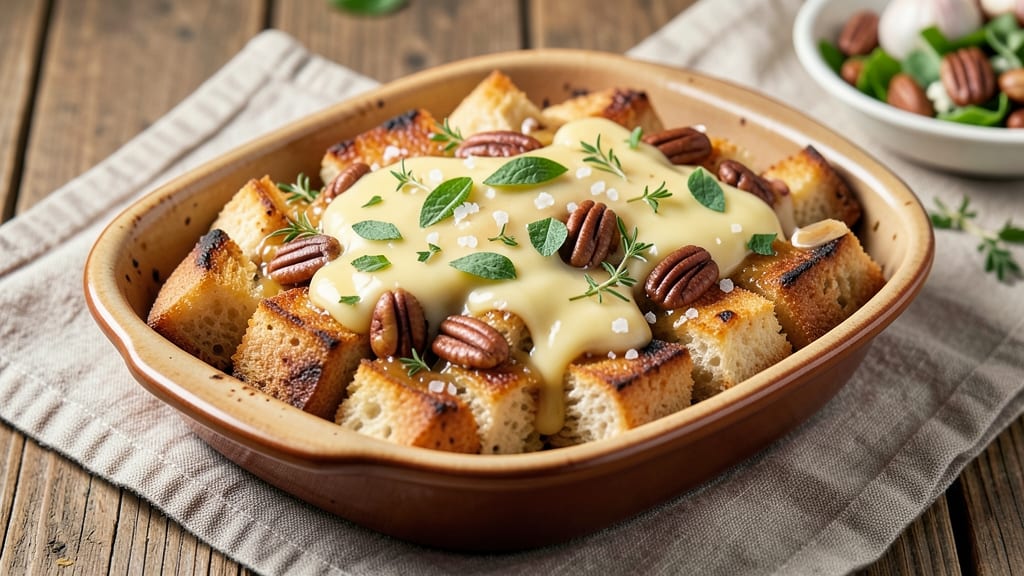
This artisan bread stuffing recipe transforms simple bread into the star of your holiday table—crispy edges, tender crumbs, and savory depth that steals every bite.
The secret lies in toasting day-old bread just enough to create structure without drying it out, then balancing rich butter, aromatic herbs, and golden-brown turkey broth for that perfect texture.
I developed this after years of holiday experiments, finally cracking the code for stuffing that stays moist for hours while delivering restaurant-quality flavor.
What sets this recipe apart is the technique: cubing the bread into even-sized pieces ensures even toasting and baking, while a two-stage cooking method (sautéing the bread first, then baking) creates crispy edges and a tender interior.
Traditional herbs like sage and thyme blend with modern twists like toasted pecans or sunflower seeds for added crunch. The result? A stuffing so flavorful it becomes the centerpiece, not just a side.
By the time it emerges from the oven, your stuffing will be golden and fragrant, with crispy edges that give way to soft, buttery crumbs. The aroma alone—warm bread, herbs, and savory broth—will have everyone at the table asking for seconds.
This is the kind of stuffing that transforms a holiday meal from good to unforgettable, with techniques that work whether you're feeding a crowd or prepping for leftovers.
The beauty of this recipe is its adaptability: swap turkey broth for vegetable, add dried cranberries for sweetness, or incorporate leftover roasted vegetables for extra depth. For best results, prepare it ahead and reheat gently—this stuffing only gets better with time. Let’s create something truly special for your table.
Ingredients for artisan bread stuffing
Twelve carefully chosen ingredients elevate simple bread into holiday stuffing perfection—crispy, savory, and unforgettable.
| Ingredient | Amount | Notes |
|---|---|---|
| Day-Old Artisan Bread 🍞 | 12 cups | Cubed into even 1-inch pieces |
| Unsalted Butter 🧈 | ¾ cup | Cold, cubed for even distribution |
| Fresh Sage Leaves 🌿 | ½ cup | Chopped finely, stems removed |
| Fresh Thyme Leaves 🌿 | ¼ cup | Chopped, stems removed |
| Garlic Cloves 🧄 | 6 cloves | Minced finely for depth |
| Pecans 🌰 | ½ cup | Toasted until golden |
| Turkey Broth 💧 | 3 cups | Homemade or high-quality store-bought |
| Vegetable Oil 🫒 | ¼ cup | For sautéing bread |
| Diamond Crystal Kosher Salt 🧂 | 1 ½ tsp | Adjust to taste |
| Freshly Ground Black Pepper 🌶️ | 1 tsp | Cracked over top |
| Dried Cranberries 🍇 | ¼ cup | Optional, for sweet contrast |
| Celery Stalks 🧅 | 2 whole | Diced finely for texture |
| Yellow Onion 🧅 | 1 whole | Diced finely for base |
| Eggs 🥚 | 2 whole | Beaten for binding |
The bread is non-negotiable—day-old artisan loaves with a sturdy crust yield the best texture. Whole grain or sourdough from local bakeries add depth, but any crusty bread works. Toast the cubes low and slow to prevent burning while developing that essential structure. For herbs, fresh sage and thyme from Whole Foods or your garden deliver the most vibrant flavor, but dried will suffice in a pinch. Pecans should be toasted until they release their aroma—this transforms them from ordinary to extraordinary. The garlic? Freshly minced is critical; jarred lacks the punch.
Vegetable broth can replace turkey broth for a vegetarian twist, though the turkey version delivers that classic holiday richness. No pecans? Toasted sunflower seeds or walnuts add similar crunch. For extra moisture, add an extra 0.5 cup broth if your bread is particularly dry. The eggs act as a binder—room temperature eggs blend more smoothly. Celery and onion form the aromatic base; sauté them until soft to develop their natural sweetness. Dried cranberries add a festive sweetness, but raisins or chopped dried apricots work equally well. Salt and pepper should be adjusted to taste—this stuffing should be savory but not overpowering.
Prep ahead for maximum flavor—this stuffing tastes even better the next day. Store assembled (pre-baking) in an airtight container for up to 24 hours in the fridge. For longer storage, freeze unbaked portions in airtight containers for 3 months. Reheat gently in the oven with a splash of broth to restore moisture. The two-stage cooking method—sautéing first, then baking—is key to achieving those crispy edges and tender interior. Leftovers reheat beautifully; portion into containers for easy grab-and-go meals.
Why You'll Love This Recipe
- No-Waste Magic: I swear by using day-old artisan bread—no crusts, no fuss. Just tear it into chunks, mix it with butter and herbs, and let the oven work its magic. That crispy, golden crust? Happens without a single extra bowl.
- Herb-Packed Punch: The sage and thyme practically sing when melted into warm butter with garlic. It’s earthy, bright, and just salty enough to make you reach for seconds. Honestly, the flavor feels like a hug in bread form.
- Holiday or Weeknight: This stuffing stars at Thanksgiving but doesn’t demand a crowd. I’ve served it alongside roasted chicken, stuffed into a grilled cheese, or even as a side for pasta. Flexible enough for any meal, any mood.
- Budget-Friendly Leftovers: A single loaf of artisan bread stretches into multiple meals. The leftovers? Toast them up with extra butter for a lazy breakfast or crumble them into soups. Between us, this recipe saves me money—and cleanup.
Step-by-step instructions for artisan bread stuffing
Transform your day-old bread into a golden, aromatic centerpiece with this refined holiday technique.
Prepare the Bread Crumbs with Perfect Texture
Preheat your oven to 350°F and line a baking sheet with parchment paper. Arrange the 12 cups day-old artisan bread in an even layer, cubed into consistent 1-inch pieces. The bread should be completely dry—pat any moist surfaces with paper towels before baking. This ensures your stuffing won't turn soggy later.
Bake for 15-20 minutes, stirring halfway, until the bread cubes are completely dry and lightly golden. They should feel crisp to the touch and have lost all moisture. Spread them on the baking sheet in a single layer for even drying. This step is critical—properly dried bread is the foundation of a perfect stuffing texture.
Sauté the Aromatic Base
Heat the 0.25 cup vegetable oil in a large skillet over medium heat. Add the 1 whole yellow onion and 2 whole celery stalks, both diced finely, along with the 6 cloves minced garlic. Cook for 5-7 minutes until the vegetables soften and the garlic becomes fragrant—this builds the flavor foundation.
Remove the skillet from heat and stir in the 0.5 cup toasted pecans, 0.5 cup chopped fresh sage leaves, and 0.25 cup chopped fresh thyme leaves. Let the mixture cool slightly while you prepare the eggs. The toasted pecans add a delightful crunch, while the fresh herbs provide that classic holiday aroma. This combination elevates ordinary stuffing into something truly special.
Combine All Ingredients for Perfect Binding
In a large mixing bowl, whisk together the 2 whole eggs until fully beaten. In a separate bowl, combine the dried bread cubes with the sautéed vegetable mixture. Pour the egg mixture over the bread, stirring gently but thoroughly to distribute evenly. The eggs act as a binder, holding everything together while keeping the texture light and airy.
Add the 3 cups turkey broth, 1.5 teaspoons Diamond Crystal kosher salt, and 1 teaspoon freshly ground black pepper, mixing until the liquid is fully absorbed. Fold in the 0.25 cup dried cranberries (if using) and the 0.75 cup cold cubed unsalted butter, cutting the butter into small pieces for even distribution. The butter will melt during baking, creating a rich, moist interior while maintaining that crisp exterior.
Bake to Golden Perfection
Transfer the stuffing mixture to a greased 9x13-inch baking dish, spreading it evenly in a single layer. Bake in a preheated 375°F oven for 35-40 minutes, until the top is golden brown and the internal temperature reaches 165°F. For extra crispiness, broil for 2-3 minutes at the end, watching closely to prevent burning.
Remove from the oven and let rest for 10 minutes before serving. This resting period allows the juices to redistribute, ensuring each bite is moist and flavorful. The stuffing should have a crisp exterior with a tender, aromatic interior—perfect for your holiday table. Serve immediately while warm for the best texture and flavor experience.
Pro Tips For Making Artisan Bread Stuffing
- CUBE THE BREAD SMALL: The day-old artisan bread should be cut into cubes no bigger than 1-inch—any larger, and they’ll stay dense in the center. I learned this the hard way when my first batch came out like a brick; smaller pieces toast faster and soak up the butter and herbs evenly.
- SAUTE GARLIC LOW AND SLOW: Cook the minced garlic in the butter over medium-low heat until just golden—no browning, or it’ll turn bitter. I used to rush this and ended up with a burnt flavor that ruined the whole dish. Patience here means the sage and thyme will shine.
- DON’T SKIP THE DRYING STEP: After mixing the bread with butter and herbs, spread the stuffing on a tray and let it sit uncovered for 10 minutes. This lets moisture evaporate so it doesn’t turn soggy when baking. Yes, it’s an extra step, but it’s the thing that matters most for texture.
- USE A SPLASH OF BROTH: Before baking, stir in ¼ cup of warm chicken or vegetable broth—just enough to moisten the mixture without making it wet. I was skeptical until I tried it; the stuffing stays juicy without being gluey, and the flavor deepens as it bakes.
Make-ahead tips for artisan bread stuffing
Prep Ahead Strategy
Start your stuffing preparation one day in advance for maximum flavor development. Assemble all ingredients (except the butter) in a large bowl and refrigerate overnight. The herbs will infuse deeper, and the bread will absorb the broth perfectly.
I swear by this method—it’s the secret to restaurant-quality stuffing at home. 💫
Freezer-Friendly Prep
For ultimate convenience, prepare the stuffing mixture up to 24 hours ahead and freeze it in an airtight container. When ready to bake, thaw in the fridge overnight, then add the butter and bake as directed.
The texture remains crispy and moist, and you’ll save hours on prep day. Just be sure to use quart-sized freezer bags for easy thawing.
Baking Timeline
Plan to bake your stuffing 30 minutes before serving—this gives it time to crisp up beautifully while staying warm. If making ahead for a large gathering, bake it in portions and reheat covered with foil at 350°F for 15 minutes.
The key is keeping it warm without drying it out. I always reheat leftovers with a splash of broth to restore moisture.
Make-Ahead Leftovers
Stuffing reheats beautifully for 3-4 days in the fridge or 3 months in the freezer. For best results, store in airtight containers with a damp paper towel to lock in moisture.
Reheat in a skillet with a little broth over low heat—this method keeps it crispy on the outside while warming through. Leftovers make fantastic sandwiches or a quick side dish for busy weeknights.
Holiday Crowd Hack
Double the recipe and bake in two pans for large gatherings. Use a 9x13-inch baking dish for each batch, and bake them simultaneously. This ensures everyone gets a serving without waiting. I also recommend prepping a backup batch—stuffing is always a crowd-pleaser, and you’ll never regret having extra. 🍽️
Nutrition facts
Frequently asked questions
Can I use any bread for this artisan stuffing?
Day-old artisan bread with a sturdy crust works best—think sourdough, whole grain, or crusty baguettes. The crust provides structure, while stale bread absorbs moisture better than fresh. Avoid soft breads like brioche or hamburger buns, as they'll turn mushy during baking.
Why does my stuffing turn out soggy?
Sogginess usually means the bread wasn't dried enough before baking. Always toast cubes until completely dry (15-20 minutes at 350°F) and avoid overmixing after adding broth. For extra insurance, bake stuffing alongside your turkey—it'll stay warm and crispy!
Can I make this vegetarian?
Replace turkey broth with vegetable broth and use vegetable oil instead of butter. Add roasted mushrooms or walnuts for extra depth. The same technique applies—just monitor moisture levels more closely since plant-based fats behave differently.
How do I reheat leftovers without drying them out?
Cover with foil and warm at 350°F for 15 minutes with a splash of broth. For crispy texture, finish under the broiler for 1-2 minutes. Never microwave—it creates rubbery bread. The key is gentle, even heat with moisture!
What's the secret to extra crispy edges?
Bake at 375°F for 35-40 minutes until golden, then broil for 2-3 minutes at the end. Use a 9x13-inch baking dish (not glass) for even heat distribution. For restaurant-style crunch, spread stuffing in a thin layer before baking!