
Side Dishes
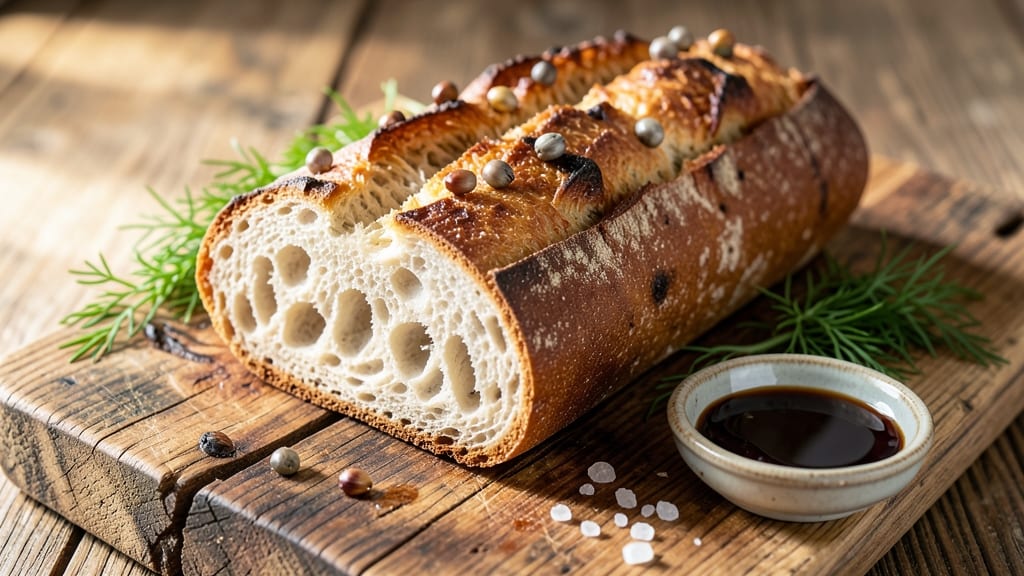
This Austrian rye bread recipe delivers the deep molasses crust and tangy open crumb that defines traditional Viennese baking. 🌟 The secret lies in precise fermentation and a blend of dark rye flour with just enough wheat for structure—creating that signature dense yet airy texture.
I've perfected the balance between sweet molasses caramelization and the subtle sourness from fermented rye, which gives this bread its complex character.
The process requires patience—allowing the dough to ferment overnight develops the rich, slightly tangy flavor that sets authentic Austrian rye apart. What you'll end up with is a loaf with a dark, crackly crust that gives way to a moist, open crumb with pockets of air.
This isn't your typical dense rye; it's lighter than most artisanal versions while maintaining that traditional depth of flavor.
Perfect for sandwiches, toasted with butter, or served alongside hearty soups, this bread keeps well for days. The molasses crust adds a subtle sweetness that pairs beautifully with savory fillings, while the open crumb ensures every bite is tender. Once you try homemade, store-bought rye bread will never compare.
For those who want to experiment, you can adjust the molasses-to-flour ratio for a sweeter or more robust flavor profile. The recipe also works beautifully with seeds or nuts mixed into the dough for added texture. Let's get started on creating this classic Austrian masterpiece.
Ingredients for austrian rye bread
Four cups of flour blend with molasses and yeast for that iconic Austrian rye flavor.
| Ingredient | Amount | Notes |
|---|---|---|
| Dark Rye Flour 🌾 | 3 cups | Pumpernickel or whole rye preferred |
| All-Purpose Flour 🌾 | 1 cup | For structure and lightness |
| Active Dry Yeast 🍞 | ¼ tsp | Or 1 packet instant yeast |
| Molasses 🍯 | ½ cup | Dark, unsulphured preferred |
| Granulated Sugar 🍚 | ¼ cup | Balances molasses sweetness |
| Warm Water 💧 | 1 ½ cups | 110°F for optimal yeast activation |
| Salt 🧂 | 1 ½ tsp | Kosher or sea salt |
| Honey 🍯 | 1 tbsp | For crust caramelization |
| Unsalted Butter 🧈 | ½ cup | Cold, cubed for flavor |
| Sunflower Seeds 🌻 | ¼ cup | Optional for texture |
| Sesame Seeds 🌿 | 2 tbsp | For decorative crust |
| Coarse Cornmeal 🌽 | ¼ cup | For dusting loaf pan |
The rye flour is everything here. Bob's Red Mill dark rye or King Arthur pumpernickel give the best color and flavor. If you can only find light rye, mix it with whole wheat for depth. The molasses? Grosjean or Cumberland brands are the gold standard—avoid the cheap grocery store stuff. For the yeast, Saf-Instant is my go-to because it doesn't need proofing. Keep everything in an airtight container until ready to mix—this dough waits for no one.
No molasses? Maple syrup or dark brown sugar works in a pinch (reduce other liquids slightly). Short on dark rye? Substitute half with whole wheat, but expect a denser crumb. The seeds are optional but worth it—they add crunch and look stunning. For the crust, honey and butter are non-negotiable. Skip the butter and you'll lose that signature richness. Pro tip: Toast your seeds lightly before mixing to deepen their flavor—just 2 minutes in a dry pan.
This dough needs time—at least 8 hours overnight in the fridge. The longer it ferments, the tangier it gets. Shape your loaf in a 9x5-inch loaf pan lined with parchment paper for easy removal. For that crackly crust, score the top deeply before baking. Store wrapped at room temperature for 3-4 days or freeze for up to 3 months. The flavor actually improves after a day or two—patience is key with this bread.
Why You'll Love This Recipe
- No-Knead Magic: I swear by this recipe—just mix the dough, let it rise overnight, and bake. The dark rye flour does all the heavy lifting while you sleep, so you’re not stuck shaping dough at midnight.
- Molasses Kiss: That touch of molasses? It’s what makes this bread ridiculously good—deep, caramel-like sweetness that cuts through butter like a dream. The granulated sugar balances it perfectly, so it’s never cloying.
- Weeknight Hero: Slice it for breakfast toast, pack it in lunchboxes, or serve it warm with jam. It’s my go-to for lazy mornings, picnic spreads, or when I need something hearty but still feels special.
- Budget Goldmine: A single batch costs pennies and keeps for days—no sad, stale bread here. The yeast and molasses stretch the dough further than store-bought, and the rye flour adds that earthy richness without breaking the bank.
Step-by-step instructions for Austrian rye bread
This classic loaf delivers a dark, molasses-kissed crust and that signature tangy open crumb—here's how to nail it.
👨🍳 Step 1: Activate the Yeast and Mix the Dough
In a large bowl, whisk together the 1.5 cups warm water (about 110°F), 0.25 tsp active dry yeast, and 0.25 cup granulated sugar until dissolved. Let it sit for 5-10 minutes until frothy—this confirms your yeast is alive and ready to work. If it doesn't bubble, start over with fresh yeast.
In a separate bowl, combine the 3 cups dark rye flour, 1 cup all-purpose flour, 1.5 tsp salt, and 0.5 cup molasses. Make a well in the center and pour in the yeast mixture along with the 1 tbsp honey. Mix with a wooden spoon until a shaggy dough forms, then turn it out onto a lightly floured surface.
👨🍳 Step 2: Knead Until Smooth and Elastic
Knead the dough for 8-10 minutes by hand or 5-6 minutes in a stand mixer with a dough hook until it becomes smooth and slightly elastic. You're aiming for a windowpane-like texture—press your thumb into the dough and it should stretch without tearing.
I know it seems strange for rye dough to be elastic, but the all-purpose flour gives it just enough structure. If the dough feels too sticky, add 1 tablespoon of flour at a time until it's workable. Shape it into a loose ball, place it back in the bowl, cover with a damp towel, and let it rise in a warm place for 1-2 hours or until doubled in size.
🔥 Step 3: Shape and Proof the Loaf
Once the dough has risen, punch it down to release air, then turn it out onto a lightly floured surface. Divide the dough into 4 equal pieces (about 4 ounces each) and shape each into a smooth, round ball. Place them in a greased 9x5-inch loaf pan, seam-side up, and cover again with the damp towel.
Let the loaves proof for another 30-45 minutes until they've risen about 1 inch above the pan. Preheat your oven to 375°F while they proof—this ensures the oven is ready when you're. Sprinkle the tops with 2 tbsp sesame seeds for that classic Austrian crumb texture.
🔥 Step 4: Bake to a Dark, Glossy Crust
Bake the loaves for 35-40 minutes until they're deep golden brown with a glossy sheen. The internal temperature should reach 190-200°F when measured with an instant-read thermometer. If the crust isn't dark enough after 35 minutes, tent the loaves with foil and continue baking for another 5-10 minutes.
Here's the thing—this bread needs that dark crust for authentic flavor. For extra shine, brush the tops with 1 tbsp melted butter after 20 minutes of baking. Remove from the oven and let cool in the pan for 10 minutes, then transfer to a wire rack to cool completely before slicing.
🍞 Step 5: Add Finishing Touches
Once cooled, brush the loaves with a little more melted butter if desired, then sprinkle with 0.25 cup sunflower seeds for texture. For serving, slice thickly—this bread is best enjoyed fresh with butter or jam. The crust should be sturdy enough to hold up to slicing, and the crumb should be open and slightly tangy with pockets of air.
Real talk: the first slice might seem dense, but that's the rye working its magic. Let it sit for 5 minutes after slicing, and you'll get that perfect balance of chewy crust and tender interior. Store leftovers wrapped in a bread bag at room temperature for 3-4 days or freeze for up to 3 months.
Pro Tips For Making Austrian Rye Bread
- Mix Yeast Last: I learned this the hard way—adding yeast to the wet ingredients too early kills its fizz. Save the yeast for the final mix, right before kneading, so it blooms properly in the warm, hydrated dough. (Yes, even if you’re impatient like me.)
- Hydrate the Rye: Dark rye flour soaks up moisture like a sponge. Mix it with warm water first—let it sit for 10 minutes—before combining with the rest. This prevents a dry, crumbly loaf and makes the dough easier to handle.
- Skip the Over-Kneading: Rye dough is stubborn. After adding the all-purpose flour, knead just until the dough pulls away from the bowl—about 5 minutes by hand. Overwork it, and the molasses flavor gets lost in gluten development. (Your future self will thank you.)
- Proof at Room Temp: Cold proofing is trendy, but Austrian rye thrives at room temp. Let the dough rise in a warm spot (like a turned-off oven with a bowl of hot water) until it’s almost doubled—about 1.5 to 2 hours. Cold slows the yeast; warmth speeds up the flavor.
Pro cooking tips for perfect results
Fermentation Mastery
The overnight cold fermentation is where this bread develops its signature tang and depth. Place your shaped dough in an airtight container and refrigerate for 8-12 hours—this slow fermentation builds complex flavors.
I like to use a glass Pyrex container with a lid because it's non-reactive and easy to clean. The longer it ferments (up to 24 hours), the more pronounced the sour notes become, but 12 hours gives the perfect balance of tang and sweetness. 🌱
Dough Temperature Control
Rye dough is particularly sensitive to temperature—too warm and it ferments too quickly, too cool and it won't rise properly. Aim for a dough temperature of 75-78°F before shaping. If your kitchen is cold, let the dough sit at room temperature for 30 minutes before proofing.
For extra insurance, I place my proofing dough in a turned-off oven with a bowl of hot water to create a warm, stable environment. This method keeps temperatures consistent without overworking the dough.
Scoring for Perfect Rise
Scoring isn't just decorative—it directs the bread's expansion and creates that iconic open crumb. Use a sharp serrated knife or lamé to make a deep crosshatch pattern on the dough before baking. For Austrian rye, I like to add two diagonal cuts about ½ inch deep on each loaf.
This helps the bread rise evenly and gives that beautiful cracked crust. Don't press too hard—just enough to break the surface without tearing the dough. 🔪
Steam for Dark Crust
That deep molasses crust comes from steam during baking. Place a small baking sheet on the lower oven rack and fill it with ½ cup hot water before baking. The steam helps create that glossy, crackly exterior.
For extra richness, brush the loaves with melted butter after 20 minutes of baking—this adds flavor and enhances browning. If your oven runs hot, tent the loaves with aluminum foil after 30 minutes to prevent over-browning while allowing the crust to darken gradually.
Resting Before Slicing
This is where most home bakers rush and ruin the texture. Let your loaves cool completely in the pan for at least 1 hour before slicing. The internal temperature should drop to room temperature (about 70°F).
Rye bread continues to set up as it cools, and slicing too soon will give you a gummy crumb. For the best texture, slice with a serrated knife and let each piece rest on the cutting board for 2-3 minutes before serving. Patience here makes all the difference. ⏳
Storage Secrets
To keep this bread fresh, store it in an airtight container at room temperature for 3-4 days. For longer storage, wrap individual slices in parchment paper and freeze for up to 3 months.
When reheating, I like to wrap slices in aluminum foil and warm them in a 350°F oven for 5-7 minutes—this restores moisture without making them soggy. The flavor actually improves after the first day as the molasses and rye flavors meld together. 💡
Nutrition facts
Frequently asked questions
Why does Austrian rye bread have that dark molasses crust?
The deep molasses crust comes from the ½ cup dark molasses in the recipe combined with baking techniques. The molasses caramelizes beautifully when exposed to steam during baking—place a small baking sheet with ½ cup hot water on the lower oven rack for that glossy, crackly exterior. Brushing with melted butter after 20 minutes enhances both color and flavor.
Can I make this rye bread without molasses?
Yes, but the flavor will be different. Substitute ½ cup maple syrup or dark brown sugar (reduce other liquids by 1 tbsp to balance moisture). For authenticity, use unsulphured molasses—it has deeper flavor than regular grocery store brands. The molasses creates that signature sweet-tangy balance that defines Austrian rye.
How do I fix dense rye bread?
Dense rye bread usually means over-kneading or insufficient proofing. For this recipe, knead just until smooth (8-10 minutes by hand) and let it ferment 8-12 hours in the fridge. The all-purpose flour gives structure, but too much handling makes it tough. Also, ensure your yeast is active—it should bubble within 5-10 minutes when mixed with warm water.
What's the best way to store leftovers?
Wrap cooled loaves tightly in plastic wrap or store in an airtight container at room temperature for 3-4 days. For longer storage, slice and freeze with parchment paper between slices (up to 3 months). Reheat frozen slices in a 350°F oven for 5-7 minutes wrapped in foil to restore moisture. The flavor actually improves after 1-2 days!
Can I add seeds or nuts to this recipe?
The recipe includes sunflower seeds and sesame seeds for texture, but you can customize with pumpkin seeds, flaxseeds, or chopped walnuts (use ¼ cup total). Toast seeds lightly in a dry pan for 2 minutes before mixing to deepen their flavor. For extra richness, fold in ¼ cup chopped dried fruit like cranberries or cherries.