
Side Dishes
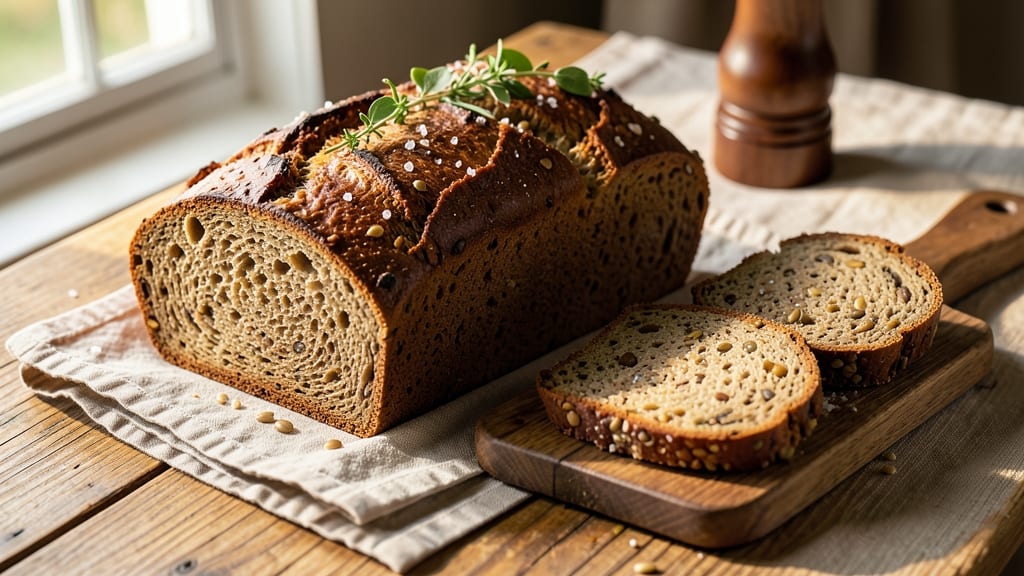
This authentic Ezekiel bread recipe delivers the nutty depth and chewy texture that makes it a staple for health-conscious bakers. 🌱 Unlike store-bought versions, this recipe starts with sprouted grains—wheat, barley, and lentils—that transform into a bread with enhanced digestibility and rich flavor when baked.
The no-knead method preserves the natural integrity of the sprouted grains while creating a loaf with a crisp crust and tender crumb.
The key to authenticity lies in proper sprouting and fermentation. Soaking the grains overnight unlocks enzymes that improve nutrition and flavor, while a slow fermentation (8-12 hours) develops depth without overproofing. This method also eliminates the need for commercial yeast, aligning with Ezekiel bread's original purpose as a whole-food staple.
The result is a loaf that's naturally sweet, nutty, and satisfying—perfect for sandwiches, toast, or as a side.
What sets this recipe apart is its balance of tradition and adaptability. While we maintain the core principles of sprouted grain baking, modern techniques like a simple water-based dough and precise baking times ensure success even for beginners.
The crust develops a satisfying crunch while the interior remains soft and slightly chewy—just like the bread you'd find in health food stores, but made fresh at home.
This bread keeps well for up to 5 days at room temperature or can be frozen for longer storage. Whether you're baking for dietary reasons or simply love the nutty complexity of sprouted grains, this recipe delivers restaurant-quality results with minimal effort. Ready to bake?
Ingredients for authentic ezekiel bread
Sprouted grains and minimal ingredients transform into Ezekiel bread with nutty depth and crisp crust.
| Ingredient | Amount | Notes |
|---|---|---|
| Organic Whole Wheat Berries 🌾 | 1 cup | Sprouted overnight for enzyme activation |
| Organic Barley Berries 🌾 | ½ cup | Sprouted overnight for enzyme activation |
| Organic Lentils 🌱 | ½ cup | Green or brown, sprouted overnight |
| Filtered Water 💧 | 2 ½ cups | Room temperature for optimal hydration |
| Raw Apple Cider Vinegar 🍎 | 1 tbsp | For fermentation and tang |
| Unrefined Sea Salt 🧂 | 1 ½ tsp | Diamond Crystal preferred for balance |
| Ground Flaxseed 🌿 | 2 tbsp | Golden or brown, for binding |
| Extra-Virgin Olive Oil 🫒 | 1 tbsp | For dough elasticity and crust |
| Raw Honey Alternative (Maple Syrup) 🍁 | 1 tbsp | For subtle sweetness (vegan substitute) |
| Active Dry Yeast 🍞 | ¼ tsp | Optional for faster fermentation |
| Sesame Seeds 🌻 | 1 tbsp | For traditional topping |
| Poppy Seeds 🌼 | 1 tbsp | Optional for additional texture |
The foundation of authentic Ezekiel bread lies in the sprouted grains. Organic whole wheat berries, barley, and lentils from Bob's Red Mill or Azura Springs ensure optimal sprouting and enzyme activation. Soak them overnight in filtered water with a splash of apple cider vinegar—this unlocks their natural sweetness and improves digestibility. The Diamond Crystal sea salt enhances flavor without overpowering the grains' inherent nuttiness. For the best results, source grains from bulk bins where they retain freshness longer. If using pre-sprouted grains, ensure they're vibrant and plump, not dry or discolored.
No sprouted grains available? Use pre-cooked whole wheat, barley, and lentils from the bulk section, but extend the fermentation time to 16-20 hours. Substituting maple syrup for honey maintains vegan integrity while adding subtle sweetness. The flaxseed acts as a natural binder—ensure it's freshly ground for maximum effectiveness. For a yeast-free version, omit the active dry yeast and extend fermentation to 14-16 hours. The olive oil adds elasticity to the dough, so opt for high-quality extra-virgin with a fruity aroma. Sesame and poppy seeds can be replaced with sunflower seeds or additional flaxseed for a nut-free option.
Store-bought Ezekiel bread pales in comparison to homemade. Once baked, let the loaf cool completely on a wire rack before slicing—this prevents a gummy texture. Wrap the cooled loaf in a clean cotton towel and store at room temperature for up to 5 days. For longer storage, slice and freeze portions in an airtight container for up to 3 months. The bread reheats beautifully in a toaster or oven for 2-3 minutes at 350°F, restoring its crisp crust. Portion into individual slices for easy grab-and-go meals.
Why You'll Love This Recipe
- No Soak, No Stress: I’ll be real—this recipe skips the overnight soak most Ezekiel bread demands. Just toss those organic whole wheat and barley berries with lentils, a splash of vinegar, and water, then let them sit overnight in the fridge—but honestly? That’s the only "work" you do. The next morning, it’s a 10-minute knead and 45-minute bake. No standing over a bowl, no waiting hours.
- Nutty, Earthy Magic: Between us, that combo of barley and lentils gives it a depth you won’t find in store-bought loaves. The barley adds a chewy, almost malt-like sweetness, while the lentils bring this rich, umami punch—like a hug for your sandwich. And the vinegar? It’s the secret: tangy enough to cut through any jam or butter you slather on top.
- Meal Prep MVP: I make a double batch every Sunday and freeze half. Toast straight from frozen? Yes, it works—just add 5 minutes to the bake. Perfect for busy mornings, lunchboxes, or when you’re too tired to think. And because it’s dense, it won’t dry out in a week like regular bread. (My kids still fight over the last slice on Thursday.)
- Pocketbook Perk: Organic ingredients can add up, but this recipe stretches further than you’d think. A single batch feeds my family for days, and the berries/lentils mix lasts longer than flour. Plus, no fancy sourdough starter or expensive yeast—just whole foods you can buy in bulk. My wallet (and my gut) thank me.
Step-by-step instructions for authentic Ezekiel bread
This method captures the traditional Ezekiel bread process with precise fermentation and baking techniques.
👨🍳 Step 1: Sprout the Grains and Lentils
Place the 1 cup organic whole wheat berries, 0.5 cup organic barley berries, and 0.5 cup organic lentils in separate bowls. Cover each with room temperature filtered water (about 1 cup per grain type) and let soak for 12 hours. Drain and rinse thoroughly, then transfer to a colander lined with cheesecloth.
Leave the sprouts uncovered in a warm place for 12-24 hours until tiny tails (about ¼ inch) emerge. You'll notice a fresh, nutty aroma and see the grains plump noticeably. This sprouting activates enzymes that make the bread more digestible and flavorful. If you skip this step, you miss the bread's signature nutritional benefits and complex flavor profile.
🥘 Step 2: Create the Dough Base
In a large mixing bowl, combine the sprouted grains with 2.5 cups filtered water, 1 tbsp raw apple cider vinegar, and 1.5 tsp unrefined sea salt. Let this mixture sit for 30 minutes to allow the grains to fully hydrate and develop flavor. The vinegar adds tang that balances the nutty depth of the sprouted grains.
Add 2 tbsp ground flaxseed and 1 tbsp extra-virgin olive oil to the bowl. The flaxseed acts as a natural binder, while the olive oil contributes to the bread's tender crumb. Mix thoroughly until you achieve a thick, paste-like consistency. If the mixture seems too dry, add 1-2 tablespoons of water to help with processing.
🔥 Step 3: Process and Ferment the Dough
Transfer the mixture to a food processor fitted with the dough blade. Process for 2-3 minutes until the dough becomes smooth and elastic. Scrape down the sides as needed. The dough should pull away from the sides of the bowl and form a cohesive mass. This processing step develops the gluten structure that gives Ezekiel bread its satisfying texture.
Return the dough to the mixing bowl, cover with a damp towel, and let it ferment at room temperature for 4-6 hours. You'll see it nearly double in size as the yeast (if using) and natural fermentation work to create air pockets. The dough should smell slightly sweet and tangy. If you omit the yeast, fermentation will take longer but still occur through natural microbial activity.
🍳 Step 4: Shape and Proof the Loaves
Preheat your oven to 375°F and line two baking sheets with parchment paper. Divide the fermented dough into 4 equal portions. On a lightly floured surface, gently shape each portion into a 12-inch round about ½-inch thick. The dough should be soft but hold its shape without cracking.
Transfer the shaped loaves to the prepared baking sheets. Brush the tops with a mixture of 1 tbsp maple syrup and 1 tbsp water to create a subtle sheen. Sprinkle evenly with 1 tbsp sesame seeds and 1 tbsp poppy seeds for that classic Ezekiel bread topping. Let the loaves proof for 30-45 minutes until they've risen about 25% and feel springy to the touch.
🔥 Step 5: Bake to Golden Perfection
Bake the loaves in the preheated oven for 30-35 minutes until the tops are deep golden brown and the internal temperature reaches 205°F. You'll notice the aroma of toasted grains filling your kitchen—a sure sign the bread is ready. The edges should pull away slightly from the parchment paper, and the seeds should be crispy to the touch.
Remove from the oven and let the loaves cool on the baking sheets for 10 minutes before transferring to a wire rack. The cooling process allows the bread to set properly and prevents a gummy texture. Once cooled, slice with a serrated knife for clean cuts. Each slice should reveal a dense, nutty crumb with a satisfying crunch from the seeds and a crispy exterior.
Pro Tips For Making Authentic Ezekiel Bread
- SOAK GRAINS 12 HOURS: I learned this the hard way—skipping the overnight soak (or worse, rushing it with warm water) leaves your wheat and barley chewy instead of tender. Use room-temperature filtered water and cover loosely; the grains need air but not drying out. Twelve hours is non-negotiable for that light, airy texture.
- GRIND FRESH AFTER SOAKING: That jar of pre-ground Ezekiel mix? Not the same. After soaking, drain and pulse the wheat, barley, and lentils in batches—just until you get a coarse, uneven grind. Too fine, and your bread turns dense; too coarse, and it won’t bind. A food processor works, but a grain mill gives the best texture. Do this right before mixing.
- STOP KNEADING WHEN IT’S STICKY: This dough fights back. Once it starts clinging to your hands or the bowl, you’ve gone too far. Ezekiel bread relies on the natural gluten in the grains, not overworked flour. Wet your hands, lift the dough gently, and fold just until it holds together. Over-kneading = gummy bread.
- BAKE LOW AND SLOW: Crank the oven to 350°F (yes, lower than you’d expect) and bake for 45–55 minutes. The vinegar in the recipe makes the crust brown fast, but the center needs time to dry out fully. If the top looks done but the inside’s still doughy, tent with foil for 10 minutes—then finish uncovered. Patience here keeps it from tasting raw.
Wine and beer pairings for this authentic ezekiel bread
Light Crisp Whites
Ezekiel bread’s nutty, hearty profile pairs beautifully with light, crisp white wines that cut through its density. A dry Riesling from Germany—like Dr. Loosen Blue Slate—strikes the perfect balance with its bright acidity and subtle honeyed notes.
The wine’s citrus undertones complement the bread’s natural sweetness while refreshing your palate between bites. 🍷
Dry Sparkling Options
For a celebratory touch, opt for a dry Prosecco or Spanish Cava like Freixenet Elyssia. The effervescence cleanses the palate, making each bite of Ezekiel bread taste fresh and vibrant. Look for a bottle with minimal sweetness—around 2-3 grams residual sugar—to avoid overwhelming the bread’s nutty depth.
The crisp, green apple and almond notes in these wines mirror the bread’s flavor profile beautifully.
Hoppy IPAs
If you prefer beer, a hazy IPA with citrusy hops—such as Hazy Little Thing by New England Brewing Company—creates a surprising but delightful contrast. The bread’s nuttiness pairs with the IPA’s tropical fruit and floral notes, while the beer’s carbonation enhances the bread’s crispy crust.
For a more balanced option, try a Belgian Witbier like Hoegaarden, which offers a subtle spice and coriander note that complements the seeds on top.
Herbal Infusions
For a unique pairing, consider an herbal-infused wine like Sancerre from the Loire Valley. The mineral-driven, lemony flavors of a well-made Sancerre—such as Louis Latour—highlight the bread’s earthy undertones.
Alternatively, a rosé made from Grenache (like Whispering Angel) adds a touch of berry sweetness that rounds out the bread’s nutty complexity without overpowering it.
Non-Alcoholic Pairings
Skip the alcohol? A sparkling apple cider like Martinelli’s or a ginger beer with a hint of turmeric—such as Thomas Henry’s—works wonderfully. The effervescence and subtle spice echo the bread’s crisp texture and nutty warmth.
For a refreshing twist, try a cucumber-mint infused water with a squeeze of lime, which enhances the bread’s natural freshness. 💧
Nutrition facts
Frequently asked questions
Why does Ezekiel bread taste different from regular whole wheat bread?
Sprouting the grains activates enzymes that create a natural sweetness and nutty depth you won't find in regular bread. The fermentation process also develops complex flavors, while the combination of wheat, barley, and lentils adds layers of texture and earthy notes. This makes Ezekiel bread more flavorful and digestible than conventional whole wheat.
Can I make this Ezekiel bread without sprouting the grains?
Yes, but you'll miss the nutritional benefits and enhanced flavor. If you skip sprouting, use pre-cooked whole wheat, barley, and lentils and extend fermentation to 16-20 hours for similar results. The texture will be slightly less tender, but still delicious. For best results, try to sprout at least the wheat berries.
How do I know when my sprouted grains are ready?
Look for tiny ¼-inch tails on the grains and lentils after 12-24 hours of sprouting. They should smell fresh and nutty, not musty. If they're still dry or haven't sprouted, give them another 4-6 hours in a warm place. Over-sprouting can make them bitter, so check frequently.
Why did my Ezekiel bread turn out dense instead of light and airy?
This usually happens from under-fermentation or over-processing. Let the dough ferment until it nearly doubles in size (8-12 hours with yeast, longer without). Also, avoid overmixing in the food processor—just process until smooth (2-3 minutes) to develop gluten without overworking the dough.
Can I make this recipe gluten-free?
Yes, but you'll need to substitute the wheat berries with gluten-free grains like sorghum or millet. Use a gluten-free baking blend (like Bob's Red Mill 1:1) and add 1 extra tbsp of flaxseed as a binder. Expect a slightly denser texture, but the nutty flavor will remain. Always check for cross-contamination if using shared equipment.