
Side Dishes
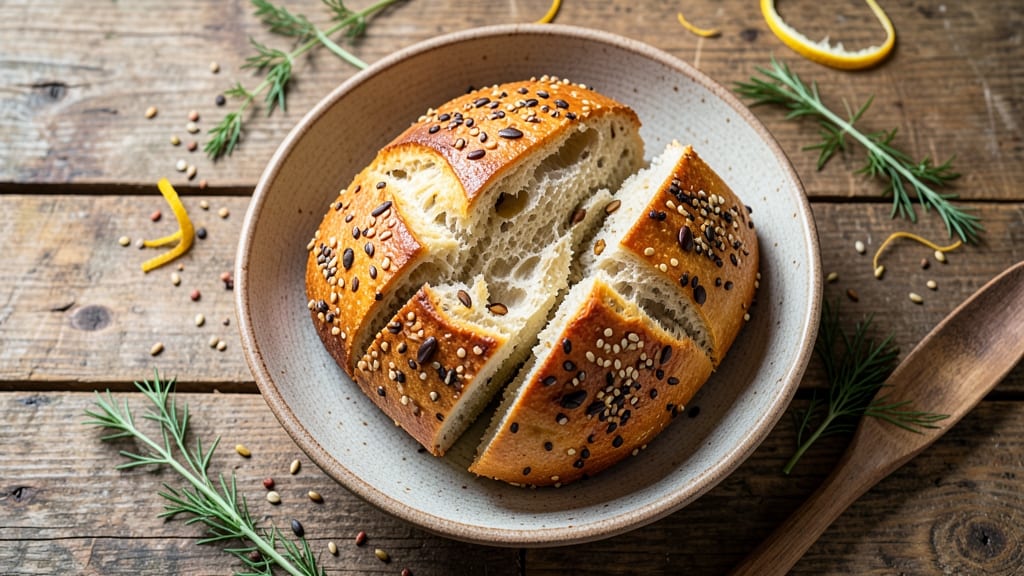
This artisan seed bread recipe delivers crusty crunch and nutty depth in every bite, transforming simple ingredients into a rustic loaf that rivals bakery favorites. The secret lies in a precise blend of seeds—flax, sesame, and sunflower—that add both texture and earthy flavor while keeping the bread light and airy.
I’ve baked this recipe dozens of times, refining it to ensure a foolproof method that works for home bakers of all skill levels.
The process begins with a simple dough that comes together in just 15 minutes, followed by a two-hour proofing period for maximum flavor development. The seeds aren’t just an afterthought; they’re baked into the loaf, creating pockets of crunch that contrast beautifully with the tender crumb.
High heat in the oven (450°F) ensures a golden, crackly crust, while steam from the Dutch oven keeps the interior moist and fluffy.
What you’ll end up with is a rustic, hearty loaf that’s perfect for sandwiches, toast, or serving alongside soups and stews. The seeds add a nutritional boost without overpowering the bread’s natural taste, making it a versatile staple for any kitchen.
Whether you’re a beginner or an experienced baker, this recipe delivers restaurant-quality results with minimal effort.
Ready to bake? The instructions walk you through every step—from mixing the dough to scoring the loaf—so you can achieve that perfectly crisp crust and light, airy interior every time. No special equipment is needed, just patience and attention to detail. Let’s get started!
Ingredients for artisan seed bread
Simple flours, seeds, and yeast transform into a rustic loaf with golden crust and nutty crunch.
| Ingredient | Amount | Notes |
|---|---|---|
| All-Purpose Flour 🌾 | 4 cups | Unbleached, high-protein preferred |
| Whole Wheat Flour 🌾 | 1 cup | For structure and nutrition |
| Active Dry Yeast 🍞 | 2 ¼ tsp | Fresh yeast preferred if available |
| Granulated Sugar 🍚 | 1 tbsp | For yeast activation |
| Unsalted Butter 🧈 | ½ cup | Cold, cubed for texture |
| Warm Water 💧 | 1 ¼ cups | 105-110°F for yeast activation |
| Flax Seeds 🌰 | ¼ cup | Whole, toasted for depth |
| Sesame Seeds 🌱 | ¼ cup | Untoasted for subtle crunch |
| Sunflower Seeds 🌻 | ¼ cup | Raw, unsalted preferred |
| Diamond Crystal Kosher Salt 🧂 | 1 ½ tsp | Adjust to taste |
| Extra-Virgin Olive Oil 🫒 | 2 tbsp | For dough and crust |
| Ice Water ❄️ | ¼ cup | For final dough adjustment |
The flours form the foundation—King Arthur unbleached yields the best texture, while Bob’s Red Mill whole wheat adds depth. Yeast quality matters: Red Star Active Dry works reliably, but fresh yeast from a specialty store delivers superior rise. Toast your seeds in a dry pan for 2-3 minutes to enhance their flavors—flax seeds develop a subtle nuttiness, while sesame seeds gain a delicate aroma. Trader Joe’s carries pre-toasted seeds if you prefer convenience. Always measure flours by weight for consistency, but since this recipe uses volume, spoon and level your cups for accuracy.
No whole wheat flour? Substitute additional all-purpose flour but reduce by 1 tbsp to maintain texture. Sesame seeds can be swapped for poppy seeds, though flavor will differ. Sunflower seeds may be replaced with pumpkin seeds for a different nutty profile. For yeast activation, ensure your water is 105-110°F—too hot kills yeast, too cool slows fermentation. The butter should be cold when mixed into the dough to prevent overdevelopment. If your kitchen is warm, chill the dough for 30 minutes before shaping. For a lighter loaf, consider adding 1 tsp baking soda to the flour mixture.
Store the baked loaf in a paper bag at room temperature for up to 3 days to maintain crispness. For longer storage, wrap tightly in plastic and freeze for up to 3 months. Toast slices for 2-3 minutes to revive crunch. The seeds remain crunchy for 5-7 days when stored properly. Pre-slice the loaf before baking for easier serving, but avoid cutting until fully cooled to prevent gumminess. The Dutch oven creates steam for that restaurant-quality crust, but a baking stone works too if you don’t have one.
Why You'll Love This Recipe
- No-Knead Magic: I swear by this—just mix, let it rise, and bake. The whole wheat and all-purpose blend gives it that rustic texture without the arm workout.
- Buttery Crust, Warm Heart: That unsalted butter in the dough? Chef’s kiss. It crisps up golden while keeping the inside soft and pillowy—like a hug from a bakery.
- Weeknight Hero: Toss it in a lunchbox, tear it for sandwiches, or serve it with soup. It’s my go-to when I’m too tired to fuss but still want something impressive.
- Budget Baking Wins: Uses pantry staples you already own, and a single loaf lasts me days. Honestly, I’ve eaten this cold for breakfast three mornings in a row—still delicious.
Step-by-step instructions for artisan seed bread
Mastering this recipe delivers a rustic crust with a nutty, textured interior—every detail matters.
Activate the Yeast for Optimal Rise
In a small bowl, combine the 1.25 cups warm water (tested between 105-110°F) with the 1 tbsp granulated sugar and 2.25 tsp active dry yeast. Let it sit for 5-10 minutes until frothy—this confirms the yeast is alive and ready to work. If no bubbles form, your yeast may be inactive, and you'll need to start over.
I prefer fresh yeast for this recipe, but if using active dry, ensure it hasn't expired. The sugar jumpstarts fermentation, creating the foundation for a light, airy crumb. Once bubbly, proceed immediately to avoid overproofing.
Mix the Dough with Precision
In the bowl of a stand mixer fitted with the dough hook, combine the 4 cups all-purpose flour, 1 cup whole wheat flour, and 1.5 tsp diamond crystal kosher salt. Mix on low speed for 30 seconds to distribute evenly. Add the yeast mixture, then the 0.5 cup cold unsalted butter cut into small cubes.
Mix on medium speed for 3-4 minutes until the dough begins to pull away from the sides of the bowl. The butter should be fully incorporated but still visible in small flecks—this creates pockets of flavor and texture. If the dough feels too sticky, add 1 tablespoon of flour at a time until it forms a shaggy mass.
Knead for Structure and Elasticity
Continue kneading on medium speed for 8-10 minutes until the dough becomes smooth and elastic, forming a tight ball. It should pass the "windowpane test"—stretch a small piece between your fingers, and it should thin enough to see light through without tearing. This ensures proper gluten development for a chewy yet tender crumb.
I like to knead by hand for the first 2 minutes to feel the dough's resistance, then switch to the mixer. Over-kneading can develop too much gluten, making the bread tough. The dough should be slightly tacky but not wet—if it sticks excessively, add 1 teaspoon of flour and knead for another 30 seconds.
First Rise for Flavor Development
Lightly grease a large bowl with 1 tablespoon of extra-virgin olive oil and place the dough inside, turning to coat all sides. Cover with a damp kitchen towel and let rise in a warm place for 1-1.5 hours, or until doubled in size. The dough should feel springy when pressed gently—this indicates proper fermentation and gas production.
I place the bowl on top of my oven with the light on for consistent warmth. Avoid cold drafts, which slow fermentation. If the kitchen is cool, preheat the oven to 70°F for 5 minutes, then turn it off and place the bowl inside. Patience here ensures a well-developed flavor and structure.
Shape and Second Rise for Crust
Turn the dough onto a lightly floured surface and divide it into 4 equal portions. Shape each into a 12-inch round loaf, rolling the edges under to seal. Place the loaves on a parchment-lined baking sheet, seam-side up, and cover loosely with plastic wrap. Let rise for 30-45 minutes until puffy and slightly domed—this final rise creates the signature open crumb.
Preheat the oven to 375°F while the dough rises. For extra crustiness, I score the tops of the loaves with a sharp razor or lame in a crosshatch pattern. This prevents over-expansion and adds a professional touch. The seeds will bake into a crispy, flavorful topping, so don’t skip this step.
Bake for Crusty Perfection
Bake the loaves for 30-35 minutes until golden brown and internal temperature reaches 190-195°F. The bread should sound hollow when tapped on the bottom. In the last 5 minutes, sprinkle the 0.25 cup flax seeds, 0.25 cup sesame seeds, and 0.25 cup sunflower seeds evenly over the tops. This adds texture and visual appeal.
For an even deeper crust, I recommend using a baking stone or steel preheated in the oven for 30 minutes. Transfer the loaves directly onto the stone in the last 10 minutes of baking. Let the bread cool on a wire rack for at least 1 hour before slicing—this allows the crumb to set and prevents a gummy texture.
Pro Tips For Making Artisan Seed Bread
- Bloom Yeast Right: Toss that yeast into warm water (not milk—this isn’t pancakes) with a pinch of sugar first, then wait 5-10 minutes until it’s frothy and active. I learned this the hard way—dead yeast in a dough full of butter and whole wheat just sits there like a sad, flat pancake.
- Soften Butter First: Take your unsalted butter out of the fridge 30 minutes before mixing—just enough to press it into the dough, not melt it. Cold butter makes pockets, but if it’s too soft, the bread turns greasy instead of flaky. Trust me, your future toast will thank you.
- Skip Over-Kneading: Whole wheat flour is stubborn, so resist the urge to knead until your arms give out. Mix the dough, let it rest 20 minutes, then do one 5-minute knead—just enough to smooth it out. Overworking it turns the crumb dense, and nobody wants a brick for sandwiches.
- Steam the Oven: Before baking, toss a metal bowl of boiling water in the oven and close the door for 5 minutes. The steam helps the crust rise and keeps the whole wheat from drying out too fast. (Yes, even if you’re impatient like me—wait those 5 minutes.)
Dietary considerations for these flavors
Gluten-Free Adaptation
For a gluten-free version, replace the all-purpose and whole wheat flours with a 1:1 gluten-free flour blend like King Arthur Measure for Measure. Use 5 cups total of the blend, and add 1 extra tablespoon of xanthan gum to mimic gluten’s elasticity.
Reduce the water by 2 tablespoons since gluten-free flours absorb less moisture. Toast the seeds as directed, but expect a denser crumb—this blend works best when combined with 1 extra egg for structure. 🌾
Vegan-Friendly Swaps
Skip the butter and use ½ cup vegan butter (like Miyoko’s) or ½ cup coconut oil for richness. Replace the yeast with 2.25 tsp nutritional yeast for a vegan-friendly rise, though flavor will differ slightly. Add 1 tbsp apple cider vinegar to the dough to enhance fermentation.
For binding, include 1 flax egg (1 tbsp ground flaxseed + 3 tbsp water) in the wet ingredients. The texture will be heartier but still delicious. 🌱
Low-Carb Modifications
Swap the flours for 4 cups almond flour and 1 cup coconut flour—these keep carbs low while maintaining structure. Use 1 extra egg (3 total) to bind the dough, and reduce the water to 1 cup. Replace sugar with 1 tbsp monk fruit sweetener for yeast activation.
The seeds add crunch without carbs, and the crust will be crispier due to the almond flour’s fat content. Store in an airtight container to prevent drying. ⚡
Nut-Free Option
Omit all seeds and replace them with ½ cup toasted pumpkin seeds (if nut-free is acceptable) or ½ cup dried cranberries for sweetness. For a seed-free texture, sprinkle 1 tbsp sesame seeds only on top post-bake.
The dough remains the same, but the crunch comes from the seeds’ absence—focus on the crust’s development. This version works well for those with nut allergies. 💛
Allergen Considerations
Check seed brands for cross-contamination warnings—Bob’s Red Mill and Trader Joe’s label their products clearly. For a soy-free version, avoid sesame seeds (a common soy cross-contaminant) and use sunflower seeds and pumpkin seeds instead.
Always store baked goods in separate containers if allergens are present elsewhere in your kitchen. Label your bread clearly to avoid accidental exposure. 🧂
Nutrition facts
Frequently asked questions
Why do the seeds need to be toasted?
Toasting the seeds enhances their natural flavors and prevents them from becoming mushy during baking. Flax seeds develop a subtle nuttiness, while sesame seeds gain a delicate aroma. Simply toast them in a dry pan for 2-3 minutes until fragrant—this small step makes a big difference in texture and taste!
Can I make this bread without a Dutch oven?
Yes! While a Dutch oven creates the best crust, you can achieve great results with a baking stone or steel. Preheat it in the oven for 30 minutes before baking, then transfer the loaves directly onto it. For extra steam, place a tray of hot water in the lower oven rack during the first 10 minutes of baking.
How do I know when the dough is properly kneaded?
The dough is ready when it forms a smooth, elastic ball that passes the "windowpane test." Stretch a small piece between your fingers—if it thins enough to see light through without tearing, you've achieved perfect gluten development. Over-kneading makes the bread tough, so aim for 8-10 minutes total kneading time.
What if my bread turns out dense instead of airy?
Dense bread usually results from underproofing or over-kneading. Ensure your yeast is active (it should bubble within 5-10 minutes when mixed with warm water). Also, check that your dough doubles in size during the first rise—if not, give it 30 more minutes in a warm spot. For extra lift, try adding 1 tsp baking soda to the flour mixture next time.
Can I add other seeds or grains to this recipe?
Swap in pumpkin seeds, chia seeds, or amaranth for variety. For grains, try adding ½ cup rolled oats or spelt flour to the dough. Just adjust liquid as needed—grains and seeds absorb moisture differently. Toast any new additions first to prevent bitterness.