
Side Dishes
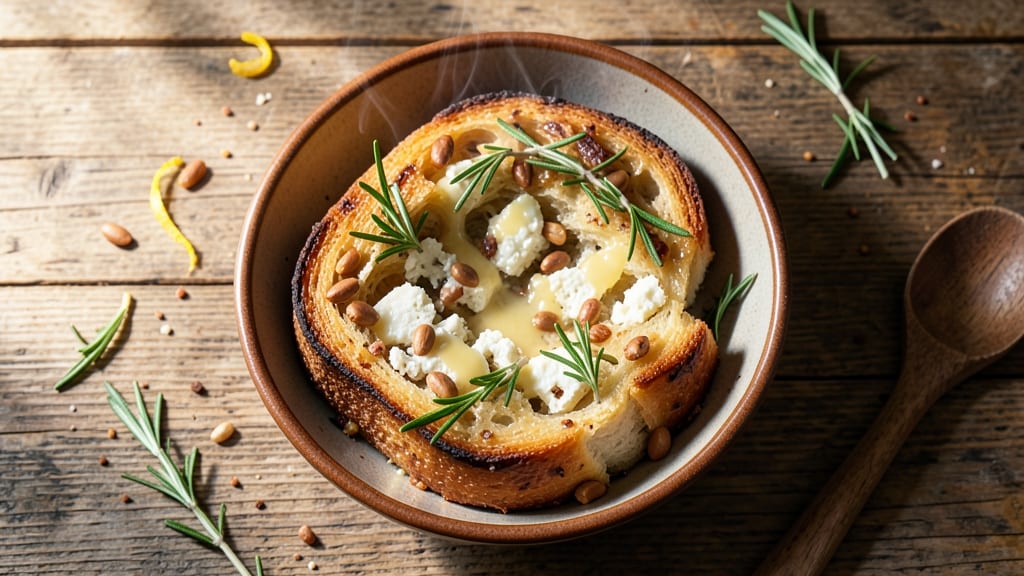
Aubree's feta bread transforms simple dough into a golden, herby masterpiece with every bite of crumbly cheese. This recipe delivers restaurant-quality flavor with a crispy crust and tender interior, perfect for elevating any meal.
The secret lies in the perfect balance of feta, herbs, and a touch of lemon zest that brightens every flavor.
The magic begins with a straightforward dough that comes together in just 10 minutes, then bakes to golden perfection in 25 minutes. Feta chunks melt slightly, creating pockets of salty richness, while fresh herbs infuse the crust with aromatic depth.
This bread pairs beautifully with soups, salads, or as a standalone appetizer that disappears quickly.
What makes this recipe special is its versatility—add rosemary for an earthy twist, drizzle with honey for sweetness, or keep it classic with just lemon and parsley. The result is a bread that's both impressive and effortless, with a texture that's crispy on the outside and soft on the inside.
Whether you're serving a crowd or treating yourself, this feta bread delivers flavor and satisfaction. Let's get started on creating your own herby, cheesy masterpiece that will have everyone asking for seconds.
Ingredients for aubree's feta bread
Restaurant-quality feta bread starts with these 13 ingredients—simple yet transformative.
| Ingredient | Amount | Notes |
|---|---|---|
| All-Purpose Flour 🌾 | 4 cups | Sifted for light texture |
| Active Dry Yeast 🍞 | ¼ oz | Or 2 1/4 tsp (1 packet) |
| Granulated Sugar 🍚 | ½ tsp | Enhances yeast activation |
| Salt 🧂 | 1 ½ tsp | Diamond Crystal preferred |
| Unsalted Butter 🧈 | ½ cup | Cold, cubed for dough |
| Whole Milk 🥛 | ½ cup | Warmed to room temperature |
| Crumbled Feta Cheese 🧀 | 1 ½ cups | High-quality, salty feta |
| Fresh Parsley 🌿 | ¼ cup | Finely chopped, stems removed |
| Fresh Dill 🌿 | 2 tbsp | Finely chopped, vibrant green |
| Lemon Zest 🍋 | 1 tbsp | Bright, fresh zest only |
| Extra-Virgin Olive Oil 🫒 | 2 tbsp | For dough and drizzling |
| Sesame Seeds 🌰 | 2 tbsp | Toasted for extra crunch |
| Coarse Sea Salt 🧂 | 1 tsp | For final sprinkle |
The feta makes or breaks this recipe. Greek feta from a deli counter—not the crumbly supermarket kind—delivers that perfect salty bite. Look for blocks with minimal additives; Kalamata feta adds a tangy depth. Fresh herbs are non-negotiable here: bright green parsley and dill from the grocery store's produce section work, but farmers market herbs have more punch. The lemon zest should be freshly grated—pre-made zest loses its vibrancy. For the flour, King Arthur or Gold Medal brands yield the lightest texture, but any all-purpose will suffice if sifted properly.
No feta? Substitute with crumbled goat cheese or vegan feta, though texture will differ. Short on dill? Mint or tarragon at half the amount adds a different but complementary freshness. The butter must be cold for proper dough development—microwave it 40 seconds to soften if needed. For the milk, warm it slightly (about 110°F) to activate the yeast faster. Prefer a sweeter bread? Add 1 tbsp honey to the dough. The sesame seeds can be swapped for poppy seeds or everything bagel seasoning for a different crunch profile.
Dough keeps for 24 hours in the fridge, wrapped tightly in plastic. For longer storage, freeze the shaped loaf for up to 3 months—thaw at room temperature before baking. Feta bread reheats beautifully: 5 minutes at 350°F restores that crispy crust. Portion into individual slices for easy serving—this bread disappears fast at gatherings. Leftovers? Toast them for a quick snack or crumble over salads for extra flavor.
Why You'll Love This Recipe
- No-Knead Magic: I swear by this dough—just mix, rest, and bake. The yeast does all the work while I sip coffee, and that buttery crust? Worth the wait.
- Feta Frenzy: Crumbled feta baked right into the dough? It’s salty, tangy, and melts into every bite like a cheesy hug. Honestly, I fight over the last slice.
- Weeknight Hero: Toss a loaf in the oven while you prep dinner—it’s warm, ready, and pairs with everything. My go-to for sandwiches, soups, or just tearing with your hands.
- Budget Stretch: Flour, butter, yeast—basic pantry staples. One batch feeds my family for days, and those leftovers? Toasted with olive oil? Even better the next morning.
Step-by-step instructions for aubree's feta bread
Here's the precise method for crafting bread with a briny, herby crust and a tender, feta-speckled interior.
Activate the Yeast with Warm Milk and Sugar
In a small bowl, combine the 0.5 cup warm whole milk (about 105-110°F) with the 0.5 tsp granulated sugar and 0.25 oz active dry yeast. Let it sit for 5-10 minutes until frothy—you'll see small bubbles forming on the surface and a yeasty aroma develop. This confirms the yeast is alive and ready to work.
If the mixture doesn't bubble after 10 minutes, your yeast may be dead. Start fresh with a new packet—this is the foundation of your bread's rise. I like to test the milk temperature with my finger; it should feel warm but not hot to the touch, like freshly drawn bathwater.
Mix the Dough with Butter and Feta
In the bowl of a stand mixer fitted with the dough hook, combine the 4 cups all-purpose flour and 1.5 tsp salt. Mix on low speed for 30 seconds to aerate the flour. Add the yeast mixture, then the 0.5 cup cold cubed unsalted butter and 1.5 cups crumbled feta cheese.
Mix on medium speed for 4-5 minutes until the dough begins to pull away from the bowl but remains slightly sticky. The butter should be incorporated but still visible in small chunks. Don't overmix—you're looking for a shaggy dough that comes together when pressed, not a smooth, elastic ball at this stage.
Knead Until Elastic and Smooth
Continue kneading on medium speed for an additional 8-10 minutes until the dough becomes smooth, elastic, and slightly tacky. The surface should feel firm when pressed with one finger, with just a slight indentation remaining. If the dough feels too sticky, add 1 tablespoon flour at a time until it reaches the right consistency.
The feta will make this dough slightly denser than traditional bread, so don't be alarmed if it doesn't look perfectly light. The key is achieving proper gluten development—test this by doing the "windowpane test": stretch a small piece of dough until it's translucent and thin enough to see light through it without tearing.
First Rise and Folding Technique
Lightly oil a large bowl, place the dough inside, and cover with a damp towel. Let it rise in a warm place for 1-1.5 hours, or until it has doubled in size. I place my bowl on top of my turned-off oven with the light on for consistent warmth—this creates the ideal 75-80°F environment.
After the dough has risen for 30 minutes, perform two sets of folds: wet your hands, grab one side of the dough, stretch it upward, and fold it over itself. Rotate the bowl and repeat this process on all four sides. This strengthens the gluten structure and helps create that signature open crumb we want in feta bread.
Shape and Second Rise
Punch down the risen dough to release air, then turn it out onto a lightly floured surface. Gently shape it into a 9x5-inch loaf pan by folding the edges toward the center and pressing down firmly. Brush the top with 2 tablespoons extra-virgin olive oil and sprinkle with the 2 tablespoons sesame seeds.
Cover the pan with a damp towel and let the dough rise for another 45-60 minutes until it has risen about 1 inch above the pan's rim. Preheat your oven to 375°F during the final 15 minutes of rising. The dough should feel springy when pressed gently—this indicates it's ready for baking.
Bake Until Golden and Crisp
Bake the loaf for 35-40 minutes until the top is deep golden brown and the internal temperature reaches 190-195°F when measured with an instant-read thermometer. The bread should sound hollow when tapped on the bottom. If the top browns too quickly, tent loosely with foil after 20 minutes.
For extra crispiness, brush the baked loaf with additional olive oil while still warm, then sprinkle with the 1 tsp coarse sea salt and the remaining 0.25 cup fresh parsley and 2 tbsp fresh dill mixed with the 1 tbsp lemon zest. Let the bread cool in the pan for 10 minutes, then transfer to a wire rack to cool completely.
Pro Tips For Making Aubree'S Feta Bread
- TEST YEAST FIRST: I learned this the hard way—skipping the yeast test means guessing if your dough will rise. Mix 1 teaspoon yeast, 1 teaspoon sugar, and ¼ cup warm water (110°F) for 5-10 minutes. If it bubbles, your yeast is active; if not, toss it and start over. This recipe isn’t forgiving if your yeast flops.
- SALT THE DOUGH: More salt than you think, especially with unsalted butter. Sprinkle the full 1½ teaspoons directly into the flour before mixing—it dissolves better and distributes evenly. I used to hold back, thinking it’d be too salty, but the flavor actually balances the feta’s sharpness.
- KNEAD LESS, STRETCH MORE: This dough doesn’t need brutal kneading—just 5-6 minutes by hand until smooth. After the first rise, use your knuckles to gently stretch and fold the dough in four directions (like a cross). It builds strength without overworking the gluten, and the feta pockets stay intact when baking.
- COOL BUTTER BEFORE CUBING: Cold butter makes flaky layers, but if you cut it straight from the fridge, you’ll end up with a dense loaf. Let the butter sit at room temp for 10 minutes until it’s soft but not greasy—then cube it quickly. This recipe relies on those butter pockets melting just right for that golden, airy crumb.
Dietary considerations for this dish
Gluten-Free Adaptation
Swap the all-purpose flour for a 1:1 gluten-free baking flour blend like King Arthur Measure for Measure or Bob's Red Mill. Add 1 tsp xanthan gum to improve texture, and reduce the warm milk to 0.375 cup—gluten-free dough absorbs less liquid.
Let the dough rest 15 minutes after mixing to hydrate properly. Bake at 350°F for 30-35 minutes—gluten-free bread browns faster. 🌾
Dairy-Free Options
Replace the 1.5 cups feta cheese with 1.5 cups crumbled vegan feta (like Follow Your Heart) or 1 cup dairy-free goat cheese. Use 2 tbsp nutritional yeast in the dough for a cheesy flavor.
For the butter, swap in 0.5 cup dairy-free butter (like Miyoko's) or 0.4 cup coconut oil, chilled. The texture will be slightly denser but still delicious. 🧀
Lower-Sodium Version
Reduce the 1.5 tsp salt to 1 tsp, then balance with extra lemon zest (1.5 tbsp) and fresh herbs (0.3 cup parsley + 2 tbsp dill).
Use low-sodium feta (like Feta Bella) if available, or rinse regular feta in cold water for 5 minutes to remove excess salt. Taste before baking—add 1/4 tsp salt if needed after cooling. 🧂
Nut-Free Considerations
Skip the 2 tbsp sesame seeds and replace with 2 tbsp poppy seeds or 1 tbsp everything bagel seasoning (check for nut-free brands like Trader Joe's).
For extra crunch, toast 2 tbsp panko breadcrumbs and sprinkle on top. Always verify labels—some sesame pastes or seasonings contain traces of nuts. 🌰
Keto-Friendly Twist
Replace the flour with 3 cups almond flour (finely ground) and 1/4 cup coconut flour, plus 1 tsp psyllium husk for binding. Reduce the warm milk to 0.25 cup and add 1 extra egg to the dough.
Use 1/2 cup crumbled goat cheese (lower carb than feta) and bake at 350°F for 25-30 minutes. This version will be denser but rich in flavor. 🥑
Allergen-Friendly Tips
For egg-free dough, replace the 1 egg (if used in variations) with 1 tbsp ground flaxseed + 3 tbsp water (let sit 5 minutes). Check all spices for soy or gluten cross-contamination—Penzeys Spices offers certified allergen-free options.
Always use separate utensils and surfaces if allergies are severe. Double-check labels on feta and herbs for hidden additives. 💡
Nutrition facts
Frequently asked questions
Can I make this feta bread without a stand mixer?
Simply mix the dough by hand in a large bowl using a wooden spoon or dough whisk. After combining all ingredients, turn the dough onto a lightly floured surface and knead for 8-10 minutes by pressing, folding, and turning the dough. The feta will make it slightly denser, so focus on developing the gluten through proper kneading technique rather than achieving a perfectly smooth texture.
How do I store leftover feta bread?
Wrap cooled bread tightly in plastic wrap or aluminum foil and store at room temperature for 2-3 days. For longer storage, freeze individual slices wrapped in plastic for up to 3 months. To revive, warm slices in a 350°F oven for 5 minutes or toast in a skillet with butter until crispy.
Why did my feta bread turn out dense?
Dense texture usually means one of three things: over-kneading (which breaks down gluten), under-proofing (dough didn't rise enough), or too much feta (which weighs down the structure). For next time, knead just until the dough passes the windowpane test, let it rise until doubled, and reduce feta to 1 cup if needed. The butter should also be cold when mixing.
Can I add other cheeses to this recipe?
Yes! Try adding ½ cup crumbled goat cheese for tanginess or ¼ cup grated Parmesan for umami depth. For a sweeter version, mix in ½ cup shredded mozzarella and reduce the feta to 1 cup. Always use room-temperature cheese to prevent lumps, and adjust baking time if the dough feels heavier.
What's the best way to reheat sliced feta bread?
For crispy results, wrap slices in foil and warm at 350°F for 3-4 minutes. For a restaurant-style finish, toast in a dry skillet over medium heat for 1-2 minutes per side until golden. Avoid microwaving—it makes the bread soggy. A quick broiler blast (375°F for 1 minute) also works for extra crispiness!