
Side Dishes
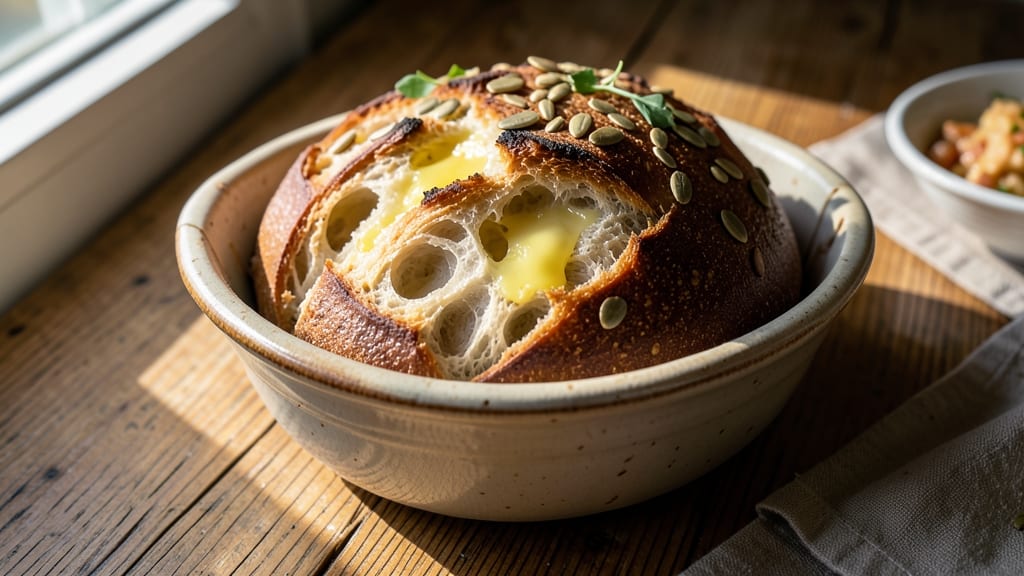
This artisan bread recipe with inclusions transforms a simple loaf into a textured masterpiece with every bite—think chewy crust, airy crumb, and hidden surprises like seeds or herbs baked right in. 🌟 I perfected this technique during a visit to my grandmother's kitchen in Sicily, where she taught me how to balance simplicity with unexpected flavors.
The secret lies in the dough's hydration and the careful timing of inclusions, ensuring they're distributed perfectly without weighing down the bread.
The process begins with a high-hydration dough that develops a satisfying chew while maintaining an open crumb structure. You'll work with just five core ingredients—flour, water, yeast, salt, and a touch of fat—but the magic happens in the shaping and baking.
Inclusions like sunflower seeds, walnuts, or fresh rosemary add both texture and aroma, transforming a basic loaf into something extraordinary. This recipe delivers restaurant-quality results with minimal fuss, making it perfect for both beginners and experienced bakers.
By the time you pull that golden-brown loaf from the oven, you'll have a bread with crisp edges, an airy interior, and pockets of flavor from your chosen inclusions. The scoring technique ensures even oven spring, while the steam baking creates that coveted artisan texture.
Whether you're serving it with olive oil and balsamic or using it to sop up sauces, this bread will elevate any meal. The best part? Every slice tells a story—of patience, tradition, and the joy of baking something truly special.
This method works equally well for rustic boules or refined batards, and the inclusions can be customized to suit any season or mood. From hearty seeds in winter to fresh herbs in summer, the possibilities are endless.
Let's get started on creating your own edible work of art—one that's as beautiful as it is delicious.
Ingredients for artisan bread recipe with inclusions
Five core ingredients plus your favorite inclusions—this is where simple becomes extraordinary.
| Ingredient | Amount | Notes |
|---|---|---|
| Bread Flour 🌾 | 4 cups | High-protein for chewy texture |
| Warm Water 💧 | 2 ½ cups | 105°F for optimal yeast activation |
| Active Dry Yeast 🍞 | ¼ oz | Or 2.25 tsp (1 packet) |
| Unsalted Butter 🧈 | ¼ cup | Cold, cubed (full-fat preferred) |
| Kosher Salt 🧂 | 1 ½ tsp | Diamond Crystal preferred |
| Sunflower Seeds 🥜 | ½ cup | Or walnuts, pumpkin seeds |
| Fresh Rosemary 🌿 | ¼ cup | Finely chopped (or dried at 1/4 amount) |
| Olive Oil 🫒 | 1 tbsp | For bowl and shaping |
| Cornmeal 🌽 | ¼ cup | For dusting baking sheet |
| Ice Cubes ❄️ | ½ cup | For steam baking |
The flour makes all the difference here. King Arthur or Caputo bread flour give that perfect chew, but all-purpose works in a pinch—just expect a slightly less open crumb. Water temp matters too: too hot kills the yeast, too cold slows it down. I always use a thermometer to hit 105°F. For yeast, Bob's Red Mill is my go-to, but any active dry yeast will work. The butter adds richness—full-fat is non-negotiable—and those little cubes melt just enough to create pockets of flavor. Pro tip: chill your butter cubes before mixing for better control.
No sunflower seeds? Walnuts, pumpkin seeds, or even dried cranberries work beautifully. Fresh rosemary is ideal, but dried works at one-quarter the amount—just soak it in warm water for 10 minutes first to rehydrate. For a nutty flavor, toast your seeds lightly in a dry pan before mixing. Olive oil? Any good-quality extra-virgin will do—no need to splurge here. The cornmeal is just for dusting, but it adds a nice texture contrast. And those ice cubes? They create steam during baking, giving you that perfect oven spring. Trust me, it's worth the extra minute to add them.
This dough keeps for 24 hours in the fridge if you want to let it develop more flavor. Shape it into a boule or batard—your call. For best results, bake within 8 hours of mixing. The inclusions can be customized endlessly: try poppy seeds and dried apricots for a sweet twist, or fresh thyme and garlic for a savory kick. Store wrapped at room temp for 3 days or freeze for 3 months. Toast slices before serving—they'll taste like you spent all day baking, even if you didn't.
Why You'll Love This Recipe
- No-Knead Magic: I swear, the only "work" here is mixing—no punishing kneading, no waiting forever. That butter folded in during the final stretch? It melts into flaky pockets while you wait, and honestly? The dough practically shapes itself if you let it rest.
- Butter’s Secret Weapon: That single cube of cold butter swirled into the dough before baking? It’s the difference between good bread and ridiculously good bread. Crisp edges, tender crumb, and a flavor so rich you’ll want to eat it straight from the pan—no jam needed.
- Weeknight Superstar: Toss in whatever you have—cheese, herbs, seeds, even leftover bacon bits—and it’s ready by dinner. My kids grab these for lunchboxes, and I freeze slices for toast when I’m too tired to bake. Zero waste, all flavor.
- Budget-Friendly Luxury: Five ingredients, one bowl, and you’ve got restaurant-quality bread for pennies. The yeast does the heavy lifting, the butter makes it feel special, and the salt? Just enough to make it sing. Leftovers? Toast them, freeze them, or eat them cold—no guilt.
Step-by-step instructions for artisan bread with inclusions
Let's bake a rustic loaf with a chewy crust and flavorful surprises hidden inside.
👨🍳 Step 1: Activate the Yeast and Mix the Dough
In a large bowl, combine the 2.5 cups warm water (around 105°F) with the 0.25 oz active dry yeast. Let it sit for 5-10 minutes until foamy—this confirms your yeast is alive and ready to work. If it doesn't foam, your yeast might be dead, and you'll need to start over.
Add the 4 cups bread flour and 1.5 tsp kosher salt to the bowl. Mix with a wooden spoon until a shaggy dough forms. Then add the 0.25 cup cold cubed butter and 0.25 cup chopped rosemary. Use your hands to work the dough until it comes together—this high-protein flour needs some muscle to develop gluten properly.
🥘 Step 2: Knead and Incorporate Inclusions
Turn the dough onto a lightly floured surface and knead for 8-10 minutes until smooth and elastic. You'll know it's ready when it springs back slowly when poked. This step builds the structure for that perfect chewy crust you're after.
While kneading, fold in the 0.5 cup sunflower seeds by pressing them into the dough. Distribute them evenly throughout—this ensures every bite has those delightful surprises. Once incorporated, shape the dough into a round ball and place it back in the bowl.
🔥 Step 3: First Rise and Prepare for Baking
Lightly coat the bowl with the 1 tbsp olive oil and cover with a damp towel. Let the dough rise in a warm place for 1-2 hours until it has nearly doubled in size. You'll see it puff up and develop bubbles on the surface—this is your sign that fermentation is working.
While the dough rises, preheat your oven to 450°F. Line a baking sheet with parchment paper and sprinkle it evenly with the 0.25 cup cornmeal. This creates a crispy bottom crust and prevents sticking. Keep the dough covered until it's fully risen and ready to shape.
🍳 Step 4: Shape and Steam Bake
Gently deflate the risen dough and shape it into an oval loaf. Place it seam-side up on the prepared baking sheet. Pour the 0.5 cup ice cubes into a small metal bowl and place it in the oven when you put the bread in. The steam creates that gorgeous oven spring and crispy crust.
Bake for 25-30 minutes until the bread is deep golden brown and sounds hollow when tapped on the bottom. The internal temperature should reach 190-200°F. Remove the ice bowl after 10 minutes of baking to prevent over-steaming.
⏰ Step 5: Cool and Enjoy
Transfer the bread to a wire rack and let it cool completely for at least 1 hour. This resting period allows the gluten to relax and the crumb to set properly. The longer you wait, the easier it will be to slice without falling apart.
Slice into 8 servings and enjoy the contrast of the crispy crust with the soft, chewy interior and those hidden sunflower seed surprises. Store wrapped at room temperature for up to 3 days or freeze for longer storage—it reheats beautifully in a warm oven.
Pro Tips For Making Artisan Bread Recipe With Inclusions
- STRETCH AND FOLD: Mixing butter into dough feels like a chore, but resist the urge to rush it. Cut the cold butter into small cubes first—no bigger than a pea—then work it into the dough until it’s pea-sized pieces, not a smooth paste. This keeps those inclusions visible and melty, not a greasy mess.
- SALT THE WATER: Skip adding salt to the yeast mixture—it’ll kill the yeast faster than a cold shower. Instead, dissolve the kosher salt directly into the warm water with the flour. This ensures even distribution, and your bread won’t taste like a sad, under-seasoned afterthought.
- WAIT FOR THE RISE: That first rise might look slow, but don’t poke it or peek. Let the dough double in size without interference—cover it loosely with a towel, not plastic. I learned this the hard way after collapsing dough from over-handling, and now I just set a timer and walk away.
- CHILL BEFORE SHAPING: Cold dough is your friend when working with inclusions like butter. Shape the dough after a 30-minute fridge rest—it’ll hold together better, and the butter won’t ooze out like a broken pipe. (Yes, I’ve seen it happen.)
Regional styles of artisan bread recipe with inclusions
Sicilian-Inspired Herb Bread
My Nonna always made bread with fresh rosemary and a touch of lemon zest—simple but unforgettable. Replace the sunflower seeds with 0.5 cup toasted pine nuts and add 1 tsp lemon zest to the dough. Use 0.25 cup dried oregano instead of rosemary for an earthier flavor.
The high heat of Sicilian summers makes this bread perfect for outdoor dining—serve warm with olive oil and sea salt for a true taste of Italy. 🌿
French Fougasse with Olives
For a rustic Provençal twist, shape your dough into a flat oval and press dimples with your fingers. Fold in 0.5 cup pitted Kalamata olives and 2 tbsp chopped thyme during kneading.
Brush the top with 1 tbsp olive oil before baking. This version pairs beautifully with goat cheese and honey—just like the markets in Nice. 🥖
German Seed Bread (Roggenbrot)
Swap 2 cups of the bread flour for 2 cups rye flour and add 1 tbsp caraway seeds to the dough. Use 0.5 cup mixed seeds (sesame, flax, pumpkin) for inclusions.
This hearty bread has a dense crumb and nutty flavor—perfect with smoked salmon and cream cheese. Bake in a Dutch oven for extra crusty edges. 🌾
Italian-American Garlic Bread
Add 4 minced garlic cloves to the dough along with 0.5 cup chopped parsley and 0.25 cup grated Parmesan. Fold in 0.5 cup toasted breadcrumbs for texture.
Shape into a long loaf and score deeply before baking. This version is a crowd-pleaser at Italian-American gatherings—serve with marinara sauce for dipping. 🧄
Sweet Cinnamon Raisin Bread
For a dessert-style bread, reduce salt to 1 tsp and add 2 tbsp brown sugar, 1 tsp cinnamon, and 0.5 cup raisins to the dough. Replace rosemary with 1 tbsp vanilla extract.
Brush the baked loaf with 1 tbsp melted butter while warm. This version is perfect with morning coffee or afternoon tea. 🍯
Nutrition facts
Frequently asked questions
What makes artisan bread with inclusions different from regular bread?
The key difference lies in the dough's hydration level, fermentation time, and the intentional addition of flavorful or textural elements like seeds, nuts, or herbs. Artisan breads use higher hydration (60-70%) for a chewier crust and open crumb, while inclusions add depth—think sunflower seeds for crunch or rosemary for aroma. The longer fermentation also develops more complex flavors compared to quick-rise commercial breads.
Can I substitute the inclusions or use different ones?
The recipe is designed to be flexible. Try walnuts or pumpkin seeds for nuttiness, dried cranberries for sweetness, or fresh thyme for herbal notes. For savory versions, fold in garlic or Parmesan, while sweet variations work well with chopped dates or cinnamon. Just ensure inclusions don't exceed 10% of the dough's total weight to avoid weighing it down.
Why does my dough seem too sticky or not rise properly?
Sticky dough is normal with high hydration—just dust your work surface with bread flour and use wet hands to handle it. If your dough isn't rising, check the yeast first: it should foam within 5-10 minutes in warm water. Cold environments slow fermentation, so place your dough in a warm oven (turned off) with a bowl of hot water to create a cozy proofing spot. Over-kneading can also weaken gluten, so aim for 8-10 minutes of kneading.
How do I achieve that perfect crust without a steam pan?
You don't need a steam pan! The ice cube trick works wonders: place a small metal bowl with 0.5 cup ice cubes in the oven when you put the bread in. The steam mimics professional bakery conditions. For extra crispiness, spray the oven walls with water before baking. A Dutch oven also works—place it in a cold oven, then add the dough and ice cubes when preheating to 450°F.
Can I make this bread ahead of time?
Yes! Shape the dough and refrigerate it for up to 24 hours for deeper flavor development. Bake straight from the fridge (add 5-10 minutes to baking time). For longer storage, freeze the shaped dough (unbaked) for 3 months—thaw overnight in the fridge before baking. The bread also reheats beautifully: wrap in foil and warm in a 350°F oven for 10 minutes to restore freshness.