
Side Dishes
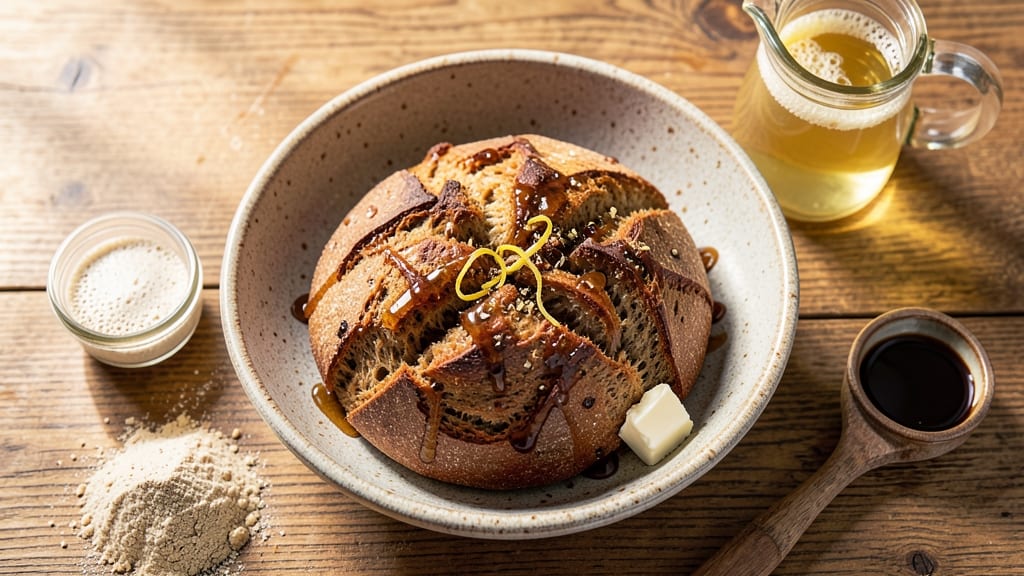
This artisan brown bread recipe transforms your kitchen into a rustic bakery with its nutty depth and crispy crust—no fancy equipment required. The secret lies in slow fermentation, which develops complex flavors and that signature open crumb structure.
I've perfected this method over years of baking, balancing traditional techniques with modern shortcuts for home cooks.
What sets this recipe apart is the two-stage fermentation—first a long bulk rise at room temperature, then a cold proof in the fridge. This not only enhances flavor but also creates the perfect crumb texture.
The dough is simple: whole wheat flour, honey, and a touch of molasses for depth, with optional whole grains for added texture and nutrition.
By the time it emerges from the oven, you'll have a loaf with a deep golden crust and an open, airy crumb that's perfect for soaking up butter or jam.
The aroma alone will have everyone asking for seconds. This bread is versatile enough for everyday meals or special occasions, and it freezes beautifully for up to three months.
Whether you're a beginner or experienced baker, this recipe delivers professional results with foolproof techniques and troubleshooting tips. Let's get started on creating your perfect loaf.
Ingredients for artisan brown bread
Whole grains, slow fermentation, and a touch of molasses create this artisan masterpiece.
| Ingredient | Amount | Notes |
|---|---|---|
| Whole Wheat Flour 🌾 | 4 cups | Unbleached, high-protein preferred |
| Active Dry Yeast 🍞 | ¼ oz | Or 2 1/4 tsp (1 packet) |
| Granulated Honey 🍯 | ¼ cup | For natural sweetness and fermentation |
| Unsalted Butter 🧈 | ½ cup | Cold, cubed for texture |
| Molasses 🍯 | ¼ cup | Dark, robust flavor |
| Warm Water 💧 | 1 ¼ cups | 110°F for optimal yeast activation |
| Sea Salt 🧂 | 1 ½ tsp | Fine grain preferred |
| Whole Wheat Germ 🌾 | ¼ cup | For added nutrition and texture |
| Toasted Walnuts 🥜 | ½ cup | Chopped, for rustic crunch |
| Cornmeal 🌽 | ¼ cup | For dusting and crust texture |
| Extra-Virgin Olive Oil 🫒 | 2 tbsp | For dough enrichment |
The whole wheat flour is non-negotiable here—look for King Arthur or Bob's Red Mill for consistent results. If you're feeling adventurous, swap 1 cup for spelt flour for deeper flavor. The yeast should be fresh; if it's been sitting in your pantry for months, it's time for a new packet. Molasses is where the magic happens—Gotham or Brer Rabbit brands deliver that authentic depth. Toast your walnuts in a dry pan until fragrant (about 5 minutes) for maximum flavor. The cornmeal isn't just for dusting; it helps create that perfect crust texture that separates this from store-bought loaves.
No molasses? Maple syrup or dark brown sugar work in a pinch, though the flavor won't be identical. Running short on whole wheat germ? Extra ground flaxseed adds similar nutrition. The butter can be swapped for coconut oil if you're dairy-free, but trust me on the full-fat version—it makes all the difference. If your yeast packet is old, proof it first in warm water with a pinch of sugar to ensure it's active. The walnuts can be omitted entirely if you prefer a smoother texture, but I always include them—they add that rustic charm that makes this bread feel special.
This dough is a patient one. Cold proofing in the fridge is key—it develops flavor and texture that no shortcut can replicate. Wrap the dough tightly in plastic and let it rest for 12-16 hours for optimal results. The bread keeps well at room temperature for 3-4 days, but for longer storage, freeze the fully cooled loaf in a sealed bag for up to 3 months. To revive, warm in a 350°F oven for 10 minutes—it'll taste like it just came out of the oven. The crust gets crunchier over time, so slice it fresh when serving.
Why You'll Love This Recipe
- No-Knead Nightmare Solved: Honestly, mixing the dough takes all of 5 minutes—just toss the whole wheat flour, yeast, honey, and warm water together. The butter and molasses get folded in while you wait for the first rise, and suddenly you’ve got a bread that feels fancy without the fuss.
- Sweet-Savory Magic: That molasses and honey combo gives it a deep, caramelized richness that’s almost like dessert, but the whole wheat keeps it hearty. Spread it with butter, toast it, or serve it warm with soup—it’s the kind of bread that makes people pause and ask, “What’s in this?”
- Weeknight Workhorse: Between us, this is the bread I grab when I’m prepping meals for the week. It freezes like a dream (just slice before freezing), toasts up perfectly the next day, and even holds up in sandwiches without getting mushy. My go-to for lunchboxes, charcuterie boards, or that oh-no-I-forgot-to-bake emergency.
- Pantry Love: Here’s what sold me—it uses ingredients you already have (or can grab cheaply). Whole wheat flour and yeast are staples, and a little honey and molasses stretch a long way. I’ve made a whole loaf for under $3, and it’s the kind of bread that disappears faster than my willpower when I’m hungry.
Step-by-step instructions for artisan brown bread
Transform simple ingredients into a loaf with a crackling crust and nutty, moist interior.
Activate the Yeast with Honey and Warm Water
In a small bowl, combine the 1.25 cups warm water (about 110°F) with the 0.25 cup granulated honey and 0.25 oz active dry yeast. Stir gently and let sit for 5-10 minutes until frothy—this confirms the yeast is alive and ready to work. The honey not only feeds the yeast but also adds subtle sweetness to the dough.
If the mixture doesn’t bubble after 10 minutes, your yeast may be dead. Start fresh with a new packet—this is the foundation of your bread’s rise. Once active, proceed immediately to avoid overproofing.
Mix the Dough with Butter and Molasses
In a stand mixer fitted with the dough hook, combine the 4 cups whole wheat flour, 1.5 tsp sea salt, and 0.25 cup whole wheat germ. Mix on low speed for 30 seconds to aerate the flour. Add the yeast-honey mixture, 0.5 cup cold cubed unsalted butter, and 0.25 cup molasses. Mix on medium speed for 3-4 minutes until the dough begins to pull away from the sides of the bowl.
The molasses adds depth and moisture, while the cold butter creates pockets of flavor as it melts during baking. If the dough feels too sticky, gradually add 1-2 tablespoons warm water—but avoid overhydrating, as whole wheat flour absorbs moisture differently than white flour.
Knead Until Elastic and Smooth
Continue kneading on medium speed for 5-7 minutes until the dough is smooth, elastic, and slightly tacky but not sticky. You’ll notice it springs back slowly when poked—this indicates proper gluten development. If the dough sticks to your fingers, wet them slightly and keep kneading.
Whole wheat dough is denser than white flour dough, so don’t expect the same light texture. Instead, focus on achieving a uniform consistency. Once ready, transfer the dough to a lightly oiled bowl, cover with a damp towel, and let it rise in a warm place for 1-2 hours or until doubled in size.
Shape and Proof for Maximum Flavor
Punch down the risen dough to release air, then turn it onto a lightly floured surface. Gently shape it into a 9x5-inch loaf pan, tucking in the sides to create a tight seal. Brush the top with 1 tbsp extra-virgin olive oil and sprinkle evenly with 0.25 cup cornmeal and 0.5 cup toasted walnuts for texture and crunch.
Cover the loaf pan loosely with the towel and let it proof for another 30-45 minutes until the dough has risen about 1 inch above the pan. The walnuts will add a rustic bite, while the cornmeal creates a crispy crust. Preheat your oven to 375°F while the bread proofs—this ensures a hot start for even baking.
Bake to a Golden, Crispy Perfection
Bake the loaf for 45-50 minutes until the crust is deep golden brown and sounds hollow when tapped on the bottom. If the top browns too quickly, tent loosely with foil to prevent over-browning while the center cooks through. The internal temperature should reach 190-200°F—this guarantees a moist crumb.
Remove the bread from the oven and let it cool in the pan for 10 minutes, then transfer to a wire rack. The crust will firm up as it cools, developing that satisfying crackle. Slice while still slightly warm for the best texture—each bite should balance chewy crust, nutty depth, and a hint of molasses sweetness.
Pro Tips For Making Artisan Brown Bread
- STIR THE DOUGH LONG: Whole wheat flour is stubborn—it needs at least 10 minutes of vigorous stirring by hand (or 5-6 minutes with a dough hook) to fully hydrate. I used to rush this, and my bread always came out dense. Let the gluten relax while you work, but don’t stop until the dough pulls cleanly away from the bowl.
- WEIGH THE FLOUR: Scooping whole wheat flour from the bag packs in air, which means your bread will rise unevenly or collapse. Use a kitchen scale and measure by weight—about 450 grams for a standard loaf. (Yes, even if your measuring cups are "clean.") The difference in texture is night and day.
- LET THE YEAST BLOAT: Skip the warm water shortcut—proof your yeast in a mix of honey and warm water (110°F) for 10 minutes before adding to the dough. The honey feeds it better, and you’ll see bubbles before you even start kneading. No bubbles? Start over—dead yeast ruins everything.
- STEAM THE CRUST: After scoring, toss a handful of ice cubes into the oven’s water tray (or spray the sides with water) and bake with the door slightly ajar for the first 10 minutes. This traps steam, giving you that deep mahogany crust without burning the molasses flavor. (I know, it feels counterintuitive—but trust me.)
Flavor customization for this artisan brown bread
Sweet vs. Savory
Want to sweeten things up? Swap the molasses for 1/4 cup maple syrup and add 1 tsp cinnamon to the dough for a breakfast loaf. The walnuts become caramelized bites of heaven when toasted with 1/2 tsp cinnamon before sprinkling.
For a savory twist, replace the honey with 2 tbsp apple cider vinegar and add 1 tsp smoked paprika—this creates a tangy, slightly spicy profile perfect for soups. 🌶️
Nutty Variations
Swap the walnuts for pecans or almonds for a different texture profile. Toast 1/2 cup pecans with 1/4 tsp cayenne pepper before adding to the dough for a subtle kick.
For extra richness, fold in 1/4 cup chopped dried apricots with the nuts—they soften slightly during baking and add natural sweetness. I love this combo for a dessert-style loaf that still works as a hearty side.
Herb Infusions
Fresh herbs elevate this bread to restaurant-quality. Add 2 tbsp finely chopped rosemary or thyme directly to the dough for an aromatic twist. For a Mediterranean touch, mix 1 tbsp dried oregano with the cornmeal before sprinkling on top.
The herbs pair beautifully with the molasses depth, creating a complex flavor profile that surprises guests. Store herbs in airtight containers to preserve freshness.
Seed Boosts
For a nut-free option, replace walnuts with 1/2 cup pumpkin seeds or sunflower seeds. Toast the seeds first for maximum flavor—just 3-4 minutes in a dry pan until fragrant. Add 1 tbsp sesame seeds to the cornmeal mix for a crunchy contrast.
These seed variations add protein and fiber while keeping the bread's rustic charm. The seeds also create beautiful texture patterns when baked.
Spiced Twists
Warm spices take this bread to new heights. Add 1/2 tsp ground ginger or cardamom to the dough for a cozy, almost cake-like quality. For a Middle Eastern-inspired version, mix 1/2 tsp coriander with the salt.
The spices work particularly well with the molasses, creating layers of warmth that make every slice satisfying. Store spices in small jars with tight lids to maintain potency.
Gluten-Free Adaptation
For a gluten-free version, replace 2 cups whole wheat flour with 2 cups gluten-free 1:1 baking flour (like Bob's Red Mill) and add 1/4 cup psyllium husk powder to improve texture. Reduce the water by 1/4 cup since gluten-free flours absorb differently.
The bread will be denser but still delicious—perfect for those with gluten sensitivities. Let it rest 10 minutes after mixing to hydrate properly.
Nutrition facts
Frequently asked questions
Why does my artisan brown bread turn out dense instead of open and airy?
Whole wheat flour absorbs more water and lacks gluten elasticity compared to white flour, which can make the crumb denser. To fix this, ensure proper kneading for 5-7 minutes until the dough springs back slowly when poked. Also, don't skip the cold proof in the fridge—this slow fermentation develops better structure. If needed, reduce water by 1-2 tablespoons for a stiffer dough.
Can I make this bread without a stand mixer?
Mix the dough by hand in a large bowl, using a wooden spoon first to combine ingredients, then your hands to knead. Work the dough for 8-10 minutes on a floured surface until smooth and elastic. The key is patience—whole wheat dough requires more effort to develop gluten properly. A dough scraper helps prevent sticking during hand-kneading.
How do I know when the bread is fully baked?
The bread is done when it reaches an internal temperature of 190-200°F and sounds hollow when tapped on the bottom. The crust should be deep golden brown, not just pale. If it browns too quickly, tent with foil to prevent over-browning while the center cooks. For extra assurance, use an instant-read thermometer inserted into the center of the loaf.
What's the best way to store this bread to keep it fresh?
Store the bread at room temperature in an airtight container for 3-4 days—the crust will crisp up nicely. For longer storage, freeze the fully cooled loaf wrapped in plastic and a foil layer for up to 3 months. To revive, warm in a 350°F oven for 10 minutes with a cup of water on the lower rack to create steam and restore moisture.
Can I substitute whole wheat flour with all-purpose flour?
While possible, it will change the texture and flavor dramatically. For a lighter loaf, replace 2 cups whole wheat flour with all-purpose flour, but reduce the water by 2 tablespoons since all-purpose absorbs less. The bread will be less nutty and denser. For best results, stick with the whole wheat base—it's what gives this bread its signature depth and texture.