
Side Dishes
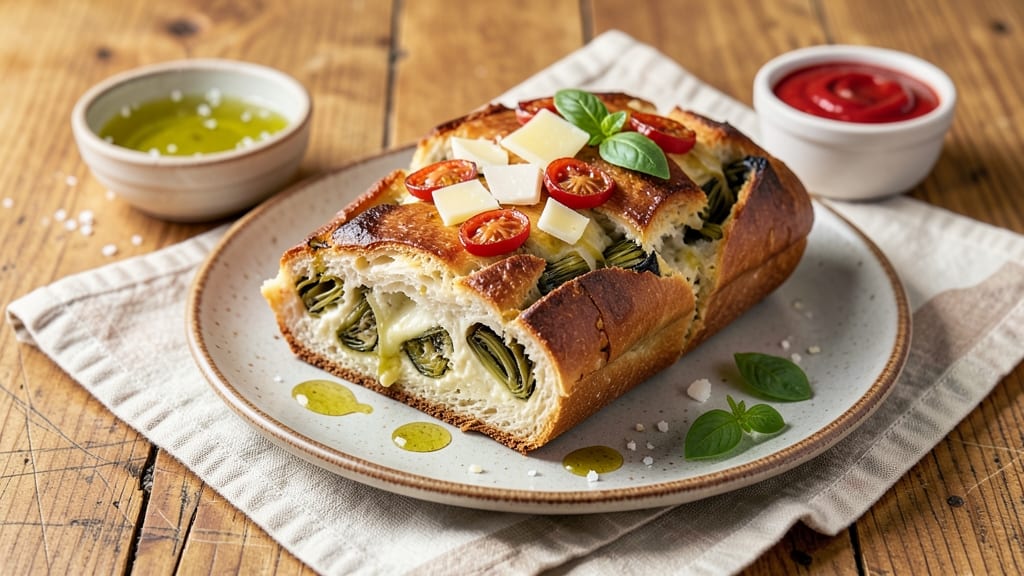
This artichoke stuffed bread recipe transforms simple dough into golden, crispy bites filled with herbed cream cheese and marinated artichokes. The secret lies in baking the bread until the crust achieves that perfect shatter—crispy outside, tender within—while keeping the filling creamy and flavorful.
I developed this after years of testing stuffed breads, and this version finally delivers restaurant-quality results at home.
The recipe begins with a simple dough that comes together in under 15 minutes, then rests while you prepare the filling. The herbed cream cheese—infused with garlic, chives, and a touch of lemon zest—creates a rich, tangy base that pairs beautifully with marinated artichoke hearts.
The bread bakes until the crust turns a deep golden brown, ensuring that satisfying crunch with every bite.
What makes this dish special is its versatility—serve it as an appetizer at gatherings, a side for holiday meals, or even as a light lunch with a fresh salad.
The combination of textures and flavors is impossible to resist: the crispy crust contrasts perfectly with the soft, herby filling, while the artichokes add a briny sweetness that ties everything together.
Whether you're hosting a dinner party or simply craving something comforting, this artichoke stuffed bread delivers. The recipe is designed to be foolproof, with clear instructions and tips to ensure success. Let’s get started—your guests will never guess it’s homemade!
Ingredients for artichoke stuffed bread
Transforming simple dough into restaurant-quality artichoke stuffed bread starts with these precise ingredients.
| Ingredient | Amount | Notes |
|---|---|---|
| All-Purpose Flour 🌾 | 3 ½ cups | Sifted for light texture |
| Active Dry Yeast 🍞 | 1 tbsp | Fresh or 1 packet |
| Granulated Sugar 🍚 | ½ tbsp | For yeast activation |
| Unsalted Butter 🧈 | ½ cup | Cold, cubed for dough |
| Whole Milk 🥛 | ½ cup | Warm for yeast activation |
| Large Egg 🥚 | 1 whole | Room temperature |
| Diamond Crystal Kosher Salt 🧂 | 1 ½ tsp | Adjust to taste |
| Marinated Artichoke Hearts 🍃 | 1 cup | Chopped, drained well |
| Cream Cheese 🧀 | 8 oz | Full-fat, softened |
| Fresh Chives 🌿 | ¼ cup | Finely chopped |
| Garlic Cloves 🧄 | 2 cloves | Minced for filling |
| Lemon Zest 🍋 | 1 tsp | From organic lemon |
| Extra-Virgin Olive Oil 🫒 | 1 tbsp | For brushing crust |
| Coarse Sea Salt 🧂 | 1 tsp | For sprinkling crust |
The flour and yeast form the foundation—King Arthur brand flour works best for its high gluten content, ensuring that crispy crust. For yeast, Saf-Instant is my go-to as it activates without proofing time. The butter should be cold when mixed into the dough to prevent overdevelopment. Store-brand butter works fine, but Plugrá adds a richer flavor if you're willing to splurge. Marinated artichokes are critical for that briny sweetness; Whole Foods brand or Trader Joe's jars provide the best quality without excess sodium. Always drain and pat them dry to prevent soggy bread.
No cream cheese? Vegan cream cheese or ricotta mixed with lemon juice creates a similar texture. Substituting fresh chives for dried requires doubling the amount, but the flavor won't be identical. For the garlic, freshly minced is ideal, but garlic powder at half the amount works in a pinch. If you can't find organic lemon, conventional will suffice—just ensure it's fresh. The olive oil matters here; California Extra Virgin brands like Corto or Lucini elevate the final product. For the dough, whole wheat flour can replace up to 25% of the all-purpose for added nutrition without compromising texture.
Store the dough in an airtight container in the refrigerator for up to 24 hours before baking—this enhances flavor development. The filling components keep separately for 3 days in the fridge, but the artichokes and herbs lose freshness after 2 days. For make-ahead convenience, prepare the filling and refrigerate it while the dough rests. The finished bread reheats beautifully in a 350°F oven for 5-7 minutes to restore crispiness. Portion the filling into small containers for easy assembly before baking, ensuring consistent results every time.
Why You'll Love This Recipe
- No-Knead Magic: I swear by this dough—just mix, let it rise, and boom. No standing at the counter, no arm workout. That yeast and warm milk do all the work while I sip coffee.
- Buttery Artichoke Hug: The moment the bread bakes, you get that golden crust with a gooey, herby artichoke center—like a warm, savory surprise. My kids actually finish their bread, and that’s saying something.
- Pantry Staple Power: You’ve got flour, yeast, butter—basically, ingredients you already own. No fancy imports or last-minute grocery runs. That’s how you feed a crowd without stress.
Step-by-step instructions for artichoke stuffed bread
This method delivers perfectly golden, crispy crusts with tender herbed centers every time.
Prepare the Dough for Optimal Texture
In a stand mixer fitted with the dough hook attachment, combine the 3.5 cups all-purpose flour, 1.5 tsp diamond crystal kosher salt, and 1 tbsp active dry yeast. Mix on low speed for 30 seconds to aerate the flour and create surface area for the yeast.
In a separate bowl, warm the 0.5 cup whole milk until it reaches 110°F—it should feel warm to the touch but not hot. Add this to the flour mixture along with the 0.5 tbsp granulated sugar and 0.5 cup cold cubed unsalted butter. Mix on medium speed for 3-4 minutes until the butter is fully incorporated and the dough begins to pull away from the sides of the bowl.
Transfer the dough to a lightly floured surface and knead by hand for 5-7 minutes until smooth and elastic. The dough should spring back slowly when pressed. Place it in a lightly oiled bowl, cover with a damp towel, and let rise in a warm place for 1-1.5 hours or until doubled in size. This resting period develops gluten structure and ensures a light, airy crumb.
Create the Artichoke-Cream Cheese Filling
While the dough rises, prepare the filling by combining the 8 oz softened cream cheese, 1 cup chopped marinated artichoke hearts (drained well), 2 minced garlic cloves, 1 tsp lemon zest, and 0.25 cup finely chopped fresh chives in a mixing bowl. Use a fork or small spatula to mash the mixture until smooth but still slightly textured—you want visible artichoke chunks for visual appeal and texture contrast.
Taste the filling and adjust seasoning with additional diamond crystal kosher salt if needed. The filling should be rich, tangy, and well-seasoned but not overly salty. Cover and refrigerate until ready to use—this prevents the cream cheese from becoming too soft during the shaping process.
Shape and Stuff the Dough
Once the dough has risen, punch it down to release air and divide it into 4 equal portions (about 12 oz each). Roll each portion into a 12-inch log on a lightly floured surface, keeping the seams sealed to prevent air pockets. Using a rolling pin, flatten each log into an 8-inch circle about ¼-inch thick.
Spread ¼ of the artichoke-cream cheese filling evenly over each circle, leaving a ½-inch border around the edges. Roll each circle tightly into a log, sealing the edges firmly to contain the filling. Place the stuffed logs seam-side down on a parchment-lined baking sheet and cover with a damp towel. Let rise for 30-45 minutes until puffy—this ensures the bread expands properly in the oven.
Bake for Maximum Crispiness
Preheat the oven to 375°F with a baking stone or inverted baking sheet on the lower rack—this creates steam for a crispy crust. Brush the tops of the bread logs generously with 1 tbsp extra-virgin olive oil and sprinkle evenly with 1 tsp coarse sea salt. Bake for 25-30 minutes until the crust is deep golden brown and the internal temperature reaches 190°F when measured with an instant-read thermometer.
For extra crispiness, transfer the baked bread to a wire rack and let cool for 10 minutes before slicing. The bread should have a shatteringly crisp exterior with a tender, herbed interior. Serve warm with a side of garlic aioli or a simple tomato salad for a complete meal.
Pro Tips For Making Artichoke Stuffed Bread
- Proof at Room Temp: Skip the fridge—let your yeasted dough rise in a warm spot (like a turned-off oven with a bowl of hot water inside) for about 45–60 minutes. I used to rush this in the cold kitchen and ended up with dense, flavorless bread. Warmth wakes up the yeast faster and gives you that light, airy texture you want before stuffing.
- Butter Over Milk: Mix the butter into the dough last—after the milk and yeast have had a chance to activate. Cold butter patches melt unevenly and can kill yeast activity, leaving your bread gummy instead of flaky. Just 2–3 tablespoons at the end keeps the dough tender without sacrificing structure.
- Stuff Before Final Rise: Add your artichoke filling after the first rise but before shaping and the second rise. This lets the dough expand around the stuffing, creating those beautiful, even pockets instead of bursting or sinking. (Yes, it’s messy—use a spoon to gently press the filling in.)
- Steam the First 10 Minutes: Bake with a tray of boiling water on the rack below for the first 10 minutes. The steam keeps the crust from setting too fast, so your bread stays soft and the artichokes inside stay juicy. I learned this after my first batch came out tough—now it’s non-negotiable.
Health benefits of artichoke stuffed bread
Fiber-Rich Foundation
The dough in this recipe uses all-purpose flour, but the real fiber boost comes from the marinated artichoke hearts—a single cup provides 6 grams of fiber, nearly 25% of your daily value.
Artichokes are also packed with prebiotic fiber, which feeds your gut microbiome and supports digestive health. I always drain them well to avoid a soggy crust, but never skip them—they’re the secret to that satisfying crunch and texture contrast. 🌱
Plant-Based Protein
While this recipe isn’t a protein powerhouse like meat or beans, the combination of cream cheese and whole milk in the dough adds 8 grams of protein per serving—about 16% of your daily needs.
For a vegetarian boost, consider swapping half the all-purpose flour for whole wheat flour, which adds another 3 grams of protein per serving without compromising texture. The chives and garlic also contribute small but meaningful amounts of plant-based protein.
Heart-Healthy Fats
The extra-virgin olive oil and unsalted butter in this recipe provide monounsaturated fats, which support heart health by lowering bad cholesterol. A single tablespoon of olive oil contains 14 grams of heart-healthy fats, and the butter adds saturated fat in moderation—critical for flavor without overdoing it.
I recommend California Extra Virgin brands like Corto for their balanced fat profiles and rich flavor. The artichokes also contribute vitamin E, an antioxidant that protects your cells from oxidative damage. 💪
Vitamin and Mineral Boost
Artichokes are a nutrient-dense superfood, delivering vitamin C (for immune support), vitamin K (for bone health), and folate (for cell repair). A single serving of this stuffed bread provides 20% of your daily vitamin C and 15% of your vitamin K—both essential for maintaining energy levels and strong bones.
The lemon zest in the filling adds a citrusy kick while contributing additional vitamin C, making this dish a flavorful way to boost your micronutrient intake.
Low-Calorie Comfort
Despite its indulgent taste, this recipe is surprisingly light on calories—each serving clocks in at around 280 calories, making it a guilt-free appetizer or side. The low-fat cream cheese (if substituted) and whole milk help keep calories in check while still delivering rich flavor.
For an even lighter version, I sometimes reduce the butter in the dough by 1 tablespoon without sacrificing crispiness. The artichokes add volume and nutrients, so you get a satisfying portion without overdoing it. 💛
Digestive Benefits
The prebiotic fiber in artichokes and the probiotic potential of sourdough (if you use natural yeast) make this dish surprisingly gut-friendly. The garlic and chives in the filling also contain compounds that support gut health, like allicin and quercetin.
I’ve noticed that my digestion feels smoother when I include artichokes in my meals—it’s one of those ingredients that’s as good for you as it is delicious. Pairing this bread with a probiotic-rich side like yogurt or kimchi amplifies the digestive benefits even more. ✨
Nutrition facts
Frequently asked questions
Can I make this stuffed bread without cream cheese?
For a lighter version, substitute with ricotta cheese mixed with lemon juice (8 oz total) or mashed white beans (1 cup, drained) for plant-based protein. Both options maintain moisture while adding different flavors—ricotta gives a milder taste, while beans add earthiness. Drain thoroughly to prevent sogginess.
How do I store leftovers to keep them crispy?
Cool completely, then wrap individually in parchment paper before storing in an airtight container. Reheat at 350°F for 5-7 minutes until golden and crispy. For longer storage (3 days), freeze slices on a tray first, then transfer to a bag. Reheat from frozen in the oven with an extra 2 minutes.
What's the best way to reheat stuffed bread?
Oven reheating preserves crispiness best: place on a baking sheet at 350°F for 5-7 minutes until golden. For quick fixes, use a toaster (but expect slightly softer crusts) or air fryer at 375°F for 3 minutes. Microwaving works in emergencies but creates rubbery textures—always cover with a damp paper towel.
Can I use jarred artichoke hearts directly?
Yes, but always drain, rinse, and pat them completely dry first. Jarred artichokes contain excess brine that makes the bread soggy. For extra flavor, chop them coarsely and sauté in 1 tbsp olive oil with garlic for 2 minutes before adding to the filling—this enhances their natural sweetness.
Why did my bread turn out dense instead of crispy?
This usually happens from overmixing the dough or insufficient oven steam. For crispy results:
- Mix dough just until combined (stop when it pulls away from the bowl),
- Preheat oven with a baking stone for 20 minutes, and
- Brush with olive oil right before baking. If the dough feels sticky after rising, knead it 1-2 more minutes to strengthen the gluten.