
Side Dishes
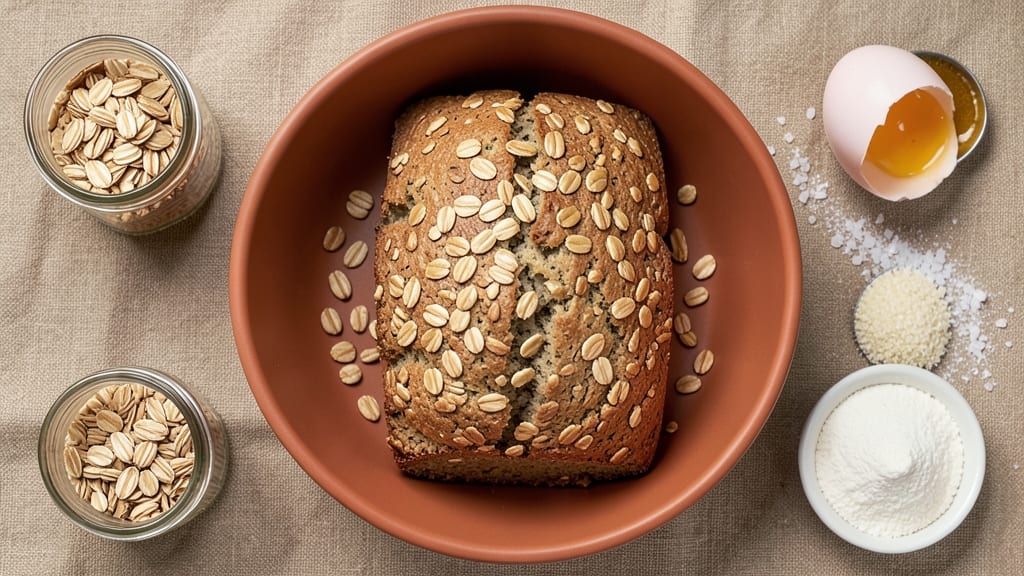
Alton Brown's oat bread delivers that perfect balance of golden crust and nutty depth in a single rise—no complicated techniques required. This recipe transforms simple pantry staples into a loaf with a crisp exterior and tender crumb, thanks to Alton's signature approach to yeast handling and dough development.
The secret lies in proper hydration and a methodical mixing process that ensures even gluten formation without overworking the dough.
What sets this bread apart is its foolproof one-rise method, eliminating the need for multiple proofing stages. Alton's technique focuses on precise temperature control and careful ingredient ratios to create a loaf with excellent oven spring and a satisfying crunch.
The rolled oats add subtle texture and nuttiness, while the yeast works its magic during the single, extended rise—resulting in a bread that's both rustic and refined.
By the time you pull it from the oven, you'll have a loaf with a deep golden crust that crackles when sliced and a soft, airy interior with just the right amount of chew.
The aroma alone will transform your kitchen into a bakery, and each slice—whether toasted with butter or served fresh—will showcase that perfect balance of texture and flavor. This is bread that feels special without requiring advanced skills.
Perfect for breakfast toast, sandwiches, or serving alongside soups, this oat bread proves that homemade loaves can be both restaurant-quality and achievable. The recipe scales easily, so you can bake one loaf for daily enjoyment or two for sharing. Let's get started on mastering this classic with a modern twist.
Ingredients for alton brown oat bread
Pantry staples meet Alton Brown's genius for golden crust and nutty perfection in one rise.
| Ingredient | Amount | Notes |
|---|---|---|
| All-Purpose Flour 🌾 | 4 cups | Spooned and leveled for accuracy |
| Rolled Oats 🥣 | 1 cup | Old-fashioned, not quick oats |
| Active Dry Yeast 🍞 | 2 ¼ tsp | Freshly opened package |
| Granulated Sugar 🍚 | 1 ½ tbsp | White sugar preferred |
| Salt 🧂 | 1 ½ tsp | Diamond Crystal kosher salt |
| Large Eggs 🥚 | 2 whole | Room temperature for even mixing |
| Unsalted Butter 🧈 | ½ cup | Cold, cubed for easier mixing |
| Warm Water 💧 | 1 ½ cups | 110°F for optimal yeast activation |
| Whole Milk 🥛 | ½ cup | Room temperature for best dough texture |
| Honey 🍯 | 2 tbsp | Wildflower preferred for depth |
| Cornmeal 🌽 | ¼ cup | For dusting baking sheet |
The yeast is non-negotiable here—Bob's Red Mill or Saf-Instant are my go-tos, but any active dry yeast works if it's fresh (check expiration dates). Rolled oats should be old-fashioned—quick oats won't give that satisfying crunch. For the butter, Land O'Lakes unsalted is reliable, but European-style cultured butter adds extra depth if you're feeling fancy. The milk and water temps matter: 110°F water activates yeast perfectly, while room-temp milk ensures even hydration without shocking the dough. Pro tip: measure your flour by spooning it into the cup and leveling—don't scoop or you'll end up with a dense loaf.
No rolled oats? Blend whole wheat oats until finely ground—they'll work in a pinch, though texture will differ slightly. Short on honey? Maple syrup at double the amount gives similar moisture and sweetness. The eggs can be separated if you're making an egg wash later (save the yolks for brushing). For a dairy-free version, unsweetened almond milk replaces whole milk, and vegan butter works for the fat. If your yeast isn't fresh, proof it first in warm water with a pinch of sugar to ensure it's active before committing to the dough.
This dough keeps beautifully—cover tightly and refrigerate for up to 3 days, or freeze portions for 3 months. For the best results, let it come to room temp before shaping. The cornmeal on your baking sheet prevents sticking, but don't skip the egg wash—1 egg yolk beaten with 1 tbsp water gives that signature golden sheen. Leftovers? Toast them within 2 days for maximum freshness—after that, they're perfect for croutons or bread pudding.
Why You'll Love This Recipe
- No-Knead Magic: I swear by this recipe because the dough is actually foolproof—just mix, let it rise, and bake. No standing at the counter, no overworking the gluten, just hands-off perfection that still feels like you put in effort.
- Toasty Crunch Factor: That rolled oats crust? It’s the star. Every bite has this irresistible crunch that gives way to a soft, pillowy center—like a hug for your taste buds. (Yes, I’ve been known to eat it straight from the pan.)
- Breakfast to Brunch: Between us, this bread is my lazy weekend hero. Toast it for breakfast, serve it with jam for brunch, or even tear it into croutons for salads. The rolled oats keep it interesting no matter how you slice it—literally.
- Budget-Friendly Staple: Five ingredients, one loaf, and it’ll last a week if you’re smart. I freeze slices for toast emergencies, and the yeast stretch goes a long way. Honestly, it’s the kind of recipe that makes grocery day feel like a win.
Step-by-step instructions for Alton Brown's oat bread
This method delivers a perfectly golden crust with nutty depth—all in one rise. Follow these steps carefully for the best results.
Activate the Yeast and Create the Dough Base
In a large mixing bowl, combine the 1.5 cups warm water (about 110°F), 2.25 tsp active dry yeast, 1.5 tbsp granulated sugar, and 2 tbsp honey. Let this sit for 5-10 minutes until the mixture becomes frothy and bubbly—this confirms the yeast is alive and ready to work. If it doesn't bubble, your yeast may be inactive, and you'll need to start over.
Once bubbly, add the 4 cups all-purpose flour and 1.5 tsp salt to the bowl. Using a wooden spoon or dough whisk, stir until a shaggy dough forms. The mixture will look rough, but that's normal at this stage. This is where the gluten begins to develop, so don't worry if it doesn't come together immediately.
Incorporate Wet Ingredients and Knead the Dough
Add the 2 whole large eggs, 0.5 cup whole milk, and 0.5 cup cold cubed unsalted butter to the bowl. Using your hands or a stand mixer with a dough hook, knead the dough for 5-7 minutes until it becomes smooth and elastic. You'll know it's ready when it passes the "windowpane test"—stretch a small piece of dough thin enough to see light through it without tearing.
If the dough feels too sticky, gradually add small amounts of the 1 cup rolled oats while kneading. The oats will absorb excess moisture and add texture. Once the dough is smooth and springs back when poked, transfer it to a lightly oiled bowl, cover with a damp towel, and let it rise in a warm place for 1 hour or until doubled in size. This single rise is key to achieving that perfect texture and flavor.
Shape and Proof the Dough for Optimal Rise
After the dough has risen, punch it down gently to release any air bubbles. On a lightly floured surface, shape the dough into a loaf by folding the edges toward the center and rolling it tightly. Place the shaped loaf seam-side down in a 9x5-inch loaf pan that has been lightly greased or dusted with 0.25 cup cornmeal to prevent sticking. Cover the pan with the damp towel and let the dough proof for another 30-45 minutes until it rises about 1 inch above the pan.
Here's the thing—don't overproof the dough. If it rises too much, it may collapse during baking. You want just enough lift to give you that beautiful, airy crumb. Preheat your oven to 375°F while the dough proofs. The residual heat will help the bread bake evenly and achieve that golden crust we're after.
Bake to a Golden Perfection
Once the dough has proofed, bake the loaf in the preheated oven for 30-35 minutes until the top is deep golden brown and an instant-read thermometer inserted into the center reads 190-200°F. The bread should sound hollow when tapped on the bottom, indicating it's fully baked. If the top browns too quickly, tent the loaf with aluminum foil to prevent over-browning while it finishes baking.
Real talk: This is the moment that matters. The bread will continue to rise slightly as it bakes, so don't open the oven door early. Patience here ensures a crust that's crispy on the outside and tender on the inside. Let the bread cool in the pan for 10 minutes before transferring it to a wire rack to cool completely. This resting period allows the steam inside the bread to redistribute, resulting in a lighter, more even texture.
Slice and Serve for Maximum Enjoyment
Once the bread has cooled for at least 30 minutes, slice it with a serrated knife for clean cuts. The interior should be soft and slightly chewy, with a hint of nuttiness from the rolled oats. Serve it warm with butter, jam, or as part of a charcuterie board. The flavor will continue to develop over the next few days, making it even more delicious as it sits.
This recipe makes 4 servings, and the leftovers keep well at room temperature for 2-3 days or can be frozen for up to 3 months. Store it in an airtight container to maintain freshness. Enjoy every bite of this homemade masterpiece—it's worth the effort!
Pro Tips For Making Alton Brown Oat Bread
- TOAST THE OATS: Brown the rolled oats in a dry pan for 5–7 minutes until they smell toasty—this deepens their flavor and prevents a raw, oaty aftertaste in the bread. (Yes, it’s an extra step, but your sandwich toast will taste like it came from a bakery.)
- WEIGH THE FLOUR: Ditch the cups and use a kitchen scale for the all-purpose flour and oats—250g each. Packing cups leads to dense bread, and this recipe needs that airy crumb. (I learned this after making a brick the first time.)
- DON’T SKIP THE HYDRATION CHECK: The dough should feel like a soft, slightly sticky Play-Doh—press your finger in and it should spring back slowly. If it’s dry, add 1 tablespoon warm water at a time. (Over-kneading or under-hydrating ruins the texture.)
- BAKE WITH STEAM: Boil a kettle and pour ½ cup hot water into the Dutch oven after adding the dough. The steam guarantees a crisp crust and prevents a gummy top. (Trust me, your bread will look like it’s from a sourdough shop.)
Flavor customization for alton brown oat bread
Sweet Variations
Add ¼ cup raisins or chopped dates to the dough during kneading for a subtle sweetness that pairs beautifully with the oats. I like to soak them in warm water for 10 minutes first to plump them up.
For extra richness, swap 1 tbsp honey with 1 tbsp maple syrup—it deepens the caramel notes in the crust. 🍯
Spiced Twist
Infuse the dough with warmth by adding 1 tsp cinnamon and ½ tsp cardamom to the dry ingredients. The spices complement the nuttiness of the oats and add a cozy aroma.
For a bold kick, sprinkle ½ tsp smoked paprika over the loaf before baking—it gives the crust a subtle smokiness that’s irresistible. 🌶️
Herb-Enhanced Bread
Brighten the flavor profile with 2 tbsp fresh rosemary or thyme, finely chopped, mixed into the dough. The herbs add an earthy contrast to the sweetness of the honey and oats.
For a Mediterranean touch, add 1 tbsp dried oregano along with the salt—it’s a game-changer for pairing with grilled meats or olive oil dips. ✨
Seeded Crunch
Boost texture and nutrition by stirring ¼ cup sunflower seeds or pumpkin seeds into the dough during the final kneading stage. The seeds add a satisfying crunch and a nutty depth that echoes the oats.
For extra richness, toast the seeds in a dry pan for 2-3 minutes before adding them to the dough—this enhances their flavor significantly. 🌰
Dairy-Free Adaptation
Replace the whole milk with ½ cup unsweetened almond milk and use vegan butter for the fat. The dough will still rise beautifully, though it may require 1-2 extra minutes of kneading to achieve the same elasticity.
To compensate for the lack of dairy richness, add 1 tbsp nutritional yeast—it adds a cheesy depth that balances the oats perfectly. 🥛
Extra-Nutty Boost
For a more pronounced nutty flavor, replace ½ cup of the all-purpose flour with ½ cup finely ground walnuts or pecans. The nuts add a luxurious texture and a deeper, toastier taste.
If using whole nuts, pulse them in a food processor until finely ground—this ensures even distribution in the dough. 🌰
Nutrition facts
Frequently asked questions
Why does Alton Brown's oat bread use a single rise instead of multiple proofings?
Alton's method simplifies the process while achieving perfect texture through precise temperature control and ingredient ratios. The single 1-hour rise allows the yeast to develop flavor without overproofing, while the 30-45 minute final proof creates that signature oven spring. This approach eliminates guesswork for home bakers.
Can I substitute quick oats for rolled oats in this recipe?
Not recommended—they won't provide the same chewy texture or nutty depth. If you're out of rolled oats, blend whole wheat oats until finely ground, but expect a slightly denser crumb. The recipe relies on old-fashioned oats for their unique texture and flavor contribution.
How do I know when the dough is properly kneaded?
Test it with the "windowpane" method: stretch a small piece of dough until it's thin enough to see light through without tearing. The dough should be smooth, elastic, and spring back when poked. If it sticks to your fingers or tears easily, knead for another 2-3 minutes.
Why did my bread collapse after baking?
This usually happens from overproofing or opening the oven door too early. The dough should rise just 1 inch above the pan before baking, not double in size. Also, avoid peeking—the sudden temperature drop can cause collapse. Let it bake undisturbed until internal temp reaches 190-200°F.
Can I make this bread without a stand mixer?
Use your hands or a wooden spoon for mixing, then knead vigorously for 8-10 minutes on a lightly floured surface. The key is consistent pressure—press down hard and fold the dough over itself to develop gluten. A dough scraper helps prevent sticking during hand-kneading.