
Side Dishes
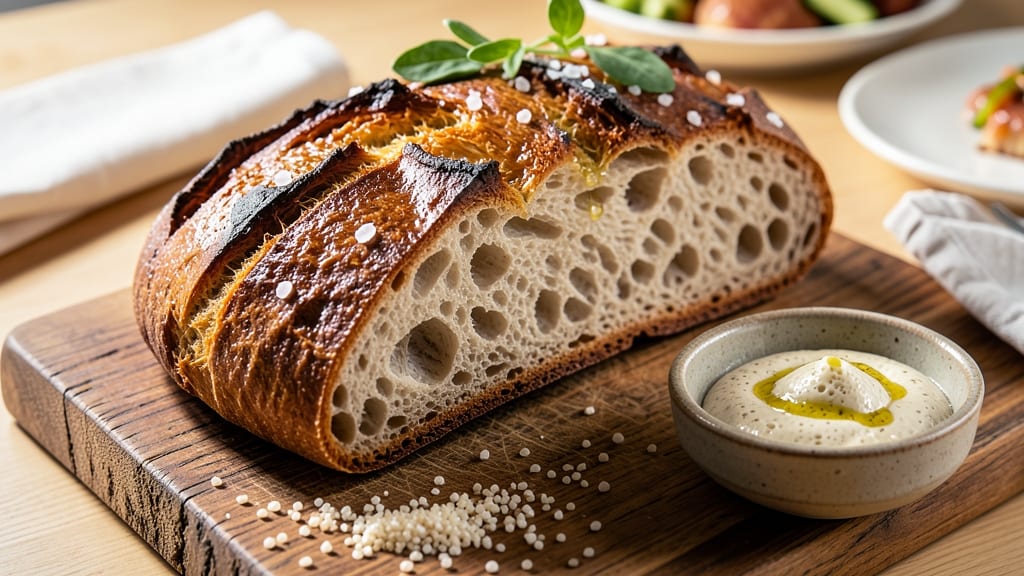
This Altamura sourdough bread recipe brings the protected Italian tradition of Puglia's famous wheat semolina loaves to your kitchen. 🌟 The key lies in its slow fermentation and semolina crust, creating a crumb so tender it melts in your mouth while the exterior develops a golden, crackly exterior.
Unlike standard sourdough, Altamura's unique texture comes from its high-protein wheat semolina, which gives it both structure and that signature chew.
Creating the authentic version requires patience—starting with a natural sourdough starter that develops over days, then blending semolina and bread flour for the perfect balance of texture.
The shaping technique is crucial: tight rolls rather than open loaves, baked in a hot oven (or wood-fired alternative) to achieve that crispy crust while keeping the interior light and airy. This isn't just bread; it's a culinary experience that transports you to southern Italy with every bite.
The result is a loaf with deep tangy notes from the sourdough, a crisp yet tender crust, and a crumb so delicate it crumbles like clouds.
Perfect for charcuterie boards, sandwiches, or simply enjoyed with olive oil and salt, this bread carries EU PDO protection for a reason—it's a masterpiece of Italian craftsmanship. Let's get started on creating your own.
What sets Altamura apart is its semolina crust, which develops a golden, crackly exterior while protecting the soft, open crumb inside. The slow fermentation (24-48 hours) ensures maximum flavor development, while the high-protein flour blend gives it that unmistakable texture.
Whether you're baking for tradition or taste, this recipe delivers restaurant-quality results at home.
Ingredients for altamura sourdough bread
Nine essential ingredients for Italy's protected semolina sourdough tradition—where patience meets craftsmanship.
| Ingredient | Amount | Notes |
|---|---|---|
| Natural Sourdough Starter 🍞 | ½ cup | Active, bubbly starter (100% hydration) |
| Type 00 Bread Flour 🌾 | 2 ½ cups | High-protein for structure (12.5% protein) |
| Semolina Flour 🌾 | 1 cup | Fine-grind for crust texture (EU PDO preferred) |
| Water 💧 | 1 ½ cups | Lukewarm, filtered for best results |
| Kosher Salt 🧂 | 1 ½ tsp | Diamond Crystal preferred (no aluminum) |
| Extra-Virgin Olive Oil 🫒 | 1 tbsp | Fruity variety for richness (Italian preferred) |
| Instant Yeast 🍄 | ¼ tsp | Optional for faster rise (not traditional) |
| Semolina Flour (for dusting) 🌾 | ¼ cup | Extra-fine for shaping (EU PDO preferred) |
| Coarse Sea Salt 🧂 | 1 tsp | For final crust scoring (Maldon preferred) |
The sourdough starter is non-negotiable—this is what gives Altamura its signature tang. King Arthur or Biga starter work well, but for authenticity, cultivate your own using Type 00 flour and water over 5-7 days. The semolina flour must be fine-grind (coarse won't work)—Barilla or Mulino Bianco are reliable brands. Type 00 bread flour is crucial for that open crumb; Caputo or Pillsbury are top choices. If you can't find EU PDO semolina, Italian brands at specialty stores like Eataly or Whole Foods will deliver the closest result. The olive oil should have fruity notes—avoid the cheap supermarket varieties.
No sourdough starter? Instant yeast plus extra fermentation time can mimic some of the flavor, but true Altamura relies on that wild fermentation. Swap semolina for fine cornmeal in a pinch, though texture will differ. Diamond Crystal kosher salt is ideal—Morton contains anti-caking agents that can alter flavor. For the olive oil, any extra-virgin works, but Italian varieties like Colavita or Filippo Berio elevate the dish. The coarse sea salt for scoring should be flaky like Maldon—it dissolves beautifully into the crust. If you're short on time, pre-ferment the dough overnight in the fridge to develop more flavor.
The starter keeps indefinitely in the fridge—feed weekly with equal parts flour and water. Semolina flour stores 6 months in a cool, dark place, while bread flour lasts 3 months once opened. Shape the dough 24 hours before baking for maximum flavor development. The finished loaves freeze beautifully—wrap tightly in plastic and toast directly from frozen for best results. For that wood-fired crust, preheat your oven to 475°F with a baking stone and steam the oven for 10 minutes before baking.
Why You'll Love This Recipe
- I’ll be real: my sourdough starter was weak at first, but this recipe is forgiving. Type 00 flour is affordable, and you only need a handful of ingredients. Plus, one loaf lasts my family five days—no sad, stale bread here. The semolina adds that extra crunch without breaking the bank.
- No-Knead Magic: I’ll admit, I was skeptical about no-knead bread—but the Altamura method? It’s actually hands-off. Just mix your sourdough starter with Type 00 flour, let it rise overnight, and shape it into a loaf. No standing at the counter, no overworking the dough. That semolina crust? Forms itself while you sleep.
- Crust So Good: Honestly, the moment I pulled this bread from the oven, I nearly burned my fingers. That crispy, golden semolina shell cracks open like a perfect pizza crust, but the inside? Still soft and pillowy. It’s the kind of bread that makes you pause mid-bite—because it’s that good.
- Weeknight Workhorse: Between us, this bread is my secret weapon for lazy nights. Toss it in the oven while you prep dinner, and suddenly you’ve got dinner rolls, garlic bread, or even a quick bruschetta base. Freezes like a dream too—just reheat slices for toast the next morning.
Step-by-step instructions for authentic Altamura sourdough bread
Here's how to capture that legendary Italian crust with a perfect balance of tang and chew.
👨🍳 Step 1: Mix the Dough with Precision
In a large mixing bowl, combine the 0.5 cup natural sourdough starter with the 1.5 cups lukewarm water. Let this sit for 5 minutes while you measure out the 2.5 cups Type 00 bread flour and 1 cup semolina flour in a separate bowl. The starter should look lively with visible bubbles—this is your sign it's ready to work.
Create a well in the dry ingredients and pour in the activated starter mixture. Add the 1.5 tsp kosher salt and 1 tbsp extra-virgin olive oil, then gently fold with a wooden spoon until just combined. The dough will look shaggy at first—that's perfect. For a slightly faster rise, add the 0.25 tsp instant yeast now, but if you're going traditional, skip it and rely solely on your starter's power.
🥘 Step 2: Develop the Gluten Through Kneading
Turn the dough onto a lightly floured surface and knead for 8-10 minutes by hand, or use a stand mixer with a dough hook for 5-6 minutes on medium speed. You're looking for smooth, elastic dough that springs back slowly when poked. The semolina flour gives it that signature crumb structure, while the Type 00 creates the tender interior Altamura bread is famous for.
Here's the thing—don't over-knead. The dough should feel like well-developed dough, not tough or leathery. If it's sticky, add just enough semolina flour to make it manageable, but don't overdo it. The right texture is slightly tacky but pliable. Once kneaded, shape into a loose ball and let it rest uncovered at room temperature for 30 minutes—this relaxation step prevents gluten from tightening up during shaping.
⏰ Step 3: Shape and Bulk Ferment for Depth
After the rest, divide the dough into 4 equal pieces (about 12 oz each) and shape into tight rounds. To shape, cup your hand over each piece, press gently to form a dome, then roll it under your palm to create surface tension. Dust your work surface with the 0.25 cup semolina flour (for dusting) to prevent sticking as you shape.
Place the shaped dough pieces in a lightly oiled bowl, seam-side up, and cover with a damp towel. Let them bulk ferment at room temperature for 4-6 hours until they've nearly doubled in size. You'll know they're ready when they look puffy and jiggly—give one a gentle shake to test. The semolina flour dusting creates that signature matte finish while preventing sticking during fermentation.
🔥 Step 4: Proof and Bake for Crispy Crust
Preheat your oven to 450°F with a baking stone or steel inside for 1 hour. While it heats, transfer each dough piece to a parchment-lined baking sheet. Score the top of each loaf with a sharp razor in a crosshatch pattern using the 1 tsp coarse sea salt, pressing down gently to create a ¼-inch deep cut. This helps control expansion and gives that beautiful cracked crust.
Bake for 20-25 minutes until the crust is a deep golden brown with crispy edges. The interior should register 205-210°F on an instant-read thermometer. Here's where the semolina flour really shines—it creates that signature crispy exterior while maintaining a tender crumb. Let the bread cool on a wire rack for at least 1 hour before slicing to preserve that perfect texture.
Pro Tips For Making Altamura Sourdough Bread
- Weigh Your Semolina: Altamura’s signature crunch comes from the semolina, but eyeballing it leads to uneven texture. Use a scale—30-40 grams per loaf—sprinkled evenly over the dough ball before baking. I learned this the hard way when my first batch had a powdery mess on one side and none on the other.
- Autolyse First: Mix the Type 00 flour and water alone for 30-60 minutes before adding starter or salt. This relaxes the gluten, making the dough easier to handle later—especially when you’re fighting sticky sourdough. Sounds counterintuitive, but it’s the thing that matters most for a smooth, open crumb.
- Skip the Overproof: Altamura dough is dense, not airy, so resist the urge to let it rise until it’s too puffy. Test with the poke method: press gently—if the dough springs back slowly (not fast), it’s ready. Overproofing turns your crusty loaf into a dense brick. (Yes, even if you’re impatient like me.)
- Steam the Oven: Place a metal tray on the bottom rack, fill it with boiling water, then bake. The steam mimics a wood-fired oven and guarantees that crispy, blistered crust you crave. I was skeptical until I tried it—now it’s non-negotiable for Altamura’s texture.
Regional styles of this dish
Puglia’s Protected Tradition
Altamura sourdough holds EU PDO status, meaning it must be made in Puglia using 100% durum wheat semolina and traditional methods. The city of Altamura has perfected this craft for centuries, and the bread’s crispy crust with cloud-like crumb is unmistakable.
Local bakeries shape the dough into tight rolls rather than open loaves, creating that signature matte, crackly exterior that shatters like glass. 🌟
Southern Italian Adaptations
In nearby regions like Calabria, bakers sometimes replace 10% of the semolina with cornmeal for a subtly sweeter flavor, though purists argue this alters the texture. For a spiced variation, add ½ tsp fennel seeds to the dough—common in Sicily—for a licorice note that pairs beautifully with cured meats.
The slow fermentation (24-48 hours) is non-negotiable; it’s what develops the bread’s complex tang.
Wood-Fired vs. Home Oven
Traditional Altamura bread is baked in wood-fired brick ovens at 800°F+, creating a deep caramelization in seconds. At home, replicate this by preheating your oven to 475°F with a baking stone and steaming it for 10 minutes before baking.
For extra crispiness, bake on the lower rack and rotate pans halfway through. The semolina crust needs that intense heat to develop its signature golden cracks.
Modern Shortcuts
Short on time? Use instant yeast (¼ tsp) instead of relying solely on the starter, but extend bulk fermentation to 8-12 hours in the fridge for deeper flavor. Swap semolina for fine cornmeal if needed, though texture will be slightly denser.
For a no-knead version, mix all ingredients, let rest 1 hour, then shape—though the crumb won’t be as open. The key is still high heat and steam during baking.
Regional Serving Styles
In Puglia, Altamura is served warm with olive oil and flaky salt at breakfast, or as panini with prosciutto and pecorino for lunch. For a rustic twist, toast slices and top with tomato concassé, basil, and burrata—the crisp crust holds up perfectly.
The bread’s neutral flavor makes it ideal for soaking up sauces, from pesto to balsamic reductions. 🥖
Nutrition facts
Frequently asked questions
Why does Altamura sourdough use semolina instead of regular flour?
The semolina gives this bread its signature crispy crust and tender crumb. The coarse texture of semolina creates a beautiful crackly exterior while the high protein content (from durum wheat) develops that signature chew. It's what makes Altamura's texture so unique—unlike standard sourdough which uses all-purpose or bread flour.
Can I make Altamura bread without a sourdough starter?
You can try using instant yeast (¼ tsp) instead, but the flavor won't be authentic. For best results, cultivate a starter using Type 00 flour and water over 5-7 days. The wild fermentation from a proper starter creates that complex tang that's essential to Altamura's character. If you're short on time, extend the cold proof to 12-24 hours to develop more flavor.
How do I get that perfect crispy crust like the Italian version?
Preheat your oven to 475°F with a baking stone for 1 hour and create steam by placing a tray of boiling water below the stone. The semolina crust needs intense heat to develop its signature golden cracks. Bake on the lower rack and rotate pans halfway through for even browning. For extra crispiness, brush the baked loaves with olive oil while still hot.
Why does my Altamura bread come out dense instead of light?
This usually happens from either over-kneading (which develops too much gluten) or underproofing (not enough fermentation time). Try kneading just until the dough is smooth (about 8-10 minutes by hand) and let it ferment until it's 50-75% larger before baking. The semolina flour needs proper hydration—make sure your dough feels slightly tacky but not sticky.
How long should I store Altamura sourdough?
At room temperature, it stays fresh for 3-4 days in an airtight container. For longer storage, freeze the cooled loaves wrapped tightly in plastic—they'll keep for 3 months. Toast directly from frozen for best results. The semolina crust actually improves slightly after the first day as it dries out, developing more complex flavors over time.