Side Dishes
Transforming the sourdough discard into delicious bread by adding sourdough discard to bread recipe isn’t just eco-friendly—it’s a game-changer for flavor and texture. This recipe turns your leftover starter into a tangy, artisanal loaf with a crisp crust and airy crumb, all while reducing waste.
The discard’s natural acidity enhances the bread’s depth, creating a profile that’s impossible to achieve with commercial yeast alone.
What sets this recipe apart is the balance of hydration and fermentation time, which ensures a light yet sturdy loaf. Whether you’re a seasoned baker or new to sourdough, the process is straightforward—no kneading required—and yields a bread that’s perfect for toast, sandwiches, or simply enjoying with butter.
The key lies in the discard’s maturity and the slow rise, which develops complex flavors without overproofing risks.
By the time it emerges from the oven, you’ll have a loaf with a golden crust and an open, airy crumb that’s slightly tangy and deeply satisfying. The discard’s unique properties also make this bread ideal for variations—add seeds, whole grains, or herbs to customize it to your taste.
Store it at room temperature for up to 3 days, or freeze for longer shelf life.
This method isn’t just about repurposing discard; it’s about elevating your bread game with minimal effort. Let’s get started on a recipe that’s as rewarding to make as it is delicious to eat.
Ingredients for add sourdough discard to bread
Four cups of flour, one cup of discard—this is all you need for tangy, artisanal bread without the waste.
| Ingredient | Amount | Notes |
|---|---|---|
| Active Sourdough Discard 🍞 | 1 cup | Unfed discard, 7-10 days old |
| All-Purpose Flour 🌾 | 3 ½ cups | White or whole wheat blend |
| Bread Flour 🌾 | 1 ½ cups | For better gluten structure |
| Water 💧 | 1 ½ cups | Room temperature, 75°F |
| Vegan Butter 🧈 | ¼ cup | Melted, unsalted preferred |
| Maple Syrup 🍯 | 1 tbsp | Or agave nectar for sweetness |
| Salt 🧂 | 1 ½ tsp | Fine sea salt preferred |
| Active Dry Yeast 🍞 | ¼ tsp | Optional for extra lift |
| Flaxseed Meal 🌱 | 1 tbsp | Mixed with 3 tbsp water for egg wash |
| Sesame Seeds 🌿 | 1 tbsp | Or poppy seeds for topping |
| Cornmeal 🌽 | 2 tbsp | For dusting loaf pan |
The sourdough discard is the star here, but its maturity matters. Use discard that’s 7-10 days old—it should smell tangy but not rotten. Most discard is stored in the fridge, so pull it out 15 minutes before using to bring it to room temperature. For the flours, King Arthur’s bread flour gives the best structure, but any high-protein flour works. The blend of all-purpose and bread flour creates that perfect balance of chewiness and airiness. If you’re using whole wheat, reduce the all-purpose by 1/4 cup to maintain texture. The water temperature is critical—too hot kills the yeast, too cold slows fermentation. Aim for 75°F (lukewarm).
No sourdough starter? Use a vegan sourdough starter kit from Breadtopia or King Arthur—they’re foolproof. Short on bread flour? All-purpose plus 1 tsp vital wheat gluten mimics the effect. The yeast is optional but helpful if your discard is sluggish—just toss it in with the dry ingredients. For the flaxseed egg wash, Bob’s Red Mill flaxseed meal works best, but ground flaxseeds from the bulk section are fine too. The sesame seeds can be swapped for poppy seeds, nigella, or even everything bagel seasoning—whatever you’re craving. Cornmeal isn’t mandatory, but it adds a nice crunch to the crust.
This dough keeps best in the fridge for 24 hours if you want to let it ferment longer—just bring it back to room temp before shaping. For the loaf pan, lightly grease it with vegan butter and dust with cornmeal to prevent sticking. The bread is best eaten within 3 days for peak freshness, but you can freeze it for up to 3 months. Wrap it tightly in plastic wrap and then foil to prevent drying. To reheat, wrap the cooled loaf in a damp towel and warm in a 300°F oven for 10 minutes—it’ll taste almost as good as fresh.
Why You'll Love This Recipe
- No Waste, All Gain: I keep a jar of sourdough discard in my fridge anyway—this recipe turns it into something golden and crusty without extra shopping. No guilt, no spoilage, just a loaf that smells like a bakery by morning.
- Tangy Twist: That discard brings a subtle, funky depth you won’t get with plain dough. Mix it with bread flour for chew, all-purpose for structure, and a pat of vegan butter for richness—it’s like a hug for your sandwiches.
- Weeknight Wonder: Toss it together in 10 minutes, let it rise while you’re folding laundry, and bake it while dinner simmers. No fancy equipment, no waiting all day—just warm, fresh bread when you need it most.
- Budget Bakery: Flour and water are cheap, but this loaf feels fancy. Stretch your dollar further by freezing slices for toast later, or use the leftovers to make croutons—no sad bread scraps here.
Step-by-step instructions for sourdough bread with tangy depth
Transform that tangy discard into a flavorful loaf with this precise method.
Prepare the Sourdough Starter and Mix Wet Ingredients
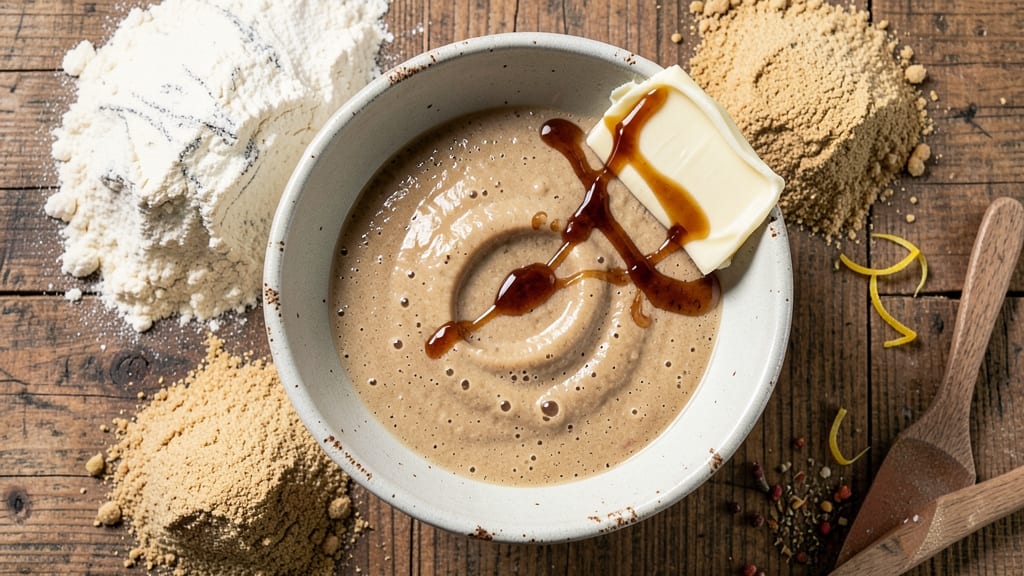
In a medium bowl, combine the 1 cup active sourdough discard with 1.5 cups water at room temperature. Stir until fully incorporated—you should see a smooth, slightly bubbly mixture. This starter contains wild yeast that will activate during the fermentation process, giving your bread that signature tangy flavor.
In a separate bowl, melt the 0.25 cup vegan butter and let it cool slightly. Add the 1 tbsp maple syrup and mix until combined. This sweet-buttery mixture will add richness to your bread while balancing the sourdough's acidity. Keep both bowls ready for the next step.
Combine Dry Ingredients and Create the Dough
In a large mixing bowl, whisk together the 3.5 cups all-purpose flour, 1.5 cups bread flour, 1.5 tsp salt, and 0.25 tsp active dry yeast. The bread flour provides better gluten structure, while the all-purpose flour keeps the texture tender. Mix well to distribute the yeast evenly—this ensures even rising throughout the loaf.
Create a well in the center of the dry ingredients and pour in the sourdough-water mixture and the melted butter-syrup combination. Using a wooden spoon or dough whisk, gradually incorporate the wet ingredients into the dry until a shaggy dough forms. This stage is where the magic begins—the sourdough's fermentation will develop as you work.
Develop the Dough Through Kneading
Turn the dough out onto a lightly floured surface and knead for 8-10 minutes by hand, or use a stand mixer with a dough hook on medium speed for 5-6 minutes. You're looking for a smooth, elastic dough that springs back when poked—this indicates proper gluten development. The dough should feel slightly tacky but not sticky.
Here's the thing—sourdough discard dough behaves differently than commercial yeast dough. It's more hydrated and less predictable, so resist the urge to add extra flour. Instead, wet your hands slightly as needed to prevent sticking. Once the dough passes the windowpane test (when stretched thin, it should be translucent with no tears), it's ready for the next stage.
Bulk Fermentation and First Rise
Lightly oil a large bowl, place the dough inside, and cover with a damp kitchen towel or plastic wrap. Let it rise at room temperature (75°F) for 4-6 hours, or until it has nearly doubled in size and shows good activity with bubbles forming on the surface. This first rise allows the sourdough culture to develop its signature flavor.
I like to perform two sets of stretch-and-folds during this time—after 1 hour and again after 2 hours. Wet your hands and gently grasp one side of the dough, stretch it upward, and fold it over itself. Rotate the bowl and repeat this process all around the dough. This technique strengthens the gluten structure and creates a more open crumb in your final loaf.
Shape, Proof, and Prepare for Baking
After the bulk fermentation, shape the dough into a tight round loaf by pinching the edges toward the center. Place it seam-side up in a greased 9x5-inch loaf pan that's been dusted with 2 tbsp cornmeal—this prevents sticking and adds a subtle crunch. Cover again and let it proof for 1-2 hours until it rises 1-2 inches above the pan.
While the dough proofs, preheat your oven to 375°F. Create an egg wash by mixing 1 tbsp flaxseed meal with 3 tbsp water and letting it sit for 5 minutes to thicken. Brush this over the risen dough just before baking—it gives a beautiful golden crust and helps with browning. Sprinkle 1 tbsp sesame seeds on top for texture and visual appeal.
Bake to Golden Perfection
Bake the loaf for 35-40 minutes until the internal temperature reaches 205°F and the crust is deep golden brown. You'll know it's done when it sounds hollow when tapped on the bottom. For extra crust development, you can broil for 1-2 minutes at the end, watching carefully to prevent burning.
Remove from the oven and let the bread cool in the pan for 10 minutes, then transfer to a wire rack. The internal temperature will continue to rise 10-15°F during this resting period—this is normal and ensures a properly baked loaf. Slice when completely cool for clean cuts and maximum flavor.
Pro Tips For Making Add Sourdough Discard To Bread
- WEIGH YOUR DISCARD: I learned this the hard way—using volume measurements for sourdough discard leads to inconsistent hydration. Weigh it (usually 10-20% of total flour) to guarantee the right ratio every time, especially when mixing with bread flour’s higher protein.
- STRETCH AND FOLD LATE: Skip the early folds if your discard is young or weak. Wait until the bulk fermentation shows 50-70% rise, then do 3-4 sets of stretch-and-folds spaced 30 minutes apart. This builds structure without overworking the gluten when the discard’s wild yeast is still cranking.
- USE COLD WATER FOR BUTTER: Your vegan butter will behave better if you chill it first, then grate it directly into the dough. This prevents melting during mixing and gives you tiny, even fat distribution—no need to fuss with softening it at room temp.
- PROOF IN COOLER, NOT FRIDGE: Resist the urge to refrigerate the shaped loaf overnight. Instead, proof it at 70-75°F (21-24°C) for 1-2 hours until puffy, then bake immediately. Cold slows fermentation too much, and you’ll lose that light, airy crumb the discard promises.
Dietary considerations for this dish
Vegan-Friendly Foundation
This recipe is naturally vegan thanks to sourdough discard (just flour and water) and plant-based substitutes like vegan butter and flaxseed egg wash. The discard itself contains no animal products, making it perfect for vegan diets.
I’ve tested this with Earth Balance vegan butter—it melts beautifully and adds rich flavor without dairy. 🌱
Gluten-Free Adaptations
For gluten-free bakers, replace the all-purpose and bread flours with a 1:1 gluten-free flour blend (like Bob’s Red Mill) plus 1 tsp xanthan gum. The discard’s hydration makes this easier than yeasted GF breads—just reduce water by 2 tbsp to compensate.
I’ve successfully made this with King Arthur GF flour, though the crumb will be denser than traditional bread.
Low-Carb Options
Swap 2 cups all-purpose flour for almond flour (finely ground) and add 1 extra tbsp flaxseed meal to bind. The discard’s tanginess helps mask the nutty flavor, and the bread will have a denser, cake-like texture.
For extra structure, include ¼ cup psyllium husk powder—it mimics gluten’s elasticity. Keep baking time to 30-35 minutes at 375°F to prevent burning.
Allergen-Free Swaps
Nut allergies? Use sunflower seed flour instead of almond flour. For sesame-free topping, try pumpkin seeds or toasted coconut flakes. If avoiding gluten and nuts, tapioca starch (mixed with GF flour) works well—just increase hydration slightly.
Always check labels on substitutes like vegan butter for hidden allergens (e.g., soy or coconut).
Storage Flexibility
This bread freezes beautifully—slice before freezing to prevent freezer burn. Wrap individual slices in parchment paper and store in a ziplock bag for up to 3 months. Reheat wrapped in a damp towel in a 300°F oven for 5 minutes.
For fridge storage, keep in an airtight container for up to 5 days, though it’s best eaten fresh. 💡
Nutrition facts
Frequently asked questions about using sourdough discard in bread
Can I use any sourdough discard, or does it need to be a certain age?
For best results, use discard that's 7-10 days old—it should smell tangy but not rotten. Younger discard (under 5 days) may not have enough flavor, while older discard (over 2 weeks) can taste overly sour. If your discard smells like vinegar or alcohol, it's past its prime for baking.
What if my dough doesn't rise properly?
Several factors could cause this: your discard might be too old (weak fermentation), the room temperature too cold (below 70°F), or you might need to add ¼ tsp extra yeast. Try extending the bulk fermentation to 8 hours or placing the dough in a slightly warmer spot (like near the oven with light on).
How do I know when the bread is fully baked?
Your bread is done when the internal temperature reaches 205°F and the crust is deep golden brown. Tap the bottom—it should sound hollow. For extra certainty, insert a thermometer into the center. If it's underbaked, return to the oven for 5-10 more minutes.
Can I make this bread without a loaf pan?
Shape the dough into a boule (round) or batard (oval) and bake on a parchment-lined baking sheet. For better oven spring, preheat a Dutch oven with the dough inside for 20 minutes before transferring to the oven. Brush with flaxseed wash and bake at 425°F for 30-35 minutes.
Why does my bread taste more sour than expected?
The tanginess comes from the discard's fermentation, but if it's overwhelming, your discard may be too mature. Balance it by reducing the discard to ½ cup and using ½ cup water + ½ tsp vinegar instead. For milder flavor, use younger discard or add 1 extra tbsp sugar to the dough.