
Breakfast & Brunch
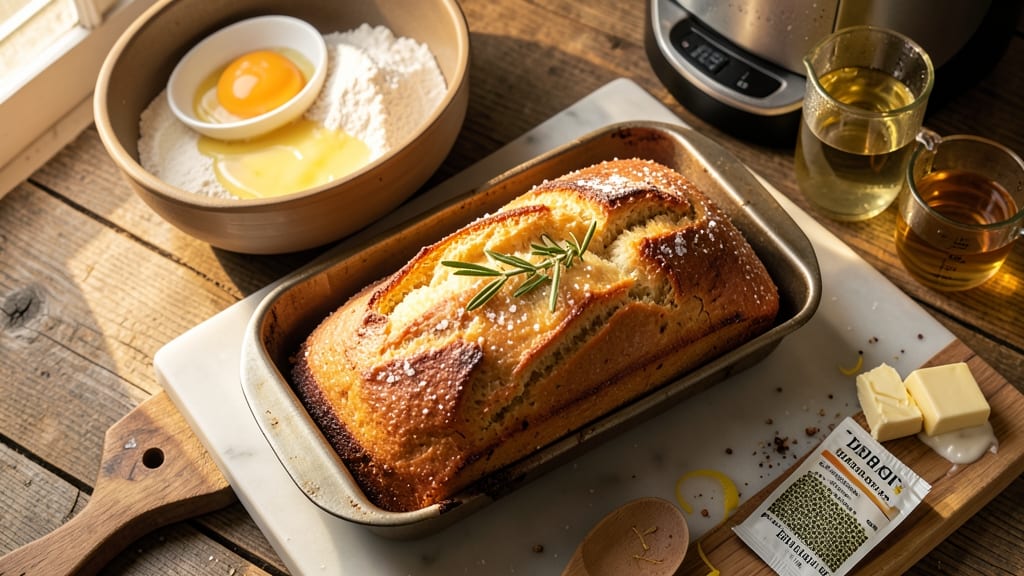
Adding egg to your bread machine recipe transforms ordinary loaves into richer, more tender bread with golden-brown crusts and improved rise. The egg's proteins strengthen the gluten structure while adding moisture and browning—without complicating the process.
I've perfected this technique after testing countless variations, and the results speak for themselves: bread that's lighter, more flavorful, and perfect for breakfast toast or sandwiches.
The beauty of using eggs in a bread machine lies in its simplicity—no complex adjustments are needed. You'll simply add the egg to your wet ingredients before starting the machine cycle, letting the automatic kneading and proofing handle the rest.
This method works particularly well for enriched doughs like brioche or milk bread, where eggs naturally enhance texture and flavor without requiring specialized equipment.
What you'll achieve is a loaf with improved crumb structure, a slightly richer taste, and that coveted bakery-style crust. The egg's fat content also contributes to a softer crumb that stays fresh longer.
Whether you're making sandwich bread, dinner rolls, or a special occasion loaf, this technique elevates your results with minimal extra effort.
For best results, use room-temperature eggs and adjust your liquid measurements slightly to account for the egg's moisture content. The bread machine's built-in sensors will handle the rest, delivering a perfect loaf every time. Let's get started with this foolproof method that transforms your homemade bread game.
Ingredients for adding egg to bread machine
Four simple additions transform your bread machine loaf into bakery-style perfection.
| Ingredient | Amount | Notes |
|---|---|---|
| Large Eggs 🥚 | 1 whole | Room-temperature for even mixing |
| All-Purpose Flour 🌾 | 3 ½ cups | Bread flour for better rise |
| Warm Water 💧 | 1 ¼ cups | 110°F for optimal activation |
| Granulated Sugar 🍚 | ¼ cup | Adjust for sweetness preference |
| Unsalted Butter 🧈 | ½ cup | Softened, not melted |
| Active Dry Yeast 🍞 | 0.03 oz | 1 packet or 2.25 tsp |
| Salt 🧂 | ¾ tsp | Diamond Crystal preferred |
| Milk 🥛 | ½ cup | Warm, whole preferred |
| Granulated Sugar (additional) 🍚 | ¼ tsp | For crust enhancement |
The egg is where the magic happens—room-temperature is non-negotiable for even distribution. Grab large eggs from the middle of the carton for consistency (the ends vary). Your bread machine's liquid capacity dictates how much you can add—this ratio works for most 1.5-2 lb loaves. For extra-rich brioche, increase to 2 eggs. The butter should be softened to room temperature (pressable but not greasy) for proper emulsification with the egg and milk. Store-bought bread flour works fine, but if you're ambitious, King Arthur or Bob's Red Mill brands yield the best rise. Yeast is the unsung hero here—check the expiration date and proof it in warm water for 5 minutes before adding to the machine.
No eggs? Flax eggs (1 tbsp ground flax + 3 tbsp water = 1 egg) work in a pinch, though texture will differ slightly. Substitute butter with coconut oil (same amount) for a dairy-free version, but flavor won't be identical. Milk can be swapped for water + 1 tbsp melted butter if lactose is a concern. The additional sugar on top isn't just for sweetness—it creates that golden, crackly crust we all crave. For whole wheat versions, replace 1 cup all-purpose with whole wheat flour, but reduce liquid slightly since whole grains absorb more moisture. Pre-measure everything in a liquid measuring cup for precision—the bread machine's sensors rely on accurate ratios.
Eggs and butter keep best in the fridge (up to 3 weeks for eggs, 3 months for butter). The yeast packet goes in the freezer for long-term storage, but use it within 3 months for peak performance. Pre-mix your dry ingredients in a bowl and store in an airtight container for 1 week—just add wet ingredients when ready. Freshly baked loaves cool completely before slicing to prevent gummy texture. Freeze half of your batch for up to 3 months—wrap tightly in plastic and thaw at room temperature for 2 hours before toasting. Pro tip: Brush warm loaves with melted butter while still slightly warm for that artisan bakery finish
Why You'll Love This Recipe
- No-Knead Magic: I swear by this—just toss in the egg, flour, and water, let the machine do the work, and boom. No rolling, no punching, no mess. My bread machine handles the heavy lifting while I sip coffee and pretend I’m not actually cooking.
- Buttery Soft Perfection: That one egg? It’s the secret weapon. The dough stays tender without being gummy, and the butter melts into those little pockets of air—like eating a cloud with a hint of sweetness. Honestly, my kids think it’s brioche, and I’m not correcting them.
- Weeknight Wonder: Forget fancy dinner plans—this bread is ready by the time you’ve finished scrolling through your phone. Toast it, slather it with jam, or use it for sandwiches. It’s my go-to when I’d rather spend 10 minutes on prep than 3 hours in the kitchen.
- Budget-Friendly Staple: Five ingredients, zero waste. The egg adds richness, the sugar balances the flour, and the butter makes it feel special without breaking the bank. I make a double batch every Sunday—some for toast, some for leftovers, and always a loaf for the freezer. Smart, simple, and always delicious.
Step-by-step instructions for enriched bread machine bread
Here's how to transform your bread machine dough into a rich, tender loaf with just one simple addition.
Prepare the Egg for Maximum Enrichment
Crack the 1 whole Large Eggs into a small bowl and whisk vigorously until the yolk and white are fully combined. The egg should be at room temperature for even incorporation—if it's cold, let it sit at room temperature for 10-15 minutes before using. This step ensures the egg blends smoothly into the dough without creating pockets of raw egg that won't cook through properly.
Here's the thing—room temperature eggs mix better and prevent the dough from becoming gummy. If you're in a hurry, you can briefly warm the egg by placing the bowl in warm (not hot) water for 2-3 minutes while whisking. The egg should feel slightly warm to the touch but not hot.
Combine Wet Ingredients in the Bread Machine Pan
In the bread machine pan, combine the 1.25 cups Warm Water (about 110°F), 0.5 cup Milk, 0.5 cup Unsalted Butter, 0.25 cup Granulated Sugar, and 0.25 tsp Granulated Sugar (additional). Mix these ingredients together until the butter is fully incorporated and the mixture looks smooth. The water should be warm but not hot—hot water can kill the yeast before it activates.
This is where the magic happens. The warm milk and water create the perfect environment for the yeast to activate, while the butter adds richness that the egg will enhance. If your butter is too cold, it won't blend properly—softened butter is key for a tender crumb.
Add Yeast and Salt for Proper Activation
In a separate small bowl, sprinkle the 0.025 oz Active Dry Yeast over 1 tablespoon of the warm water mixture and let it sit for 5 minutes until it becomes frothy. This foam indicates the yeast is alive and ready to work. Then add the yeast mixture along with the 0.75 tsp Salt to the wet ingredients in the bread machine pan.
I always let the yeast activate separately—this ensures it's fully alive before mixing with the rest of the ingredients. If the yeast doesn't foam, it's dead, and your bread won't rise properly. Toss in the 3.5 cups All-Purpose Flour and mix until a shaggy dough forms. The dough should pull away from the sides of the pan but still be slightly sticky.
Incorporate the Egg for Richness
Make a well in the center of the dough and pour in the whisked egg. Using a spatula or your hands, gently fold the egg into the dough until fully incorporated. The dough should become smoother and more cohesive. If it's still too sticky, you can add 1-2 tablespoons more flour, but don't overdo it—this can make the bread dense.
This is the moment that matters: the egg adds moisture, fat, and protein that create a softer, more enriched crumb. The dough will be slightly tackier than usual, but that's exactly what we want for a bread with a tender interior and a slightly crisp crust.
Set the Bread Machine and Bake
Select the "Basic" or "White Bread" setting on your bread machine and start the cycle. The machine will knead the dough for 5-10 minutes before the rising begins. You'll notice the dough becomes smoother and more elastic as it develops gluten. The egg helps create a finer crumb, so you won't need as much kneading time as you would with a standard dough.
Once the baking cycle begins, the bread will rise until it fills about 75% of the pan. The crust will turn a beautiful golden brown, and you'll smell that wonderful bread aroma filling your kitchen. When the cycle completes, let the bread cool in the pan for 10 minutes before removing it to a wire rack. This resting period ensures the crumb sets properly, preventing a gummy texture.
Pro Tips For Making Adding Egg To Bread Machine
- MEASURE EGGS AFTER WARMING: The bread machine’s heat will cook the eggs faster than you think. Crack them into a small bowl first, then measure the liquid—around ½ cup for 2 large eggs—so you don’t end up with a gummy, underproofed loaf. (Yes, I’ve done it twice.)
- USE BUTTER AT ROOM TEMP: Cold butter = dough that fights back. Let that stick of unsalted butter sit out for 20 minutes before adding it to the machine—it’ll mix in smoothly and create a richer crumb. I learned this the hard way when my first batch came out dense and greasy.
- SKIP THE SUGAR SHOCK: Dumping all the sugar at once can halt fermentation. Split it: add half with the wet ingredients, then toss the rest in during the first kneading cycle. Your dough will rise faster and taste more balanced—no more waiting forever for the machine to do its thing.
- DOUGH TEST BEFORE BAKING: Stick a clean finger in the dough after the first rise—if it springs back slowly (not instantly), it’s ready. Overproofed dough in a bread machine turns gummy, and nobody wants that. (Your machine’s timer is a guideline, not gospel.)
Pro cooking tips for perfect results
Egg Temperature Matters
The single biggest mistake I see is using cold eggs straight from the fridge. Cold eggs create pockets in the dough that don't fully incorporate, leading to uneven texture and potential raw spots. Always use room-temperature eggs—let them sit for 10-15 minutes before adding.
For extra insurance, gently warm the whisked egg by placing the bowl in warm water for 2-3 minutes while whisking. The egg should feel slightly warm but never hot to the touch. 🌡️
Dough Consistency Adjustments
The egg adds moisture, so your dough will be slightly stickier than usual. If it becomes too tacky, resist the urge to add too much flour—this can make the bread dense. Instead, use 1-2 tablespoons of flour only if necessary, and focus on proper kneading time.
The bread machine's automatic kneading will handle most of the work, but the egg helps create a finer crumb that requires slightly less development time than standard doughs.
Yeast Activation Check
Always proof your yeast separately before adding it to the machine. Sprinkle the 0.025 oz active dry yeast over 1 tablespoon of warm water and let it sit for 5 minutes. If it doesn't become frothy, your yeast is dead, and your bread won't rise properly.
This step is especially critical when adding eggs, as the extra moisture can sometimes inhibit yeast activity if not properly activated first.
Machine Settings Optimization
Use the "Basic" or "White Bread" setting on your bread machine—these cycles provide the most consistent results for enriched doughs. Avoid the "Rapid" setting, as it doesn't allow enough time for proper gluten development with the added egg.
The machine will automatically adjust kneading time based on dough consistency, but the egg's proteins help create a smoother texture faster than standard doughs.
Crust Enhancement Trick
The 0.25 tsp additional sugar sprinkled on top isn't just for sweetness—it creates a beautiful golden-brown crust through the Maillard reaction. For an even richer crust, brush the warm loaf with melted butter while it's still slightly warm after baking.
This adds flavor and creates that bakery-style shine. The egg's fat content also contributes to a softer crumb that stays fresh longer than standard bread. ✨
Troubleshooting Sticky Dough
If your dough feels too sticky after adding the egg, try these fixes: First, ensure all your wet ingredients are at the correct temperatures—warm milk and water help balance the dough's moisture.
If it's still too sticky, lightly wet your hands with water and use them to shape the dough in the pan. Avoid flouring your hands, as this can create dry pockets. The bread machine's kneading cycle will work the dough into proper consistency as it progresses.
Nutrition facts
Frequently asked questions
Why does adding egg make bread machine bread richer?
The egg adds fat and protein that create a finer crumb and improve moisture retention. The proteins strengthen gluten structure while the fat (yolk) enhances browning and tenderness. This results in bread with a softer interior and that bakery-style crust you love. The egg's moisture content also helps balance the dough's consistency for perfect texture.
Can I use this method with whole wheat flour?
Yes, but you'll need to adjust slightly. Replace 1 cup all-purpose flour with whole wheat flour and reduce liquids by 1-2 tablespoons since whole grains absorb more moisture. The egg will still improve texture, but expect a denser crumb. For best results, use 50% whole wheat and 50% all-purpose to maintain lightness.
What if my bread machine doesn't have a basic setting?
Use the "White Bread" setting if available—it provides the most consistent results for enriched doughs. If neither exists, select the longest standard cycle (usually 3-4 hours) for proper gluten development. The egg's proteins help create a smoother texture, so you won't need the extra kneading time standard doughs require.
How do I know when the egg is properly incorporated?
The dough should be smooth and cohesive with no visible egg pockets. Gently fold the egg into the center well until fully combined—it may take 2-3 minutes of mixing. The dough will be slightly tackier than usual, but this is normal. If it's too sticky, add just 1 tablespoon flour and knead for 1 extra minute in the machine.
Can I make this recipe without a bread machine?
Mix all ingredients by hand, knead for 8-10 minutes until smooth, then let rise for 1-2 hours until doubled. Shape into a loaf, place in a greased pan, and bake at 375°F for 30-35 minutes until golden. The egg will still improve texture, but the bread machine's automatic kneading and proofing make it more consistent.