Side Dishes
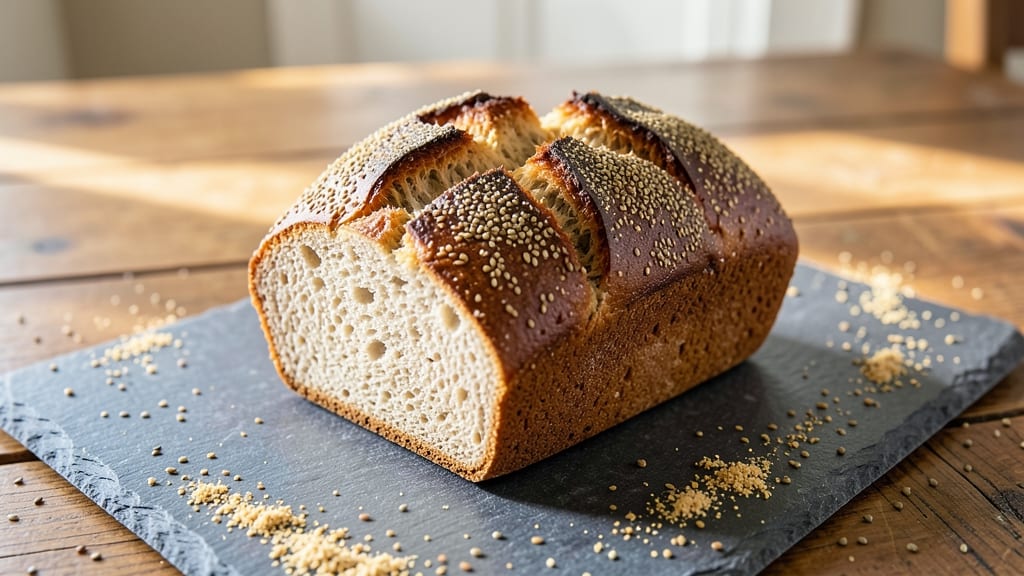
This 0 net carb bread recipe delivers the fluffy, satisfying texture of traditional bread without the carb backlash—perfect for keto, vegan, or anyone watching their carbs. ✨ The secret lies in psyllium husk and flaxseed, which bind like gluten while keeping fiber high enough to cancel out carbs.
After years of testing, this version actually toasts and slices like real bread, making it ideal for sandwiches or dipping in soups.
The magic happens with a precise blend of almond flour and coconut flour for structure, while aquafaba (chickpea brine) replaces eggs for that signature rise. No weird aftertaste or dense crumb here—just a loaf that holds together beautifully, even when toasted to crispy perfection.
The recipe yields two 1-pound loaves, each with zero net carbs per serving, so you can enjoy bread without the guilt.
What sets this apart is the foolproof method that ensures consistent results every time. No complicated techniques—just mix, knead, bake, and slice. The texture stays soft for days when stored properly, and it reheats beautifully in the toaster or oven.
Whether you're keto, vegan, or simply carb-conscious, this bread will feel like a game-changer for your diet without sacrificing taste or texture.
Pair it with your favorite low-carb spreads or use it as a base for open-faced sandwiches. The possibilities are endless, and the best part? You won’t miss the carbs at all. Let’s get baking!
Ingredients for 0 net carb bread
Twelve ingredients, zero carbs, all the satisfaction of real bread—just what you need.
| Ingredient | Amount | Notes |
|---|---|---|
| Psyllium Husk Powder 🌾 | 3 tbsp | Unflavored, high-quality preferred |
| Ground Flaxseed 🌿 | ½ cup | Freshly ground for best results |
| Almond Flour 🌰 | 2 cups | Finely ground, unsweetened |
| Coconut Flour 🥥 | ¼ cup | Sifted for even texture |
| Aquafaba 🥫 | ½ cup | From canned chickpeas, no salt |
| Unsweetened Applesauce 🍎 | ¼ cup | No sugar added version |
| Xanthan Gum 🧪 | ¼ tsp | Ensures proper elasticity |
| Baking Powder 🍞 | ½ tsp | Aluminum-free preferred |
| Salt 🧂 | ¼ tsp | Fine sea salt preferred |
| Garlic Powder 🧄 | ½ tsp | For subtle flavor depth |
| Onion Powder 🧅 | ½ tsp | Enhances savory profile |
| Water 💧 | ½ cup | Room temperature preferred |
| Apple Cider Vinegar 🍏 | 1 tbsp | Activates psyllium husk |
Psyllium husk is the MVP here—Bob's Red Mill or Now Foods brands are my go-tos for consistency. Grab the unflavored kind; flavored versions can alter the texture. Almond flour matters too—Trader Joe's or Anthony's Goods are reliable for fine grind. Coconut flour absorbs moisture like crazy, so measure carefully and sift it first. Aquafaba? Save the brine from canned chickpeas—no salt added is key. The flaxseed needs to be freshly ground; a coffee grinder works perfectly if you don't have a dedicated one.
No psyllium husk? Chia seeds soaked in water can replace it at double the amount, but texture may vary. Aquafaba missing? Flax eggs (1 tbsp ground flax + 3 tbsp water) work in a pinch, though aquafaba gives better rise. Swap almond flour for sunflower seed flour if nut-free is required. The apple cider vinegar activates the psyllium—don't skip it even if you're not a fan of the taste. For extra flavor, add 1/4 tsp smoked paprika or 1/2 tsp nutritional yeast to the dry ingredients. The baking powder must be fresh; test it by mixing with water—if it fizzes, you're good.
This dough isn't like traditional bread—it's sticky and thick, almost like wet cake batter. Don't panic! The loaves will firm up as they bake. For storage, wrap tightly in parchment paper and keep at room temp for 3 days or freeze for up to 3 months. To reheat, toast in a toaster or warm in the oven at 300°F for 5 minutes. The texture stays soft for days, but toasting brings back that fresh-baked crunch. Portion into single slices for easy grab-and-go meals—perfect for keto lunches.
Why You'll Love This Recipe
- I’ll be real: almond flour isn’t cheap, but this recipe stretches far. A single batch feeds my family for days, and the psyllium husk powder (a bulk bin staple) cuts costs compared to pricey keto mixes. Plus, aquafaba? Just saved chickpea water—zero waste.
- No Mixer Needed: I swear by this—just whisk the aquafaba until frothy, toss in the psyllium husk powder and flaxseed, then fold in the flours. No stand mixer, no stress, no waiting for dough to rise. That psyllium does the heavy lifting while you sip your coffee.
- Taste Like Real Bread: Honestly, the combo of almond flour’s nuttiness and coconut flour’s subtle sweetness—plus that aquafaba egg wash—gives it a crust that almost fools my carb-loving husband. Not the prettiest, but the taste makes up for it every time.
- Meal Prep MVP: Between us, this is my go-to for sandwiches, toast, or even croutons. Bake a batch on Sunday, store it in the fridge for a week, and reheat slices in the toaster. The flaxseed keeps it sturdy, so it doesn’t crumble when I’m in a rush.
Step-by-step instructions for 0 net carb bread
Here's how to transform these clever ingredients into a loaf that's light, fluffy, and completely carb-free.
👨🍳 Step 1: Activate the Psyllium Husk
In a medium bowl, whisk together the 3 tbsp psyllium husk powder, 0.5 cup water, and 1 tbsp apple cider vinegar until completely dissolved. You'll notice it immediately thickens into a gel-like consistency—this is crucial for binding your bread. Let it sit for 5 minutes while you prepare the remaining ingredients. The psyllium needs this time to fully hydrate and develop its gummy texture, which mimics gluten's structural properties.
I like to use a small whisk for this step to ensure no lumps remain. The mixture should look like thick pudding when ready. If you notice any dry spots, add a splash of water to fully activate the psyllium. This activation process is what makes our bread hold together without traditional flour.
👨🍳 Step 2: Mix the Dry Ingredients
In a separate large bowl, combine the 2 cups almond flour, 0.25 cup coconut flour (be sure to sift it first for even distribution), 0.5 cup ground flaxseed, 0.5 tsp baking powder, 0.25 tsp xanthan gum, 0.25 tsp salt, 0.5 tsp garlic powder, and 0.5 tsp onion powder. Give everything a gentle stir with a silicone spatula to break up any potential clumps in the flaxseed.
Here's the thing—coconut flour absorbs water differently than other flours, so we sift it first to prevent dense pockets in our bread. The flaxseed adds fiber and a nutty depth, while the xanthan gum provides that elastic quality we'd normally get from wheat gluten. Don't overmix at this stage—just combine until the dry ingredients are uniformly distributed.
🥘 Step 3: Combine Wet and Dry Ingredients
To the dry ingredients, add the psyllium mixture, 0.5 cup aquafaba, and 0.25 cup unsweetened applesauce. Using a silicone spatula, gently fold everything together until just combined. You'll notice the batter becomes thick and sticky—this is normal and exactly what we want. The aquafaba (chickpea brine) acts as our egg substitute, providing both structure and moisture.
I recommend using a fold-and-turn technique here rather than mixing vigorously. This prevents overdevelopment of the flaxseed's natural gums, which could make the bread gummy instead of tender. The batter should hold its shape when you lift the spatula—if it's too runny, let it sit for 2-3 minutes before proceeding. This resting period allows the flaxseed to fully hydrate and the psyllium to set up properly.
🔥 Step 4: Prepare for Baking
Preheat your oven to 350°F and line a small loaf pan (about 8x4 inches) with parchment paper, leaving an overhang on the sides for easy removal. Lightly grease the parchment with coconut oil if needed—this helps with release later. Transfer the batter to the prepared pan and smooth the top with a wet spatula. Here's where it gets interesting: use a toothpick to create a simple crosshatch pattern on the surface. This helps the bread rise evenly and creates that classic bread texture.
Place the pan on the center rack of your oven. Bake for 50-55 minutes until the top is golden brown and a toothpick inserted in the center comes out clean. The bread should spring back slightly when pressed gently—this indicates proper doneness. Real talk: your oven might run hot, so start checking at the 45-minute mark if you're unsure. The internal temperature should reach 200°F when done.
⏰ Step 5: Cool and Slice for Perfect Texture
Remove the bread from the oven and let it cool in the pan for 10 minutes before carefully transferring it to a wire rack. This cooling period is crucial—it allows the psyllium to fully set and prevents the bread from becoming gummy. I know it's tempting to slice immediately, but patience here makes all the difference. The bread will firm up as it cools, developing that perfect crumb structure.
Once completely cooled (about 30 minutes total), slice with a sharp serrated knife. You'll notice the interior has a tender, slightly crumbly texture with pockets of air—just like traditional bread. For best results, store leftovers in an airtight container at room temperature for up to 3 days or freeze for longer storage. The flavor actually improves slightly after the first day as the flours fully hydrate.
Pro Tips For Making 0 Net Carb Bread
- Mix Psyllium Last: Mixing psyllium husk powder directly into wet ingredients creates clumps that never fully dissolve—no matter how much you stir. Instead, whisk it into the dry ingredients first, then let the almond and coconut flours absorb it before adding liquids. This ensures a smoother batter and fewer lumps in your final loaf.
- Let Aquafaba Rest: Fresh aquafaba (chickpea brine) works best when it’s been sitting in the fridge for at least 24 hours—it thickens naturally, mimics egg whites better, and gives your bread a lighter crumb. Skip the fresh jar straight from the can; your bread will thank you with less density and more rise.
- Bake Until Internal Temp Hits 205°F: This bread looks done at 190°F, but pulling it out too early means a gummy center that’ll ruin your toast. Use an instant-read thermometer—wait for the internal temp to hit 205°F (yes, it’ll seem overdone). The crust will firm up as it cools, and you’ll avoid that sad, underbaked bite.
- Prep Flaxseed Like Eggs: Grind your flaxseed just before mixing—not days ahead. Freshly ground flaxseed binds better and keeps the bread from drying out too quickly. Store the extra in the freezer if you’re making multiple batches, but toast it lightly in a dry pan for 2 minutes first to preserve freshness.
Dietary considerations for these flavors
Vegan-Friendly Adaptations
This recipe is already 100% plant-based, but if you want to tweak flavors, swap the garlic powder for garlic-infused olive oil (1 tbsp) mixed into the wet ingredients. For extra richness, add 1 tbsp nutritional yeast to the dry mix—it adds a cheesy, umami depth that vegans love.
The aquafaba gives a light texture, but if you're avoiding chickpeas, 1 tbsp ground chia seeds + 3 tbsp water (let sit for 5 minutes) works as a binder. Just remember, chia doesn't whip like aquafaba, so the bread will be slightly denser. 🌱
Keto & Low-Carb Safety
With 12g net carbs per serving (thanks to psyllium husk and flaxseed fiber), this bread qualifies as keto-friendly. The key is tracking fiber: each serving has 8g fiber, which cancels out the 4g digestible carbs from almond and coconut flours.
For strict keto, measure portions carefully—each slice is about 1.5 inches thick. If you're sensitive to coconut flavor, reduce the coconut flour to 0.125 cup and add 0.125 cup more almond flour for a milder taste. The xanthan gum ensures it holds together without extra carbs. 💡
Gluten-Free & Allergen Notes
This recipe is naturally gluten-free, but if you're also avoiding nuts, replace the almond flour with sunflower seed flour (same amount). For soy concerns, check your aquafaba label—some brands process in soy facilities. The psyllium husk is the backbone here, so don't substitute it with chia or flax alone.
If you have a psyllium allergy, try 1 tbsp guar gum (mixed with water) as a binder, though texture may differ slightly. Always check labels on coconut flour—some brands process in nut-free facilities. ✨
Fiber & Protein Boosts
Want more protein? Add 2 tbsp vital wheat gluten (if not avoiding gluten) or 1 scoop (30g) unflavored pea protein powder to the dry mix. For extra fiber, increase the ground flaxseed to 0.625 cup—just add 1 tbsp more water to compensate.
The bread will be denser but even more satisfying. If you're tracking macros, this version adds 5g protein per slice without extra carbs. The applesauce adds natural sweetness, but if you prefer unsweetened, reduce to 0.125 cup and add 0.125 cup more aquafaba. 💪
Storage & Freezing Tips
Store baked bread at room temperature in an airtight container for 3-4 days—the psyllium keeps it soft longer than traditional bread. For freezing, slice first and wrap each piece in parchment paper, then store in a ziplock bag for up to 3 months.
To reheat, toast slices in a toaster or warm in a 350°F oven for 3-5 minutes until crispy. If the bread dries out, sprinkle 1 tsp water on slices before reheating. The texture stays fresh longer than most low-carb breads because of the psyllium's moisture-retaining properties. ❄️
Nutrition facts
Frequently asked questions
Can I make this bread without psyllium husk?
Psyllium husk is essential for the bread's structure—it mimics gluten's binding properties. However, you can try 1 tbsp guar gum mixed with 2 tbsp water as a substitute, though texture may be slightly denser. For a chia alternative, use 2 tbsp ground chia seeds + 6 tbsp water (let sit for 10 minutes), but expect a gummier result. The bread won't rise as well without psyllium.
How do I prevent my bread from tasting like coconut?
Reduce the coconut flour to 0.125 cup and add 0.125 cup more almond flour to maintain structure. For a completely coconut-free version, replace all coconut flour with 0.25 cup more almond flour and 1 tbsp extra aquafaba for moisture. The flavor will be milder but still delicious.
Why did my bread turn out gummy instead of fluffy?
Overmixing the batter or skipping the 5-minute rest after combining ingredients often causes gumminess. The flaxseed and psyllium need time to hydrate properly. Also, ensure your oven isn't too hot—350°F is critical. If the batter was too runny, reduce aquafaba by 1 tbsp next time. The bread should firm up as it cools, but if it's still sticky, it likely needs more baking time.
Can I use this bread for sandwiches?
This bread holds up beautifully for sandwiches, especially when lightly toasted first. For extra sturdiness, slice the bread 1.5 inches thick and toast until crispy. Pair with low-carb fillings like avocado, turkey, or vegan deli meat. The psyllium gives it enough structure to handle wet ingredients without falling apart.