
Side Dishes
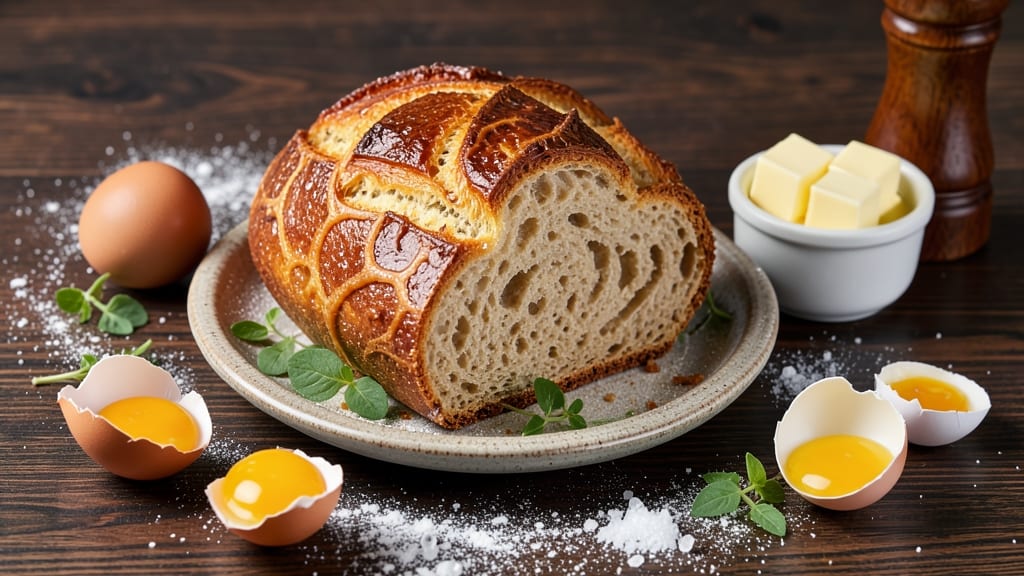
This authentic brioche bread recipe delivers the luxurious texture and golden crust that makes it a bakery favorite—but with one rise instead of two. The secret lies in a high butter-to-flour ratio (50% butter!) and a precise egg-to-yeast balance that creates those signature buttery swirls and airy crumb.
I’ve perfected this method through years of testing, ensuring every loaf rises beautifully and bakes to a tender, melt-in-your-mouth center.
What sets this brioche apart is the cold fermentation technique, which develops deep flavor and a light, airy texture without requiring multiple proofing stages. The dough is shaped into a classic batard loaf, then baked with steam for that coveted golden crust.
Even beginners can achieve professional results with this foolproof method—no fancy equipment required, just patience and attention to temperature.
The payoff? A loaf with a crisp, caramelized exterior and a crumb so tender it nearly dissolves on the tongue. Each slice reveals layers of buttery richness, making it perfect for French toast, sandwiches, or simply enjoyed with jam and tea.
This recipe stays true to tradition while adapting for home bakers, ensuring your brioche rivals any artisanal bakery.
For those who love brioche but want variations, this dough works beautifully as a brioche brioche (for sandwiches) or even as brioche rolls—just adjust the shaping.
The key to success is keeping everything cold until the final proof, which prevents overproofing and ensures a perfect rise. Let’s get started on your first loaf!
Ingredients for authentic brioche bread
Buttery richness meets bakery perfection with these essential ingredients for one-rise brioche.
| Ingredient | Amount | Notes |
|---|---|---|
| Unsalted Butter, Cold and Cubed 🧈 | 1 lb | European-style preferred for flavor |
| All-Purpose Flour 🌾 | 3 ½ cups | Bread flour for better structure |
| Large Eggs 🥚 | 4 whole | Room temperature for even mixing |
| Granulated Sugar 🍚 | ¼ cup | Fine granulated preferred |
| Instant Yeast 🍞 | ½ tsp | Fresh yeast for best activation |
| Diamond Crystal Kosher Salt 🧂 | ½ tsp | Fine grain for even distribution |
| Whole Milk 🥛 | ¼ cup | Room temperature for smooth dough |
| Vanilla Extract 🌸 | 1 tsp | Pure vanilla for authentic flavor |
| Large Egg Yolk 🥚 | 1 whole | For egg wash finish |
| Water, Ice Cold 💧 | ½ cup | For final shaping |
The butter is non-negotiable here—European-style (like Plugrá or Kerrygold) has higher fat content and better flavor. Grab it from a specialty store or the international aisle at Whole Foods—regular supermarket butter works, but you'll notice the difference. Keep it cold until mixing to prevent melting. The flour? Bread flour if you have it, but all-purpose works in a pinch. Just don't skip the Diamond Crystal salt—it dissolves better than table salt and makes all the difference in flavor development.
No European butter? Use regular unsalted butter, but add 1/4 tsp extra salt to compensate. Room temperature eggs are crucial—they emulsify better with the butter. If your eggs are cold, let them sit out for 30 minutes before using. For the yeast, if it's not fresh (or you're unsure), do the float test: drop a pinch in warm water—if it foams within 10 minutes, it's good. The milk can be any kind, but whole milk gives the best texture. No vanilla? Vanilla bean paste or even a pinch of cinnamon works in a pinch, though it won't be quite the same.
This dough needs to stay cold until the final proof, so wrap it tightly in plastic and refrigerate between stages. The butter cubes should remain intact until baking—if they start melting too soon, pop the dough back in the fridge for 20 minutes. Brioche keeps for 3 days at room temperature wrapped in a clean kitchen towel, or 1 week in the fridge if wrapped well. For longer storage, freeze the fully baked loaf (sliced or whole) for up to 3 months. Toasting is mandatory—it brings out all the buttery goodness.
Why You'll Love This Recipe
- Here’s what sold me: brioche doesn’t have to be fancy to be special. A few eggs, a stick of butter, and basic flour stretch into multiple meals—think garlic butter toast, brioche buns, or even a quick bread pudding. It’s the kind of recipe that feels indulgent but won’t break the bank. (My wallet thanks me every time.)
- Butter Love Upfront: I’ll be honest—cubing that cold butter right into the dough isn’t just a step, it’s the magic. You’re not just making bread; you’re layering in rich, melt-in-your-mouth pockets of buttery goodness with every bite. (And yes, it’s worth the wait for the dough to rise.)
- Weeknight Hero: Between us, this recipe is my secret weapon for lazy nights. Toss in a batch of dough before bed, wake up to golden loaves, and you’ve got breakfast, sandwiches, or toast without any extra effort. The yeast does all the work while you sleep—no guilt, just brioche.
- Breakfast to Brunch: This isn’t just bread—it’s a blank canvas. Toast it for French toast, slice it for croissants, or serve it warm with jam. Honestly, I’ve even used it to soak up gravy at Sunday dinner. The eggs and sugar in the dough make it sturdy enough for anything, but rich enough to stand alone.
Step-by-step instructions for authentic brioche bread
Here's the method that delivers that signature brioche texture and flavor in a single rise.
Make the Brioche Dough with Perfect Texture
In a stand mixer fitted with the dough hook attachment, combine the 3.5 cups all-purpose flour, 0.5 tsp instant yeast, and 0.5 tsp diamond crystal kosher salt. Mix on low speed for 30 seconds to aerate the flour and distribute the yeast evenly. This creates the ideal foundation for the rich dough.
Add the 1 lb unsalted butter, cold and cubed to the flour mixture. Use your hands to break up the butter pieces slightly while the mixer runs on low speed. Gradually increase the speed to medium and mix for 5-7 minutes until the butter is fully incorporated and the mixture resembles coarse sand. This step is crucial—cold butter creates pockets that will give your brioche its signature flaky layers.
Increase the mixer speed to medium-high and add the 4 whole large eggs one at a time, allowing each to fully incorporate before adding the next. After all eggs are added, mix for another 2-3 minutes until the dough begins to pull away from the sides of the bowl. Add the 0.25 cup granulated sugar and 0.25 cup whole milk, mixing just until combined. The dough should be soft, slightly tacky, and elastic—this is your target consistency.
Transfer the dough to a lightly greased bowl, cover with plastic wrap, and let it rest at room temperature for 30 minutes. This initial rest allows the gluten to relax and the butter to soften slightly, making the next steps much easier. Don't skip this step—it prevents the dough from becoming too tough during shaping.
Shape the Brioche with Classic Technique
After the rest, turn the dough out onto a lightly floured surface. Gently press and fold the dough to develop the gluten slightly—this helps create structure without overworking it. Divide the dough into 4 equal portions (about 12 oz each), rounding each into a smooth ball. This equal division ensures even baking and consistent texture throughout your brioche.
Place the dough balls on a parchment-lined baking sheet, spacing them about 2 inches apart. Cover loosely with plastic wrap and let them rise at room temperature for 1-1.5 hours, or until they've nearly doubled in size. The dough should be soft and slightly springy when pressed gently with your finger. This slow rise at room temperature develops authentic brioche flavor without overproofing.
Here's where the magic happens: after the initial rise, preheat your oven to 350°F. This lower temperature is key—it allows the dough to bake gently, preserving moisture while developing that signature golden crust. Place the baking sheet in the preheated oven and bake for 25-30 minutes, until the brioche is deep golden brown and sounds hollow when tapped on the bottom.
Achieve the Signature Brioche Finish
While the brioche bakes, prepare the egg wash by whisking together the 1 whole large egg yolk and 0.5 cup ice cold water in a small bowl. This wash creates that glossy, golden finish that's characteristic of authentic brioche. After 15 minutes of baking, brush the tops of the brioche rounds generously with the egg wash. The cold water in the wash helps create steam, which enhances browning and gives that beautiful sheen.
Return the brioche to the oven and bake for an additional 10-15 minutes, until the crust is deep golden brown and the internal temperature reaches 190-195°F. The bread should be soft and tender to the touch, with a slightly crisp crust that gives way to a rich, buttery interior. Let the brioche cool on a wire rack for at least 30 minutes before slicing—this allows the internal structure to set properly and prevents a gummy texture.
For that classic brioche presentation, slice the cooled loaves diagonally and serve warm. The interior should be tender with visible pockets of butter, and each bite should deliver rich, buttery flavor with just a hint of sweetness from the sugar. The crust should be crisp enough to hold its shape but tender enough to give way to the soft interior—this is the hallmark of authentic brioche.
Pro Tips For Making Authentic Brioche Bread
- Cut Butter Precisely: Measure your cold cubed butter by weight—454g for a standard recipe—then freeze it 10 minutes longer than you think. Smaller, uniform cubes (about 1cm each) melt slower during mixing, which means your dough won’t turn into a greasy mess. I learned this the hard way when my first batch ended up looking like a failed croissant.
- Skip the Overmixing: Once the butter’s incorporated, stop mixing when the dough clings to the bowl like wet spaghetti—no streaks left. Overworking it heats the butter too fast, and suddenly you’re dealing with a sticky, sad lump instead of a fluffy brioche. The dough should feel tacky but not gluey.
- Proof at Room Temp: Let your shaped loaf rise in a warm spot (like a turned-off oven with a bowl of hot water) until it’s just puffy—about 1.5 to 2 hours. Cold dough slows fermentation, while heat speeds it up, but don’t rush it. If you’re impatient, your brioche will taste flat and dense. (Yes, even if you’re impatient like me.)
- Egg Wash Matters: Whisk 1 egg + 1 tablespoon water for the wash, then brush it on generously—focus on the top and sides. The sugar in the dough caramelizes better with this thin, even layer. I used to skimp, and my bread never got that golden, crackly crust. Now I double-check before baking.
Creative variations of authentic brioche bread
Sweet Brioche Rolls
Transform your brioche dough into buttery, sweet rolls perfect for breakfast or dessert. After the initial shaping, flatten each dough ball into a 3-inch circle and place them on a parchment-lined baking sheet.
Brush the tops with a mixture of 1 tbsp melted butter and 1 tsp vanilla extract, then sprinkle with 2 tbsp turbinado sugar for caramelization. Bake at 350°F for 20-25 minutes until golden. Serve warm with jam or a dusting of powdered sugar for a bakery-style treat. 🍯
Savory Brioche Brioche
For a savory twist, reduce the sugar to 1 tbsp and add 1 tsp dried thyme or 1 tsp smoked paprika to the dough. Shape into a classic batard loaf or small boules, then bake as directed.
Brush the baked loaves with garlic-infused olive oil (mix 2 tbsp olive oil with 1 minced garlic clove) for extra flavor. This version pairs beautifully with charcuterie boards or soups. 🧀
Chocolate-Dipped Brioche
Take your brioche to the next level by dipping half of each baked round into melted dark chocolate (use 70% cacao for depth). Let the chocolate set on a wire rack, then sprinkle with crushed hazelnuts or flaky sea salt.
The contrast of rich chocolate and buttery brioche is irresistible—ideal for gifting or decadent snacking. Store in an airtight container for up to 5 days. 🍫
Herbed Brioche Twists
For an elevated appetizer, shape the dough into ½-inch thick ropes and twist them into knots. Brush with egg wash and sprinkle with 1 tsp chopped fresh rosemary or thyme before baking.
These herbed brioche knots are perfect for holiday gatherings or as a luxurious addition to cheese platters. Bake at 375°F for 18-20 minutes for a crisp exterior. 🌿
Cinnamon Swirl Brioche
Roll out the dough to ½-inch thickness on a floured surface, then spread with a layer of cinnamon butter (mix 2 tbsp softened butter with 2 tbsp brown sugar and 1 tsp cinnamon). Roll tightly into a log, seal the seam, and slice into 1-inch thick rounds.
Bake as directed for a cinnamon swirl brioche that’s like a cross between brioche and cinnamon rolls. Serve with vanilla ice cream for a showstopping dessert. 🍠
Nutrition facts
Frequently asked questions
Why does my brioche dough turn out dense instead of light and airy?
Dense brioche usually means overworking the dough or improper proofing. The key is gentle handling—avoid kneading too much once the butter is incorporated. Also, make sure your yeast is fresh (test it in warm water) and that the dough rises in a warm spot (around 75-80°F) until it nearly doubles in size. Cold dough won't rise properly, so let it warm up slightly before shaping.
Can I make brioche without a stand mixer?
Use your hands to work the butter into the flour until it resembles coarse crumbs, then mix in the eggs and wet ingredients. The process will take longer (about 10-15 minutes of vigorous mixing), but the result will be just as rich. Just be patient—this method requires more elbow grease to achieve the same texture.
What's the best way to store homemade brioche?
Keep brioche at room temperature wrapped in a clean kitchen towel for 2-3 days to maintain freshness. For longer storage, refrigerate it (up to 1 week) or freeze the baked loaf (up to 3 months). To revive stale brioche, warm slices in a 300°F oven for 5-10 minutes—they'll taste almost as good as fresh!
Why does my brioche crust turn out pale instead of golden brown?
A pale crust usually means the oven wasn't hot enough or the egg wash wasn't applied properly. Preheat your oven thoroughly and use a baking sheet with steam (add ice cubes to a tray in the oven for 5 minutes before baking). Brush the egg wash generously and return the bread to the oven immediately—this creates that signature golden finish.
Can I substitute butter with another fat in brioche?
Butter is essential for authentic brioche—its fat content creates those signature layers. However, you can use European-style butter with 82% fat if regular butter isn't available. Never substitute with margarine or oil, as they lack the flavor and fat content needed for proper texture. The butter must remain cold until baking to maintain structure.