
Desserts
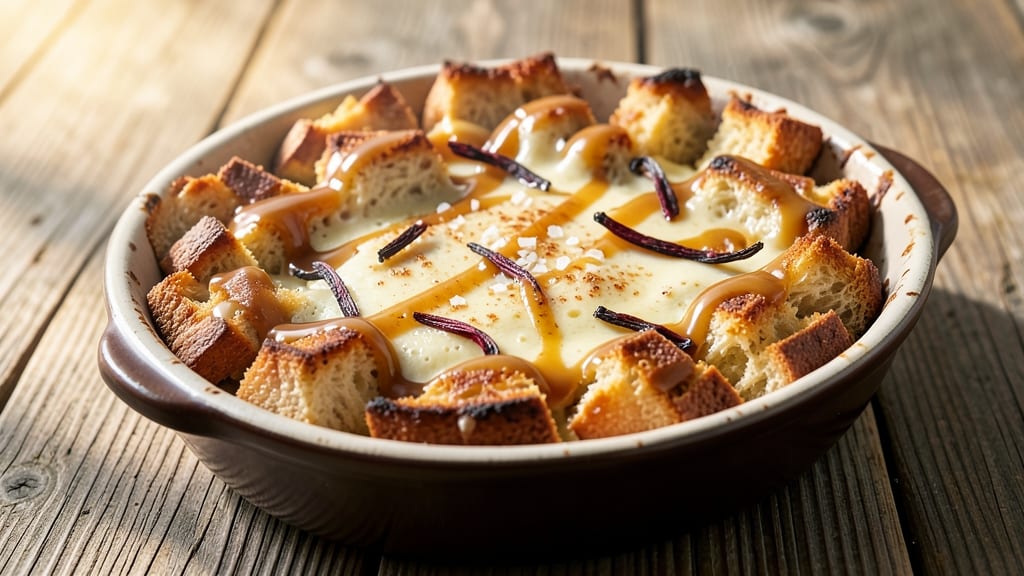
This authentic bread pudding recipe delivers the comforting, custardy perfection you crave—where every bite balances rich vanilla warmth with a crispy top that cracks under pressure. The secret lies in soaking stale bread just right, creating that signature tender-yet-firm texture while the edges develop a golden crust.
I’ve perfected this method over years of baking, ensuring no soggy centers or undercooked custard—just restaurant-quality results at home.
The traditional approach uses simple ingredients: eggs, milk, vanilla, and of course, bread—preferably a day-old loaf for maximum texture. But don’t worry if you’re short on time; I’ll show you how to adapt with fresh bread or even brioche for extra decadence.
The custard mixture is where the magic happens, thickened just enough to hold its shape while staying silky smooth.
Baked at 350°F for 40 minutes, this bread pudding emerges from the oven with a lightly golden crust that’s irresistibly crispy on top, while the inside remains velvety and rich. The vanilla infuses deeply, creating warmth that lingers long after the last bite.
Serve it warm with a drizzle of caramel sauce or a dollop of whipped cream for the ultimate dessert experience.
Whether you’re making it for a holiday gathering or a cozy weeknight treat, this recipe delivers authentic comfort with a crispy finish that’s impossible to resist. Ready to master the art of bread pudding? Let’s get started.
Ingredients for authentic bread pudding
Simple ingredients transform into restaurant-quality bread pudding with a crispy top you'll crave.
| Ingredient | Amount | Notes |
|---|---|---|
| Day-Old Bread Loaf 🍞 | 1 lb | French or sourdough preferred |
| Large Eggs 🥚 | 4 whole | Room temperature for best mixing |
| Whole Milk 🥛 | 2 cups | Not skim milk for richness |
| Pure Vanilla Extract 🌿 | 2 tsp | High-quality, not imitation |
| Granulated Sugar 🍚 | ¾ cup | Light brown sugar for depth |
| Unsalted Butter 🧈 | ½ cup | Cold, cubed for crispy top |
| Ground Cinnamon 🌶️ | 1 tsp | Freshly ground preferred |
| Salt 🧂 | ½ tsp | Kosher or sea salt |
| Heavy Whipping Cream 🥛 | ½ cup | For extra richness (optional) |
| Caramel Sauce 🍯 | ¼ cup | Store-bought or homemade |
| Whipped Cream 🍦 | ½ cup | For serving (optional) |
The bread is non-negotiable here—day-old French or sourdough gives that perfect texture. Whole Foods or Trader Joe's always have great options, but any stale loaf works. Tear it into chunks (no need to cube perfectly) and toast lightly if you're using fresh bread. The eggs should be room temperature—cold eggs make the custard lumpy. For the vanilla, McCormick or Nielsen-Massey are solid choices, but any pure extract works. The sugar? Light brown adds depth, but white works in a pinch.
No day-old bread? Toast fresh slices until dry, then cube. Skim milk won't give the same richness, but 2% works if that's what you've got. Want extra decadence? Swap half the milk for heavy cream. The cinnamon can be skipped if you're not a fan, but trust me on the full-fat butter for the crispy top. Caramel sauce is optional, but homemade is easy—just heat 1 cup sugar until melted, add 6 tbsp cream, and simmer 5 minutes. Whipped cream? Store-bought is fine, but homemade tastes better (whip heavy cream + powdered sugar).
This keeps 3 days in the fridge, but honestly tastes better the second day. Reheat at 350°F for 15 minutes—the edges get extra crispy. Portion into individual ramekins before baking if you want single servings. The caramel sauce and whipped cream? Add those fresh after reheating. Freezes beautifully for 2 months—just thaw overnight in the fridge.
Why You'll Love This Recipe
- I’ll be real: the second day is often the best. The texture softens into pure comfort, and the flavor deepens—perfect for reheating with a sprinkle of cinnamon or a scoop of ice cream. It’s the kind of dish that gets better with time.
- No Stale Ingredients Needed: Honestly, I’ll take any excuse to use up that slightly dried-out loaf from yesterday—this recipe turns it into pure gold. The bread soaks up the custard like a sponge, and you’d never guess it wasn’t fresh-baked.
- Rich Without the Fuss: That creamy egg-milk vanilla mix? It’s where the magic happens—no fancy sauces or garnishes required. The sugar caramelizes just enough to give it a subtle depth, while the vanilla ties everything together in a way that feels indulgent but isn’t trying too hard.
- Breakfast or Dessert: Between us, this is my go-to for lazy Sunday mornings and late-night cravings. Serve it warm with a drizzle of honey for a brunch win, or chill it overnight for a no-effort dessert that still feels special.
Step-by-step instructions for authentic bread pudding
Here's how to create that perfect balance of custardy center and golden, crackly top.
Prepare the Bread and Custard Mixture
Cut the 1 lb day-old bread loaf into 1-inch cubes—you should end up with about 12-15 pieces. I like to use a serrated knife for clean cuts, especially if it's a crusty French loaf. Arrange the bread cubes on a baking sheet and spread them out in a single layer.
In a large mixing bowl, whisk together the 4 whole large eggs, 2 cups whole milk, 2 tsp pure vanilla extract, 0.75 cup granulated sugar, 1 tsp ground cinnamon, and 0.5 tsp salt until completely smooth. The mixture should be pale yellow and free of any lumps. This is your custard base—don't skip the whisking, as even lumps can make the final texture uneven.
Soak the Bread in the Custard
Pour the custard mixture over the bread cubes, making sure each piece is thoroughly coated. Let it sit for 10 minutes—this gives the bread time to absorb the liquid without becoming soggy. You'll know it's ready when the bread has soaked up most of the custard but still holds its shape when gently pressed.
After the initial soak, stir the bread gently with a spatula to redistribute any remaining custard. If the mixture looks dry, add 1-2 tablespoons of whole milk to loosen it. The goal is a moist but not watery consistency—this ensures a creamy texture without making the pudding too dense.
Assemble and Bake for the Perfect Texture
Preheat your oven to 350°F. Grease a 9x13-inch baking dish with 2 tablespoons of the unsalted butter, then transfer the soaked bread mixture into the dish. Dot the top with the remaining 0.33 cup unsalted butter (about 6-8 small cubes) and press it gently into the bread. This butter will create that signature crispy top.
Bake for 45-50 minutes until the edges are golden brown and the center is just set—it should still have a slight wobble when gently shaken. If the top isn't browning enough, broil for 1-2 minutes at the end, watching closely to avoid burning. The internal temperature should reach 190°F for a perfectly custardy center.
Finish with Caramel and Whipped Cream
While the pudding is still warm, drizzle the 0.25 cup caramel sauce evenly over the top. Let it sit for 5 minutes to soften slightly, then gently swirl it into the custard with a spoon. This step adds that rich, gooey contrast that makes bread pudding irresistible.
Serve immediately with a dollop of 0.5 cup whipped cream on top. The contrast of the warm, custardy pudding with the cool cream is what makes this dessert feel truly special. Each bite should deliver that perfect mix of buttery, crispy edges, creamy custard, and sweet caramel notes.
Pro Tips For Making Authentic Bread Pudding
- Soak the Bread Right: Tear the day-old bread into 1.5-inch chunks—no need for perfect cubes—and dump them straight into the custard mixture. Let it sit for at least 15 minutes (20 if you’re impatient like me) so the bread absorbs the liquid but doesn’t turn to mush. I learned this the hard way—over-soaking makes a sad, watery pudding.
- Whisk Eggs Like a Pro: Beat the eggs and sugar together until the mixture is just pale yellow and thickens slightly—about 2 minutes with a whisk. Stop before it gets frothy or you’ll end up with a dense, rubbery pudding. My grandmother swore by this, and she was right: patience here makes all the difference.
- Skip the Overmixing: Once you fold in the soaked bread, stir just until combined—lumps are fine, even encouraged. Overmixing develops gluten, and that’s how you turn a silky pudding into a tough, bread-heavy disaster. Sounds weird, but it works: trust the texture, not the appearance.
- Bake Low and Slow: Set your oven to 325°F (not 350°F or higher) and bake uncovered for 40–45 minutes. The top should be golden, but the center should still jiggle slightly—it’ll set as it cools. After burning three batches, I finally figured out: slow and steady wins the custard race.
Pro cooking tips for perfect results
Bread Soaking Secrets
Soaking the bread is where the magic happens—10 minutes is ideal, but don’t rush it. If your bread isn’t stale, lightly toast it first to mimic day-old texture.
I’ve found French or sourdough works best, but any bread will do. For extra richness, add 1 tbsp bourbon or rum to the custard before soaking—it infuses beautifully. 🌟
Custard Consistency Matters
The custard should coat the back of a spoon but still hold its shape. If it’s too thin, simmer it gently for 2-3 minutes to thicken slightly. I use a whisk attachment on my KitchenAid mixer for smooth results.
Avoid overmixing—just until the sugar dissolves completely. The eggs should be room temperature to prevent lumps.
Butter for the Crispy Top
Don’t skimp on the butter! Use cold, cubed butter (not melted) to create steam during baking, which gives that crackly crust. Press the cubes gently into the top of the bread pudding before baking.
For extra browning, sprinkle with ½ cup breadcrumbs or crushed graham crackers. A light spray of water before baking also helps crisp the edges.
Baking Time and Temp
Bake at 350°F for 45-50 minutes—the center should jiggle slightly like gelatin. If the top isn’t golden enough, broil for 1-2 minutes at the end.
Use an instant-read thermometer to check the internal temp—190°F is perfect. Overbaking dries it out, so pull it out just before it looks fully set.
Make-Ahead and Storage
This dessert tastes even better the next day! Store leftovers in an airtight container in the fridge for up to 3 days. To reheat, cover with foil and warm at 350°F for 15 minutes.
For a crispier texture, broil for 2-3 minutes after reheating. Freeze for up to 2 months—thaw overnight in the fridge before reheating.
Pro Tips for Extra Flavor
Boost the flavor with ½ tsp nutmeg or 1 tsp lemon zest in the custard. For a boozy twist, add ¼ cup Kahlúa or Irish cream to the caramel sauce.
If you love chocolate, fold ½ cup chocolate chips into the custard before baking. The key is balancing richness with acidity—lemon or vanilla bean paste elevates the dish effortlessly. 💛
Nutrition facts
Frequently asked questions
Why does my bread pudding turn out soggy?
The most common cause is over-soaking the bread or using fresh bread instead of stale. Always use day-old bread or toast fresh slices until dry. Let the bread soak for exactly 10 minutes—no longer! If your mixture looks too wet, bake it at 325°F instead of 350°F to slow down the cooking process and prevent steam from making it soggy.
Can I make bread pudding ahead of time?
This dessert actually tastes better the next day. Store it in an airtight container in the fridge for up to 3 days. To reheat, cover with foil and warm at 350°F for 15 minutes. For extra crispiness, broil for 2-3 minutes after reheating. The flavors deepen as it sits, making it even more comforting.
What's the secret to a crispy top?
Use cold, cubed butter (not melted) pressed into the top before baking—this creates steam that crisps the edges. For extra browning, sprinkle with ½ cup breadcrumbs or crushed graham crackers. Bake until golden brown at 350°F for 45-50 minutes, then broil for 1-2 minutes at the end if needed. The butter should melt just enough to create that perfect crackly crust.
Can I use any type of bread?
While French or sourdough bread works best for texture, you can use any bread—just make sure it's stale or toasted first. Brioche adds richness, while challah gives a slightly sweeter flavor. Avoid soft sandwich breads like brioche or Italian bread unless you toast them thoroughly, as they'll make the pudding too dense.
How do I fix a lumpy custard?
Lumps happen when eggs aren't whisked properly or are too cold. To fix it, strain the custard through a fine-mesh sieve before pouring over the bread. For future batches, whisk eggs and milk together first, then add sugar and vanilla. Use room-temperature eggs and whisk vigorously for 2-3 minutes until completely smooth. If lumps still appear, simmer the custard gently for 2-3 minutes to dissolve them.