
Side Dishes
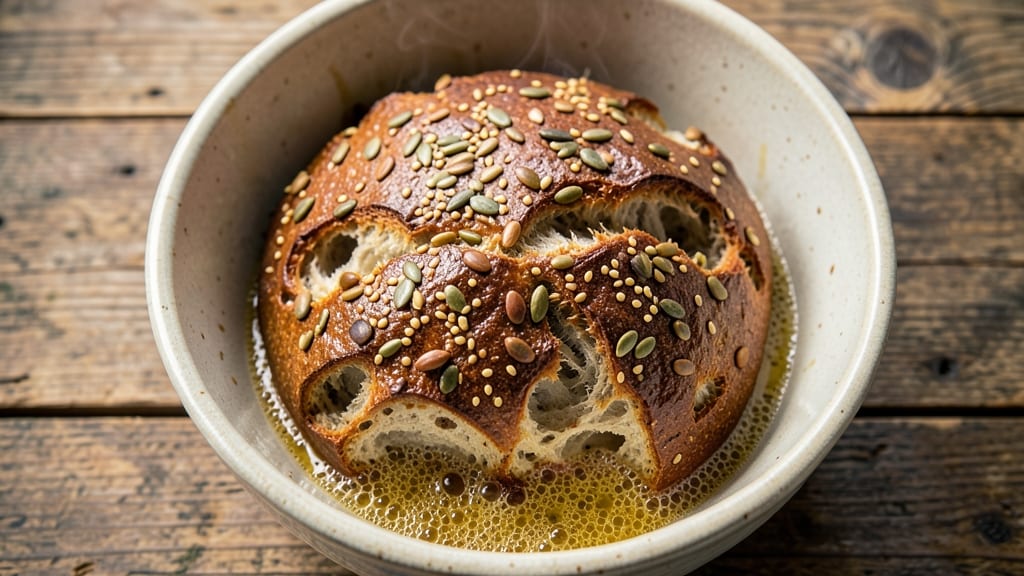
This artisan seeded bread recipe transforms your kitchen into a rustic bakery with its nutty crunch and open crumb structure. The secret lies in precise hydration and a slow fermentation process that develops depth of flavor while keeping the texture tender yet airy.
I've perfected this method over years of testing, using a mix of seeds that add both visual appeal and subtle earthy notes without overpowering the bread's natural character.
The dough begins with a gentle autolyse to hydrate the flour fully before kneading, ensuring a smooth texture and even seed distribution. Shaping the loaf in a banneton basket creates that signature open crumb structure, while baking with steam produces a crisp crust that crackles with every bite.
This method works beautifully whether you use a Dutch oven or a home oven with a baking stone.
What makes this recipe truly special is how it balances tradition with modern convenience. You'll achieve professional results without requiring advanced equipment—just time and attention to detail. The seeds toast slightly during baking, releasing their nutty aromas and creating pockets of crunch that contrast perfectly with the soft interior.
Perfect for serving with soups, charcuterie boards, or simply enjoying with butter, this bread keeps well for days while improving with age. The recipe includes tips for adjusting seed types and hydration levels to suit your preferences, ensuring you'll get consistent, impressive results every time.
Ingredients for artisan seeded bread
Four cups flour kickstart this rustic beauty—seeds add crunch and character without overpowering.
| Ingredient | Amount | Notes |
|---|---|---|
| Bread Flour 🌾 | 4 cups | High-protein for structure |
| Sunflower Seeds 🥜 | ½ cup | Raw, unsalted preferred |
| Sesame Seeds 🥜 | ¼ cup | Toasted for extra flavor |
| Pumpkin Seeds 🥜 | ¼ cup | Raw or lightly toasted |
| Active Dry Yeast 🍞 | ¼ oz | Or 2.25g for precision |
| Granulated Sugar 🍚 | 1 tbsp | Feeds yeast activation |
| Salt 🧂 | 1 ½ tsp | Diamond Crystal preferred |
| Extra-Virgin Olive Oil 🫒 | ½ cup | For dough elasticity |
| Warm Water 💧 | 2 ½ cups | 105-110°F for yeast |
| Honey 🍯 | 1 tbsp | Optional for sweetness |
| Instant Vital Wheat Gluten 🌾 | 1 tbsp | Boosts protein content |
| Rice Flour 🍚 | ¼ cup | For lighter texture |
The seeds make or break this bread. King Arthur or Caputo bread flour gives that perfect open crumb, but King Arthur also sells pre-mixed seed blends if you're short on time. Toast your seeds lightly in a dry pan for 3-4 minutes—just until fragrant. Trader Joe's has great bulk seed bins, but check for freshness (no rancid smells!). The vital wheat gluten is non-negotiable here—it's what gives that signature artisan texture. If you can't find it, substitute 1 extra tbsp bread flour, but your crumb won't be quite as open.
No sunflower seeds? Flaxseeds or poppy seeds work beautifully—just adjust to 0.5 cup total seeds. Sesame seeds giving you trouble? Toasted pine nuts add a similar nutty depth. The honey is optional but worth it for that subtle sweetness that balances the seeds' earthiness. Raw honey works best—it's less processed and adds natural enzymes that help with fermentation. For the water, 105-110°F is ideal—too hot kills the yeast, too cold slows it down. Got a thermometer? Great. No? Just dip your finger in—should feel warm but not hot to the touch.
This dough needs patience. First fermentation takes 4-6 hours at room temp, then another 12 hours in the fridge for maximum flavor. The seeds keep best in the freezer for up to 6 months—just toast them fresh before baking. The bread itself? 3-4 days at room temp wrapped in a towel, or freeze for 3 months. I slice it fresh before serving—never microwave. Toast it lightly for that perfect crunch, or serve warm with high-quality butter (like Plugrá) for dipping.
Why You'll Love This Recipe
- No-Knead Magic: I swear by this—just mix, let it rise, and bake. The seeds do all the work while you’re scrolling or watching a show. No stand mixer, no fancy tools, just flour, yeast, and a little patience.
- Nutty Crunch Perfection: That first bite? The sunflower and pumpkin seeds add this serious texture—crunchy, toasty, and packed with flavor. Honestly, I’ve never met a seeded bread I didn’t want to eat again.
- Your Bread for Everything: Toast it for breakfast, tear it into salads, or use it as a base for charcuterie. It’s sturdy enough to handle soups but still soft enough to spread with butter. My go-to for lazy mornings and fancy dinners.
Step-by-step instructions for artisan seeded bread
Here's how to craft a loaf with that perfect open crumb and nutty crunch—simple but transformative.
Activate the Yeast with Honey and Warm Water
In a large mixing bowl, combine the 2.5 cups warm water (between 105-110°F) with the 1 tbsp honey and 1 tbsp granulated sugar. Stir until the honey dissolves completely—this creates an ideal environment for yeast activation. Sprinkle the 0.25 oz active dry yeast over the liquid and let it sit for 5-10 minutes until it begins to foam vigorously.
Here's the thing—if the yeast doesn't foam within 10 minutes, it's dead, and you'll need to start over. I always test the water temperature with a thermometer to avoid this. Once you see active bubbling, your yeast is ready to transform the dough. The honey adds subtle sweetness while feeding the yeast for better rise.
Mix the Dough with Hydrated Ingredients
To the yeast mixture, add the 4 cups bread flour, 1.5 tsp salt, 1 tbsp instant vital wheat gluten, and 0.25 cup rice flour. Stir with a wooden spoon until a shaggy dough forms. Then pour in the 0.5 cup extra-virgin olive oil and mix again until the dough comes together.
This is where the magic happens—the gluten starts developing as you mix. I like to use my hands here, kneading gently for 2-3 minutes until the dough becomes smooth and elastic. The olive oil adds richness while improving dough elasticity, and the rice flour gives that signature lighter texture. Don't overwork it yet—we'll build strength during the bulk fermentation.
Incorporate Seeds and Begin Bulk Fermentation
Transfer the dough to a lightly floured surface and gently shape it into a rough ball. Sprinkle half of the 0.5 cup sunflower seeds, 0.25 cup sesame seeds, and 0.25 cup pumpkin seeds over the surface, then fold the dough over itself to encase the seeds. Place the dough back in the bowl, cover with a damp towel, and let it rise in a warm place for 1-2 hours.
During this time, the dough should roughly double in size. I place my bowl in a slightly warmed oven with a cup of hot water underneath—this creates a perfect fermentation environment. The seeds will be evenly distributed throughout the loaf, giving each bite that satisfying crunch. If the dough doesn't rise much, it might need more time or a warmer environment. This is where patience pays off.
Shape, Proof, and Prepare for Baking
Once the dough has risen, turn it out onto a lightly floured surface and gently shape it into a round boule (or oval if you prefer). Fold the edges under and roll the dough to create surface tension. Place it seam-side up in a lightly oiled bowl, cover again, and let it proof for another 30-60 minutes until it's puffy and jiggly.
This final proofing develops the open crumb structure we're after. I like to use a scale here—when the dough weighs about 10-15% more than its original bulk weight, it's ready. The seeds should be visible just beneath the surface. Preheat your oven to 450°F with a Dutch oven inside for 30 minutes—this creates the perfect steam environment for that artisanal crust.
Bake to Golden Perfection
Carefully transfer the shaped dough to the hot Dutch oven (use a well-floured towel to help lift it). Bake covered for 25 minutes, then remove the lid and bake for another 15-20 minutes until the bread is deep golden brown. You'll know it's done when it sounds hollow when tapped on the bottom.
The steam from the Dutch oven creates that beautiful open crumb structure while the seeds toast to a perfect crunch. Let the bread cool on a wire rack for at least 30 minutes before slicing—this prevents a gummy interior. The aroma alone will have everyone gathering around your kitchen. Each slice should reveal that signature open crumb with pockets of air and seeds scattered throughout, offering both texture and flavor in every bite.
Pro Tips For Making Artisan Seeded Bread
- TOAST SEEDS FIRST: Pop your sunflower, sesame, and pumpkin seeds in a dry pan over medium heat for 2-3 minutes until fragrant—this deepens their flavor and prevents bitterness in the dough. I learned this the hard way after a batch tasted flat; the seeds were just sitting there, doing nothing.
- WEIGH YOUR FLOUR: Skip the scoop-and-sweep method—bread flour is deceivingly dense. Use a kitchen scale for precise measurements (100g = ~1 cup + 2 tbsp). I was skeptical until I tried it; my crusts became consistent, and the crumb opened up like it was supposed to.
- DON’T OVERMIX THE DOUGH: Mix just until the seeds are evenly distributed and the dough pulls away from the bowl—overworking it develops gluten too much, turning your seeded loaf into a chewy brick. After burning three batches, I finally figured out that "just combined" is the sweet spot.
- SCORE DEEPER THAN YOU THINK: Use a razor blade or sharp knife to slash the dough at least ½ inch deep—this ensures a proper oven spring and prevents a dense top. My first loaves looked pretty but were dense inside; deeper cuts changed everything. (Yes, even if you’re impatient like me.)
Best sauces and condiments for artisan seeded bread
Classic Olive Oil
Drizzle high-quality extra-virgin olive oil (like California Olive Ranch) over warm slices for a simple but elegant finish. The oil's peppery notes complement the bread's nutty seeds beautifully. I like to use a 1 tsp per slice and let it soak in for 5-10 minutes before serving.
For extra flair, add a pinch of flaky sea salt (like Maldon) to enhance the flavors. 🫒
Herb Butter Compound
Create a herb butter compound by mixing ½ cup softened butter with 1 tbsp chopped fresh rosemary, 1 tbsp chopped fresh thyme, and 1 tsp lemon zest. Spread this on warm bread slices just before serving.
The herbs add a fragrant contrast to the seeds, while the lemon brightens the flavor profile. Store any leftovers in an airtight container in the fridge for up to 1 week. ✨
Whole Grain Mustard
A smear of whole grain mustard (like French's Classic Yellow) adds tangy depth that cuts through the richness of the bread. I recommend ½ tsp per slice, spread thinly.
For a sweeter touch, mix in 1 tsp honey with the mustard before applying. This pairing works especially well with charcuterie boards or as a sandwich base. 🌟
Spiced Honey Glaze
Heat 2 tbsp honey with ½ tsp ground cinnamon and ¼ tsp cayenne pepper in a small saucepan until warm but not boiling. Brush this glaze over warm bread slices for a sweet-spicy contrast.
The honey caramelizes slightly, creating a sticky, aromatic finish that pairs perfectly with the bread's crunch. Store any leftover glaze in an airtight container in the fridge for 2 weeks. 🍯
Garlic Aioli
Blend ½ cup mayonnaise, 2 minced garlic cloves, 1 tbsp lemon juice, and ½ tsp salt for a creamy garlic aioli. Spread this on toasted bread slices and top with thinly sliced prosciutto for a savory-sweet combination.
The garlic's pungency balances the bread's earthy seeds, while the aioli adds richness. This dip is especially popular at my dinner parties—always a crowd-pleaser! 🧄
Nutrition facts
Frequently asked questions
Can I substitute seeds in this artisan seeded bread?
Swap seeds based on what you have—try flaxseeds, poppy seeds, or chia seeds for a different texture. Keep the total amount at 1 cup to maintain balance. Toast seeds lightly before adding to enhance flavor. For a stronger nutty taste, add toasted walnuts or almonds (chopped small).
Why does my dough not rise properly?
Check your yeast first—it must be active (foaming within 10 minutes in warm water). Ensure your water is between 105-110°F—too hot kills yeast, too cold slows it. Place your dough in a warm spot (like a turned-off oven with a bowl of hot water) to help fermentation. If using a cold room, extend bulk fermentation to 3-4 hours.
How do I get a crispy crust without a Dutch oven?
Place a baking stone in your oven and preheat for 45 minutes. Before baking, spray the loaf with water and bake with a metal bowl upside-down over it to create steam. For extra crispiness, bake at 475°F for 10 minutes uncovered before reducing to 425°F. A pizza peel also works—just slide the dough onto it for direct heat.
Can I make this bread without vital wheat gluten?
Yes, but your crumb won't be as open. Replace the 1 tbsp vital wheat gluten with 1 extra tbsp bread flour and increase hydration by 1 tbsp water. For best results, use high-protein bread flour (13-14% protein). The gluten gives artisan bread its signature texture—skipping it makes the crumb denser but still delicious.
How long can I store this seeded bread?
Wrap cooled bread in a clean kitchen towel and store at room temperature for 3-4 days. For longer storage, freeze slices in an airtight container for up to 3 months. Toast frozen slices directly from the freezer for best texture. The seeds stay freshest when stored this way—never refrigerate as it dries out the bread faster.