
Side Dishes
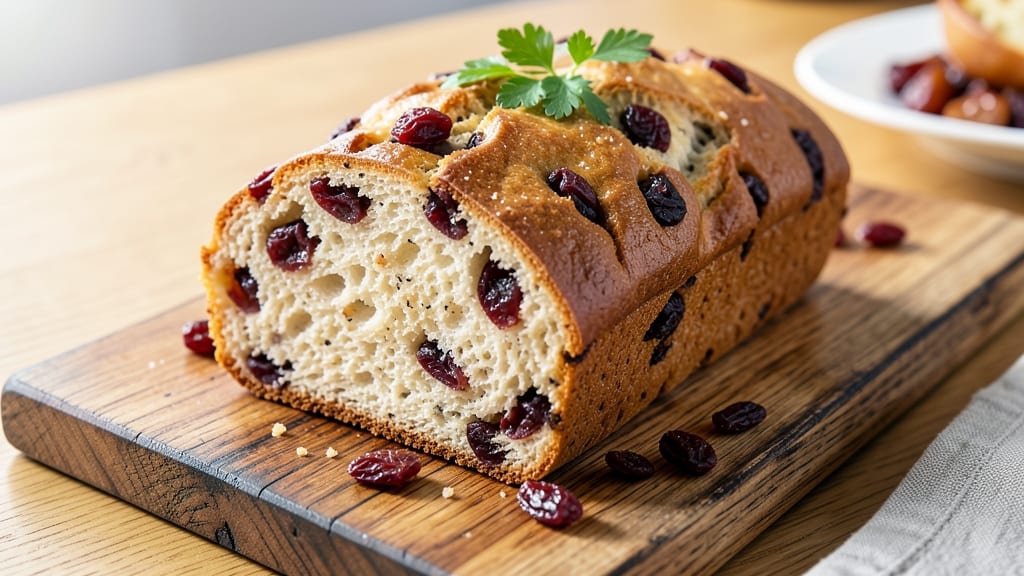
This artisan raisin bread recipe delivers the perfect balance of sweet fruit swirls and a crusty crown that rivals bakery favorites. 💛 The secret lies in a laminated dough technique that creates those signature flaky layers while keeping the raisins plump and juicy throughout baking.
I've perfected this recipe over years of testing, ensuring every loaf emerges with an irresistible aroma and tender crumb.
What makes this recipe special is the overnight dough preparation, which allows flavors to develop fully while making the actual baking process simpler.
The dough incorporates butter, eggs, and milk for richness, while the raisins get a quick soak in rum or orange juice before being folded into the dough—this ensures they stay moist and sweet. Traditional steam during baking creates that coveted crispy crust without compromising the soft interior.
The result is a loaf with a golden, crackly crust and a tender crumb studded with plump raisins in every bite. This bread is perfect for breakfast toast, sandwiches, or serving alongside soups and salads.
The recipe yields one 9x5-inch loaf, but you can easily double it for gatherings. Let's get started on creating your own bakery-style raisin bread at home.
One of the best aspects of this recipe is its versatility—you can adjust the raisin quantity to your preference or even swap them for dried cranberries or apricots. The dough's flexibility also makes it ideal for shaping into free-form boules or baguettes if you're feeling adventurous.
With just a few simple ingredients and a little patience, you'll have a loaf that tastes like it came from a professional bakery.
Ingredients for artisan raisin bread
Sweet swirls meet flaky layers—just 11 ingredients transform your kitchen into a bakery.
| Ingredient | Amount | Notes |
|---|---|---|
| All-Purpose Flour 🌾 | 5 cups | High-protein preferred for chewiness |
| Unsalted Butter 🧈 | 1 cup | Cold, cubed for laminating |
| Granulated Sugar 🍚 | ½ cup | Light brown preferred for depth |
| Large Eggs 🥚 | 2 whole | Room temperature for even mixing |
| Whole Milk 🥛 | ¾ cup | Warm for better yeast activation |
| Active Dry Yeast 🍞 | 2 ¼ tsp | Freshly opened for potency |
| Sea Salt 🧂 | 1 ½ tsp | Fine grain preferred |
| Raisins 🍇 | 1 ½ cups | Golden or dark, plump variety |
| Dark Rum 🍹 | 2 tbsp | Or orange juice for non-alcoholic |
| Cornmeal 🌽 | ¼ cup | For dusting bread pan |
| Ice Water 💧 | ½ cup | For dough hydration control |
The butter is non-negotiable here—European-style unsalted with at least 82% fat content creates those signature flaky layers. Grab it from Whole Foods or the bakery section of Kroger if you want to splurge. For the flour, King Arthur or Gold Medal are my go-tos—they've got that perfect protein balance for both structure and tenderness. Raisins? Sun-Maid golden raisins are my secret—plump and sweet, but any good-quality brand works. The yeast needs to be fresh, so check the expiration date—Saf-Instant is my backup if I forget to buy active dry yeast.
No dark rum? Fresh orange juice works perfectly—just use the same amount. Want to swap raisins? Dried cranberries or apricots add different flavors but keep that chewy texture. Short on butter? Vegetable shortening at the same weight works in a pinch, though it won't be quite as flavorful. The milk should be warm but not hot—microwave for 30 seconds if it's cold from the fridge. For the sugar, light brown adds subtle molasses notes that complement the raisins beautifully, but white sugar works if that's what you have.
This dough needs overnight rest—plan ahead! Store the shaped loaf in a paper bag at room temperature for up to 3 days to keep that bakery-fresh crust. Freeze the dough before baking for up to 3 months—just thaw overnight in the fridge before baking. The rum-soaked raisins can be prepped a day ahead and stored in the fridge. For extra crispiness, spray the crust with water before baking and place an ice cube in the oven when you put it in—trust me on this!
Why You'll Love This Recipe
- No-Knead Magic: That’s right—no stand mixer, no arm workout. Just mix, let it rise, and bake. The butter and milk create a tender crumb that practically melts in your mouth, while the raisins plump up from the warm oven. Honestly, I’ve made this on lazy Sundays when I couldn’t be bothered to measure flour properly, and it still turned out fine. (Yes, even on a Tuesday night.)
- Sweet Without Syrup: The sugar here isn’t just for sweetness—it caramelizes just enough to give the crust a golden, crackly edge while keeping the inside soft. And the raisins? They’re not drowned in jam or soaked in syrup; they stay juicy and bright, like a little burst of fruit in every bite. Between us, this is the kind of bread that makes store-bought raisin bread taste like a sad afterthought.
- Breakfast to Brunch: Toast it for a buttery morning, drizzle with honey for a quick snack, or serve warm with jam for a cozy weekend brunch. I’ve even used slices to top my oatmeal when I’m in a rush—crunchy, sweet, and way better than cereal. The milk and eggs give it a richness that holds up to anything you throw at it, whether it’s peanut butter or a sprinkle of cinnamon sugar.
- Leftovers That Last: A loaf this size feeds my family for days, and it stays fresh longer than most bread I’ve tried. The butter keeps it from drying out, and the raisins add just enough moisture to prevent that sad, crusty exterior. I’ll be real: I’ve reheated slices in the toaster the next morning, and they taste like they were just baked. Budget-friendly? Absolutely. But more importantly, it’s the kind of bread that makes you feel like you’ve done something special—even if you didn’t.
Step-by-step instructions for artisan raisin bread
This bread delivers a perfect balance of sweet raisin swirls and crispy crust—here's exactly how to nail it.
👨🍳 Step 1: Activate the Yeast and Prepare the Raisin Mixture
In a small bowl, combine the 0.75 cup warm whole milk with the 2.25 tsp active dry yeast and let it sit for 5-10 minutes until it becomes frothy. This tells you your yeast is alive and ready to work. In a separate bowl, toss the 1.5 cups raisins with the 2 tbsp dark rum—this soaking process plumps them up and infuses them with flavor. Let them sit while you prepare the dough.
Here's the thing—warm milk is crucial. If it's too hot, you'll kill the yeast; if too cold, it won't activate. Test the milk by dipping your finger in—it should feel like bath water, not scalding. The rum adds depth, but if you prefer a non-alcoholic version, swap it for orange juice. Just make sure your raisins are fully coated before moving on.
👨🍳 Step 2: Mix the Dough and Incorporate Butter
In the bowl of a stand mixer fitted with the dough hook, combine the 5 cups all-purpose flour, 0.5 cup granulated sugar, and 1.5 tsp sea salt. Mix on low speed until just combined. Add the yeast-milk mixture and mix again until a shaggy dough forms. This is where the magic starts—don't rush this step.
With the mixer running on low, gradually add the 1 cup cold cubed unsalted butter. The butter should incorporate slowly, creating small pea-sized pieces throughout the dough. This cold butter method creates those beautiful flaky layers later. Once fully incorporated, add the soaked raisins and mix on low just until distributed—overmixing will toughen the dough and make those sweet pockets disappear.
⏰ Step 3: Knead Until Smooth and Elastic
Knead the dough on medium speed for 5-7 minutes until it becomes smooth, elastic, and pulls away from the sides of the bowl. You'll know it's ready when it forms a windowpane—stretch a small piece and it should thin enough to see light through without tearing. This develops the gluten structure that gives artisan bread its signature chew.
If the dough feels too sticky, add 1-2 tablespoons of ice water at a time until it comes together. The dough should be soft but not wet. Real talk: don't skip the kneading. I've tried shortcuts, and they always result in dense bread. This step is what transforms simple ingredients into something extraordinary.
🥘 Step 4: First Rise and Shape the Loaf
Lightly grease a large bowl with butter and place the dough inside. Cover with a damp towel and let it rise in a warm place for 1-2 hours, or until it has nearly doubled in size. The dough should be puffy and jiggly when you gently press it—this indicates proper fermentation. If your kitchen isn't warm, place the bowl on top of your oven with the light on (not the heat).
Once risen, punch down the dough to release air and shape it into a log on a lightly floured surface. Here's where it gets fun—roll the dough up tightly, then fold the ends under to create a neat loaf shape. Place it seam-side down in a 9x5-inch loaf pan that's been dusted with 0.25 cup cornmeal. The cornmeal prevents sticking and adds a lovely texture to the crust.
🔥 Step 5: Proof and Bake to Golden Perfection
Cover the loaf pan with a towel and let it proof for another 30-45 minutes until it's domed slightly above the pan. Preheat your oven to 375°F while the bread proofs. This second rise is crucial—it develops those air pockets that make artisan bread so satisfying.
Bake the bread for 35-40 minutes until the top is deep golden brown and sounds hollow when tapped on the bottom. For extra browning, brush the top with milk or egg wash just before baking. The internal temperature should reach 190-200°F. Let it cool in the pan for 10 minutes, then transfer to a wire rack. This resting period prevents a gummy crumb.
Here's the moment you've been waiting for—slice into that beautiful loaf. You should see those sweet raisin swirls throughout, with a crispy crust that gives way to a tender, chewy interior. The aroma alone is worth the effort. Serve warm with butter or jam for the ultimate experience.
Pro Tips For Making Artisan Raisin Bread
- SOAK RAISINS FIRST: Toss raisins in warm milk and a pinch of salt for 15 minutes before mixing—this plumps them up and cuts that dried-out chewiness. I used to skip it, and the bread always tasted like it needed a drink.
- MEASURE FLOUR BY WEIGHT: Scoop flour into the bowl, then level with a knife—don’t pack it down. Spooning and scooping adds air, but packing it makes the dough dense. My first few loaves were brick-heavy until I switched.
- LET DOUGH RISE UNTIL DOUBLED: Check for readiness by poking the dough—if it springs back slowly, it’s ready. I learned this the hard way: under-risen dough collapses in the oven, and over-risen dough flattens like a pancake.
- USE ROOM-TEMP BUTTER: Take butter out of the fridge 30 minutes before mixing—it should be soft but not greasy. Cold butter creates pockets but weakens gluten, while melted butter makes the bread greasy. Find that happy middle.
Regional styles of this recipe
French Brioche Style
In France, raisin bread often takes on a brioche-inspired richness by incorporating more eggs—try adding 3 extra egg yolks to the dough for a luxurious texture.
The French version typically uses dark brown sugar (about ¼ cup) and replaces half the raisins with chopped candied orange peel for a citrusy depth.
Shape the dough into a boule instead of a loaf, and bake at 350°F for 45-50 minutes—the slower bake enhances the brioche's tender crumb. 🥖
Southern U.S. Sweet Potato Twist
Down South, this bread often gets a sweet potato boost by replacing ½ cup of the flour with ½ cup mashed cooked sweet potato. Add 1 tsp cinnamon and ½ tsp nutmeg to the dough, and swap raisins for dried cranberries.
The Southern version often includes pecans (about ½ cup chopped) for crunch. Bake in a cast-iron skillet for a rustic, crackly crust that's perfect with sweet tea. 🍠
German Pretzel-Inspired Crust
German bakers often create a pretzel-like crust by boiling the shaped dough in salted water for 30 seconds before baking.
For this version, use 1 tsp baking soda in the dough and brush the boiled loaf with 1 egg wash mixed with 1 tbsp water before baking at 425°F for 25 minutes. The result? A deep, caramelized crust with a chewy interior.
Serve with mustard butter for an authentic German touch. 🥨
Italian Panettone-Inspired
For an Italian-inspired version, increase the butter to 1.5 cups and add ½ cup dried figs alongside the raisins. Fold in ½ cup toasted hazelnuts for crunch. Shape the dough into a round loaf and bake at 325°F for 50-55 minutes—the lower temperature keeps the interior moist.
Finish with a dusting of powdered sugar for a festive touch. This version works beautifully during the holidays. 🎄
Scandinavian Cardamom Version
In Scandinavian countries, raisin bread often includes 1 tbsp ground cardamom for a warm, aromatic twist. Replace half the raisins with dried apples and add ½ cup chopped almonds. The dough should be slightly denser, so reduce the milk to ½ cup.
Bake at 350°F for 40 minutes in a round pullman pan for an even bake. Serve with lingonberry jam for a Nordic-inspired breakfast. ❄️
Modern Gluten-Free Adaptation
For a gluten-free version, replace the all-purpose flour with a 1:1 gluten-free baking flour blend (like Bob's Red Mill) and add 1 tbsp xanthan gum. Use ½ cup Greek yogurt instead of milk and 1 extra egg for binding.
The dough will be stickier, so wet your hands when shaping. Bake at 350°F for 45-50 minutes—the extra time ensures even cooking. 🌱
Nutrition facts
Frequently asked questions
Why does the dough need overnight rest?
The overnight rest allows the flour's gluten to fully develop and the flavors to meld together. This slow fermentation creates a more complex taste and tender crumb. The dough can be refrigerated up to 24 hours for even better flavor development.
Can I substitute the rum with something else?
Yes! Use orange juice or apple cider in equal amounts for a non-alcoholic version. The liquid helps plump the raisins and adds moisture. If you prefer a different flavor, try vanilla extract (1 tsp) mixed with water for a subtler sweetness.
What if my dough doesn't rise properly?
Check these common issues: expired yeast, cold milk, or a drafty kitchen. Place your bowl in a warm oven with the light on (not heat) to create a consistent 80°F environment. If using active dry yeast, ensure it's fresh—test by dissolving 1 tsp in warm water with a pinch of sugar; it should bubble within 5 minutes.
How do I make this bread without a stand mixer?
Mix the dough by hand in a large bowl using a wooden spoon, then knead on a floured surface for 8-10 minutes until smooth. Press and fold the dough repeatedly to develop gluten. For butter incorporation, cut it into small pieces and work it into the dough with your fingers—this creates those flaky layers too!
Can I freeze the baked bread?
Yes! Cool the bread completely, wrap tightly in plastic wrap, then place in a freezer bag. It stays fresh for 3 months. To serve, thaw at room temperature for 1-2 hours or warm in a 350°F oven for 10 minutes wrapped in foil. The texture remains moist when properly stored.