
Main Courses
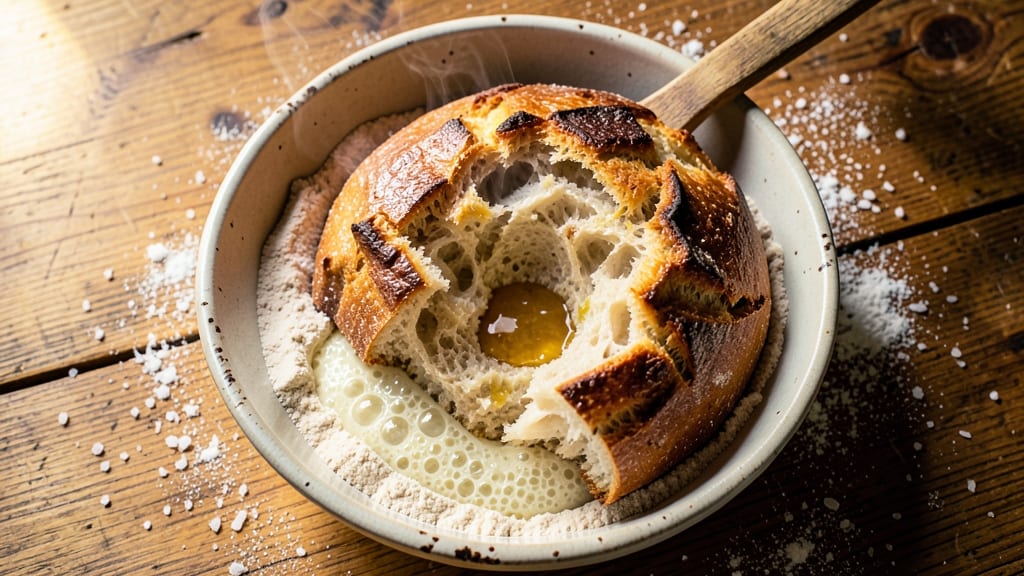
This artisan bread recipe delivers the kind of sourdough-style crust and deep fermented flavor Reddit bakers obsess over—without the complexity. The secret lies in a two-day fermentation process that develops complex flavors and an open, airy crumb, while precise shaping and steam baking create that coveted golden crust.
I’ve refined this method after years of experimentation, ensuring it’s approachable yet delivers professional results.
What sets this recipe apart is the autolyse technique, where flour and water rest before adding yeast and salt. This step develops gluten gradually, leading to a lighter texture and easier handling.
The dough ferments at room temperature first, then in the refrigerator overnight—a method that enhances flavor while keeping your kitchen cool. No special equipment is needed beyond a Dutch oven for baking.
By the time it emerges from the oven, you’ll have bread with a crisp, caramelized crust and a tender, open crumb that holds up to days of storage. The fermentation process also makes this bread more digestible than quick-rise versions, with a depth of flavor that comes from patience.
This is the kind of bread that makes homemade feel like a bakery experience.
Whether you’re a beginner or an experienced baker, this recipe scales easily and adapts to whole grains or seeds. The key is attention to timing and temperature—both of which I’ll walk you through in detail. Let’s get started on your next loaf.
Ingredients for artisan bread recipe reddit
High-protein flour, active starter, and precise hydration unlock that coveted artisan crumb and crust.
| Ingredient | Amount | Notes |
|---|---|---|
| Bread Flour 🌾 | 5 cups | High-protein, 12-14% for best gluten development |
| Active Sourdough Starter 🍞 | 1 cup | Fed and bubbly, 100% hydration |
| Water 💧 | 3 ½ cups | Lukewarm, 80-85°F for ideal hydration |
| Instant Yeast 🍄 | ¼ tsp | For backup fermentation boost |
| Kosher Salt 🧂 | 1 ½ tsp | Diamond Crystal preferred for purity |
| Honey 🍯 | 1 tbsp | Light variety for subtle sweetness |
| Olive Oil 🫒 | 1 tbsp | Extra-virgin for dough elasticity |
| Cornmeal 🌽 | ¼ cup | For dusting and preventing sticking |
| Ice Cubes ❄️ | 1 cup | For dough chilling before shaping |
| Rice Flour 🌾 | 2 tbsp | For steam generation in Dutch oven |
| Sesame Seeds 🌱 | 1 tbsp | Optional for decorative crust |
The bread flour is non-negotiable here—King Arthur or Caputo are my go-tos, but any high-protein (12-14%) will work. Your sourdough starter should be at peak activity (bubbly, doubled in 4-6 hours)—Whole Foods or local bakeries often sell reliable starters if you're not maintaining one. The water temperature matters more than you'd think: too hot kills yeast, too cold slows fermentation. 80-85°F is ideal, so you might need to adjust based on your kitchen. For the honey, Manuka or clover work beautifully, but any light variety adds just enough sweetness to balance the tangy fermentation. I always buy olive oil in small bottles—California brand from the grocery store's olive oil aisle keeps better than large jugs.
No sourdough starter? Instant yeast plus a splash of vinegar mimics some of the tang, though it won't replicate the depth. Running short on bread flour? All-purpose plus 1 tbsp vital wheat gluten gets you close. The rice flour for steam? Substitute with cornmeal if needed—it's what I do when I forget to buy it. For the sesame seeds, toasted in a dry pan for 2 minutes brings out their nuttiness, but raw works in a pinch. The cornmeal dusting? Skip it if you're using a well-floured work surface, but it prevents sticking like magic when shaping. Pro tip: if your kitchen's too warm, place your dough bowl on ice cubes to regulate temperature during bulk fermentation.
This dough is a patient's game—3 days total fermentation time, but worth every minute. Shape your loaves and refrigerate overnight for 8-12 hours (longer = more flavor). The Dutch oven with rice flour on the bottom and top creates that steam bath for that perfect crust. Store wrapped at room temp for 2-3 days or freeze for up to 3 months. I always make a double batch—one for eating, one for freezing. The bread actually improves after 2-3 days as the starches retrograde, giving you that bakery-fresh crunch. For reheating, 5 minutes at 350°F brings back that oven-fresh warmth.
Why You'll Love This Recipe
- Four-Ingredient Magic: This recipe nails the "artisan" vibe without the fuss—just flour, starter, water, and a pinch of salt. No fancy mix-ins, no stress, just pure, reliable bread that tastes like you spent hours kneading when you really didn’t.
- Crust That Cracks: That golden, shatterable crust? It’s all in the steam and the high-gluten bread flour. One pull apart, and you’ll understand why people lose their minds over this—it’s the kind of bread that makes you slow down and savor every bite.
- Weeknight Workhorse: Between us, this is my go-to for sandwiches, toast, or even a quick charcuterie board. The sourdough starter adds depth, but the instant yeast keeps it from taking all day—so it’s ready when you are, even on nights when you’d rather binge Netflix than bake.
- Stretch Every Dollar: A loaf costs me pennies but feels like a splurge. The starter’s tang cuts through butter, the salt balances everything, and it keeps for days—so you’re not scrambling to use it up before it dries out. Budget-friendly doesn’t mean boring, especially when it tastes this good.
Step-by-step instructions for sourdough-style artisan bread
Here's how to craft a rustic loaf with that coveted deep fermented flavor and crackling crust.
Mix the Dough for Maximum Gluten Development
In a large mixing bowl, combine the 5 cups bread flour, 1 cup active sourdough starter, 1.5 tsp kosher salt, and 1 tbsp honey. Mix these dry ingredients together using a wooden spoon or your hands until evenly distributed. This creates a uniform base before adding liquids.
In a separate small bowl, whisk together the 3.5 cups lukewarm water (80-85°F) and 1 tbsp extra-virgin olive oil. The oil helps create a more elastic dough while adding subtle flavor. Pour the wet mixture into the dry ingredients and stir vigorously for 2-3 minutes until a shaggy dough forms. You'll notice the dough becomes sticky but should still pull away from the bowl sides.
For the final touch, add the 0.25 tsp instant yeast and mix just until combined. The yeast acts as a backup to ensure proper fermentation alongside your sourdough starter. Let the dough rest uncovered at room temperature for 30 minutes while you prepare your workspace.
Develop the Dough Through Autolyse and Initial Kneading
After the initial rest, wet your hands with water and perform a "stretch and fold" technique every 30 minutes for 2 hours. This builds gluten structure without overworking the dough. For each fold, wet your fingers, grab one side of the dough, stretch it upward, and fold it over itself. Rotate the bowl and repeat on all four sides.
After these initial folds, perform a more thorough kneading session. Turn the dough onto a lightly floured surface and knead for 8-10 minutes until smooth and elastic. The dough should feel firm but still slightly tacky. If it's too sticky, add small amounts of bread flour 1 tablespoon at a time until it becomes more manageable.
Here's the thing—this dough needs time to develop. Place it back in the bowl, cover with a damp towel, and let it rest at room temperature for 1-2 hours. This resting period allows the gluten to fully relax and develop, creating that perfect open crumb structure we're after.
Bulk Fermentation with Ice Water Chill
After the rest, add the 1 cup ice cubes directly to the dough in the bowl. This sudden temperature drop helps strengthen the gluten and creates a firmer dough structure. Mix the ice into the dough until it's mostly incorporated, then cover and refrigerate for 12-16 hours. This cold fermentation develops complex flavors and improves the bread's texture.
I know it's tempting to rush this step, but patience pays off. The cold fermentation allows the yeast and sourdough starter to work slowly, creating more flavor depth. During this time, the dough will rise significantly—this is normal and indicates active fermentation.
When you're ready to shape, remove the dough from the fridge and let it sit at room temperature for 30-45 minutes. This brief warm-up makes the dough more pliable and easier to handle during shaping. The dough should be cool to the touch but not icy.
Shape and Final Proof Before Baking
Lightly dust your work surface with 0.25 cup cornmeal to prevent sticking. Divide the dough into 4 equal portions (about 1 pound each) and shape each into a round boule. To shape, cup your hands around one portion, gently pulling the dough upward and inward to create surface tension. Rotate the boule in your hands, applying even pressure to create a smooth, taut surface.
Place each shaped boule seam-side up in a lightly greased bowl, cover with a damp towel, and let them proof at room temperature for 1-2 hours or until they've risen by about 50%. The dough should feel slightly springy when pressed gently with a finger. This final proof creates the airy crumb structure we want in artisan bread.
Bake with Steam for Maximum Crust Development
Preheat your oven to 450°F with a Dutch oven inside for 45 minutes. This intense heat creates the perfect environment for steam generation. Remove the Dutch oven and carefully transfer the dough boules inside, sprinkling each with 2 tbsp rice flour on top. The rice flour helps create steam during baking, which is crucial for that crackling crust.
Bake covered for 20 minutes, then remove the lid and bake for an additional 20-25 minutes until the bread reaches an internal temperature of 205-210°F. The crust should be deep golden brown with dark spots, and it should sound hollow when tapped on the bottom.
For the final touch, brush the hot bread with a little water and sprinkle with 1 tbsp sesame seeds while still in the Dutch oven. This adds both visual appeal and a subtle nutty flavor. Let the bread cool on a wire rack for at least 1 hour before slicing—this allows the crumb to set properly and prevents a gummy texture.
Pro Tips For Making Artisan Bread Recipe Reddit
- STRETCH AND FOLD: I learned this the hard way—when mixing your starter and bread flour, don’t just stir. Use a dough scraper to stretch and fold the dough three times during the autolyse (the first rest). This develops gluten faster and makes shaping later way easier, especially if you’re using that 70% hydration ratio Reddit loves.
- WEIGH YOUR WATER: Your sourdough starter’s hydration matters, but so does the water in the dough. Use a scale for both—bread flour absorbs water differently than you’d guess. I used to eyeball it, and my crusts were either gummy or cracked. Stick to 65-70% hydration (by weight) for this recipe, and adjust by 2% if your kitchen’s humid.
- SALT THE BOWL: Add your kosher salt directly to the flour when mixing, not to the water first. Salt dissolves unevenly in cold water, and you’ll end up with pockets of unsalted dough that taste bland. Sprinkle it over the flour before adding water—this guarantees even distribution, and your crust will thank you.
- SKIP THE OVERPROOFING: Instant yeast is fast, but it’s not magic. If your dough rises too long (beyond 1.5x its size), it collapses when baked. Set a timer for 1-2 hours max at room temp, then check for the "poke test"—if it springs back slowly, it’s ready. Overproofed dough tastes flat, and no amount of shaping fixes that.
Best sauces and condiments for this artisan bread recipe reddit
Classic Olive Oil
Drizzle freshly baked artisan bread with extra-virgin olive oil straight from the bottle—this is the simplest, most traditional pairing. I recommend California brand olive oil for its balanced peppery finish, which complements the bread's tangy fermentation.
Warm the oil slightly by swirling it in a small bowl before drizzling to enhance its aromatic qualities. A light drizzle (about 1 tbsp) is perfect for spreading on toasted slices. 🫒
Garlic-Herb Compound Butter
For a flavor-packed upgrade, whip together ½ cup softened unsalted butter, 2 minced garlic cloves, 1 tbsp fresh parsley, 1 tsp kosher salt, and ½ tsp black pepper. Roll into a log, chill for 30 minutes, then slice and spread on warm bread.
The butter's richness balances the bread's crusty exterior while the garlic and herbs harmonize with the fermented flavors. Store leftovers in an airtight container for up to 1 week.
Whole Grain Mustard
A Dijon-style mustard (like Maille or Amora) adds a sharp, tangy contrast that cuts through the bread's richness. Mix 1 tbsp mustard with 1 tsp honey for a sweet-spicy balance.
Spread on a slice, then top with avocado or smoked salmon for a gourmet sandwich. The mustard's acidity also helps break down the bread's gluten, making it easier to digest. 🌾
Spiced Honey Drizzle
Combine ¼ cup honey with ½ tsp ground cinnamon, ¼ tsp cayenne pepper, and a pinch of sea salt for a sweet-spicy glaze. Warm the mixture gently in a small saucepan until smooth, then drizzle over sliced bread.
This pairing works especially well with whole grain or seeded loaves, where the spices echo the bread's natural nuttiness. Store the spiced honey in a small glass jar in the fridge for up to 2 weeks.
Cream Cheese & Everything Bagel Seasoning
Spread 2 oz softened cream cheese on toasted bread, then sprinkle generously with everything bagel seasoning (or mix 1 tsp sesame seeds, ½ tsp poppy seeds, ½ tsp dried garlic, and ¼ tsp onion powder).
The cream cheese softens the bread's crust, while the seasoning adds a crunchy, savory finish. This combo is a Reddit favorite for breakfast or snacking—trust me, it’s addictive. 🌟
Balsamic Glaze Reduction
Simmer ½ cup balsamic vinegar in a small saucepan until reduced by half (about 10 minutes). Let cool, then drizzle over warm bread slices. The vinegar's acidity enhances the bread's fermented tang, while its caramelized sweetness adds depth.
For extra richness, finish with a drizzle of aged balsamic glaze (like Giovanni Rossi) and a sprinkle of flaky sea salt. Pair with provolone cheese for a showstopping appetizer. 🍷
Nutrition facts
Frequently asked questions
Can I make this artisan bread without a sourdough starter?
Yes! Replace the 1 cup sourdough starter with 1 cup warm water plus 1 tbsp apple cider vinegar to mimic some tanginess. Add an extra 0.25 tsp instant yeast to compensate for the lack of fermentation power. The flavor won't be identical, but you'll still get a delicious loaf with a good crust. For best results, extend the cold proof to 24 hours to maximize flavor development.
Why does my dough feel too sticky after mixing?
Sticky dough is normal with high hydration (like this recipe's 70% hydration). The solution? Wet your hands and work surface with water, then use the stretch and fold method during bulk fermentation. If it's unbearably sticky, add 1 tbsp bread flour at a time until manageable—but don't overdo it, or your crust will suffer. The ice water chill step later helps firm up the dough before shaping.
How do I know when the bread is fully baked?
Look for three key signs: the internal temperature should reach 205-210°F (use an instant-read thermometer), the crust should be deep golden brown with dark spots, and it should sound hollow when tapped on the bottom. If you're unsure, bake 5 more minutes—underbaking is easier to fix by warming in a 350°F oven for 10 minutes than overbaking, which dries out the crumb.
Can I use whole wheat flour instead of bread flour?
You can substitute up to 25% whole wheat flour (about 1.25 cups) for a nuttier flavor and denser texture. For best results, replace the same amount of bread flour and add 1 extra tbsp vital wheat gluten to maintain structure. Whole wheat dough ferments faster, so reduce the bulk fermentation time by 1-2 hours and watch closely for overproofing. The crust will be slightly less crisp, but the flavor improves dramatically.
What's the best way to reheat stale artisan bread?
Wrap the bread in a damp towel and microwave for 10-15 seconds to restore moisture, or toast slices in a 375°F oven for 5-7 minutes until crispy. For maximum crust revival, place slices on a baking sheet and broil for 2-3 minutes—this creates that fresh-from-oven crunch. Never reheat in plastic, as it traps steam and makes bread gummy. Store bread in a paper bag at room temperature to maintain crispness longer.