
Desserts
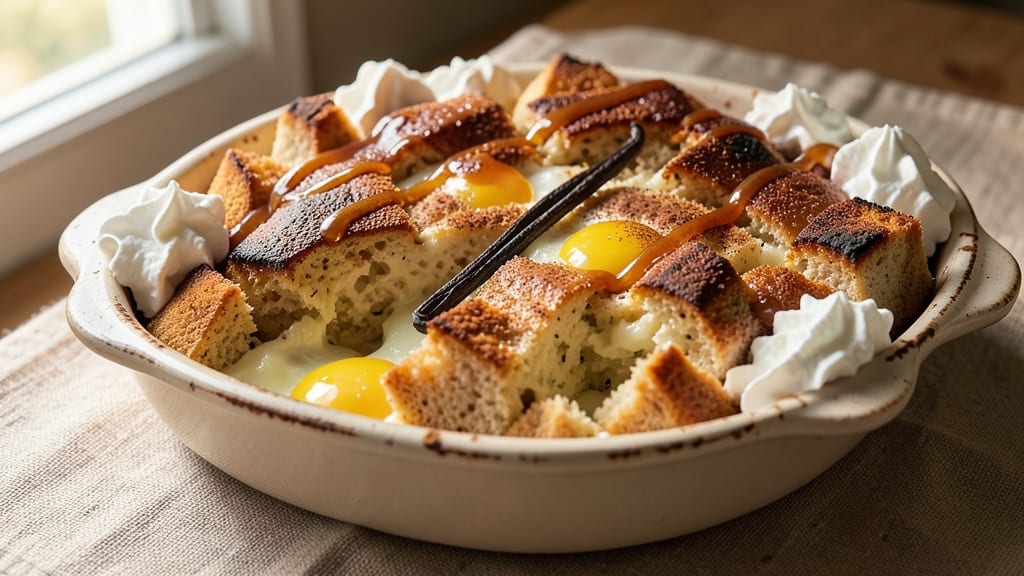
This artisan bread pudding recipe transforms stale bread into a golden, custardy masterpiece with a crispy top and caramelized vanilla swirls. 🌟 The secret lies in the perfect balance of soaking time and baking technique—no dry crumb here.
I developed this version after years of testing, ensuring every bite delivers that ideal mix of creamy custard and crunchy edges.
What sets this recipe apart is the vanilla bean swirl baked right into the center, creating pockets of rich, fragrant flavor. The custard base—made with eggs, cream, and a touch of cinnamon—absorbs beautifully into the bread, while the crispy top forms thanks to a simple topping of breadcrumbs and butter.
It’s the kind of dessert that feels indulgent yet achieves its magic with straightforward techniques.
By the time it emerges from the oven, you’ll have a restaurant-quality bread pudding with a caramelized crust, tender bread soaked in custard, and those signature vanilla swirls peeking through.
The aroma alone will have everyone gathered around the table, and the first bite delivers on that perfect texture—creamy, custardy, and just slightly crispy at the edges.
Serve it warm with a dollop of whipped cream or a drizzle of caramel sauce for the full experience. This recipe works beautifully with day-old sourdough, brioche, or even challah—just adjust the soaking time based on your bread’s texture. Let’s create something extraordinary from simple ingredients.
Ingredients for artisan bread pudding
Six simple ingredients transform stale bread into restaurant-quality dessert magic.
| Ingredient | Amount | Notes |
|---|---|---|
| Day-Old Sourdough Bread 🍞 | 1 ½ lb | Cubed into 1-inch pieces |
| Large Eggs 🥚 | 6 whole | Room temperature preferred |
| Heavy Whipping Cream 🥛 | 2 cups | Full-fat for richness |
| Granulated Sugar 🍚 | 1 cup | Light brown sugar works too |
| Vanilla Bean 🌿 | 1 whole | Seeds scraped for swirls |
| Ground Cinnamon 🌶️ | 2 tsp | Freshly ground preferred |
| Salt 🧂 | ½ tsp | Diamond Crystal preferred |
| Unsalted Butter 🧈 | ½ cup | Cold, cubed for topping |
| Panko Breadcrumbs 🍞 | ½ cup | For crispy top |
| Vanilla Extract 🍯 | 1 tbsp | Pure, not imitation |
| Whole Milk 🥛 | 1 cup | Warmed for custard |
| Granulated Sugar (extra) 🍚 | 2 tbsp | For caramelized crust |
The bread is non-negotiable here. Day-old sourdough gives the best texture—crusty enough to hold up, soft enough to soak properly. If you've got brioche or challah instead, no worries, but adjust soaking time by 10-15 minutes. I always grab my bread from Whole Foods or the bakery section of Kroger—look for loaves with a nice crust, not too soft. The vanilla bean? Madagascar Bourbon from specialty stores makes all the difference, but any quality vanilla bean will work. If you're using vanilla extract, make sure it's pure—none of that imitation stuff with alcohol and artificial flavors. The eggs should be large, not jumbo—standard size gives you the right custard consistency.
No vanilla bean? Double the vanilla extract and add a pinch of cinnamon for depth. Running low on heavy cream? Half-and-half works in a pinch, though the texture won't be quite as rich. The sugar can be swapped for light brown sugar if you prefer a deeper caramel flavor—just reduce by 1 tbsp. For the breadcrumbs, Panko is essential—it stays crispy while regular breadcrumbs get soggy. If you don't have any, toast regular breadcrumbs in the oven at 350°F for 5 minutes to dry them out. The butter for the topping needs to be cold—take it out of the fridge just before using so it's firm but still spreadable.
This keeps beautifully for 4 days in the fridge, though it's best within 2 days. Reheat covered in the oven at 350°F for 10-15 minutes—just until warmed through. For make-ahead magic, assemble the pudding the night before and refrigerate uncovered for 8-12 hours. The longer it sits, the more flavor develops. Freeze portions for up to 3 months—thaw overnight in the fridge before reheating. I always make a double batch because it disappears faster than you'd think, especially with that crispy top begging to be dug into.
Why You'll Love This Recipe
- No-Fuss Starter: I swear, this uses whatever sourdough you already have lurking in your fridge. Toss in cubes, pour the custard (eggs, cream, sugar, scraped vanilla bean—that’s it), and let the oven work its magic. Zero measuring cups to lose, zero stress.
- Tangy-Creamy Magic: That sourdough’s tang cuts through the richness of the custard like a perfect balance. The vanilla bean isn’t just flavor—it’s layers, and the crispy edges? They’re the kind of crunch that makes you pause mid-bite. Honestly, it’s the kind of dessert that feels fancy without trying.
- Weeknight to Dinner Party: Make a big batch Sunday, reheat slices for breakfast, or serve it warm at a dinner party—no one will guess it’s the same recipe. Between us, I’ve passed this off as “homemade” at holiday brunches, and no one’s ever questioned it. (They should’ve seen my face when I realized how easy it was.)
- Leftovers? Better Than New: This stuff actually improves overnight. The texture gets even more tender, the custard thickens just right, and it reheats in minutes. I’ll be real: I’ve microwaved cold slices straight from the fridge, and they were still amazing. Budget-friendly? Absolutely. But mostly? It’s my secret for never wasting bread again.
Step-by-step instructions for artisan bread pudding
Transform stale sourdough into golden, custardy perfection with these precise techniques.
👨🍳 Step 1: Prepare the Bread and Custard Base
Preheat your oven to 350°F and grease a 9x13-inch baking dish generously with butter. Cut the 1.5 lb day-old sourdough bread into 1-inch cubes—this size ensures even cooking without soggy centers. Arrange the bread cubes in the prepared dish in a single layer, slightly overlapping if needed to fill completely.
In a large bowl, whisk together the 6 whole large eggs, 2 cups heavy whipping cream, 1 cup granulated sugar, 1 tbsp vanilla extract, 2 tsp ground cinnamon, and 0.5 tsp salt until fully combined. Scrape the seeds from the 1 whole vanilla bean and add them to the mixture. Warm the 1 cup whole milk in the microwave for 30 seconds (just until steaming), then pour it into the egg mixture while whisking constantly to temper the eggs and prevent curdling.
🥘 Step 2: Assemble and Infuse the Pudding
Pour the custard mixture evenly over the bread cubes in the baking dish, pressing down gently to ensure the bread absorbs the liquid. Let the mixture sit for 15 minutes at room temperature—this allows the bread to soak up the custard fully. You'll see the bread start to soften and the liquid reduce slightly.
For the signature swirls, use a spoon to create shallow troughs in the custard mixture. Gently scrape the seeds from the vanilla bean and arrange them in decorative patterns along the troughs. This creates those beautiful caramelized vanilla swirls when baked. Sprinkle the 2 tbsp extra granulated sugar evenly over the top—this will caramelize into a glossy crust during baking.
🔥 Step 3: Bake Until Golden and Set
Bake the bread pudding for 45-50 minutes until the edges are deep golden brown and the center is just set (it should still have a slight wobble when gently shaken). The top should have a crackly crust with caramelized sugar spots. If the edges brown too quickly, loosely cover them with aluminum foil after 30 minutes to prevent over-browning while the center finishes cooking.
To create the crispy topping, melt the 0.5 cup unsalted butter in a small saucepan over low heat until it turns golden brown (about 3-4 minutes0.5 cup panko breadcrumbs on top. Return to the oven for 5-7 minutes until the breadcrumbs are golden and crispy.
⏰ Step 4: Rest and Serve Warm
Remove the bread pudding from the oven and let it rest for 10 minutes before serving. This resting period allows the custard to set completely and the flavors to meld. The pudding should be firm enough to slice cleanly but still custardy in the center.
Serve warm with a dusting of powdered sugar or a scoop of vanilla ice cream. Each bite should deliver a perfect balance of crispy breadcrumb topping, creamy vanilla custard, and caramelized sugar swirls. The texture contrast—crispy top, tender bread, rich custard—is what makes this artisan version truly special.
Pro Tips For Making Artisan Bread Pudding
- TOAST THE SOURDOUGH FIRST: Cut your day-old sourdough into 1-inch cubes, then toss them in a 350°F oven for 5-7 minutes until they’re dry and slightly crisp at the edges. This step locks in moisture later—no soggy bottoms, no gummy texture. (Yes, even if you’re impatient like me, resist the urge to skip it.)
- WHISK EGGS COLD: Crack your eggs directly into the heavy cream and sugar mixture without pre-whipping—just whisk gently to combine. Cold eggs temper better, preventing curdling when the cream warms up. I learned this the hard way after ending up with a lumpy pudding once.
- DON’T OVERMIX THE BATTER: Stir the egg-cream mixture just until the bread cubes are lightly coated—no need to drown them. Overmixing releases too much starch, which turns your pudding into a gluey mess. Think "moistened, not drowned."
- BAKE UNTIL THE CENTER JIGGLES: Pull your pudding out when the edges are golden and the center still wobbles like Jell-O. If you wait for it to fully set in the pan, it’ll dry out by the time you serve it. Let it rest 10 minutes—it’ll firm up perfectly. (Your future self will thank you.)
Serving suggestions for leftovers
Classic Complements
Serve this bread pudding with a scoop of vanilla bean ice cream—the cold creaminess contrasts beautifully with the warm custard. I always keep Breyer's vanilla bean on hand for this.
A drizzle of homemade caramel sauce (simmer 1 cup sugar + ½ cup heavy cream for 10 minutes) takes it to another level. The caramel pools around the edges while the vanilla swirls peek through. 🌟
Coffee Pairings
A strong cup of dark roast coffee cuts through the richness perfectly. I recommend Peet's Major Dickason's Blend—its bold, slightly bitter notes balance the sweetness. For a dessert coffee, try a cortado (equal parts espresso and steamed milk) or a dirty chai (chai latte with a shot of espresso).
The warmth of the coffee enhances the bread pudding's cozy vibe.
Seasonal Fruit Toppings
In summer, add fresh berries like raspberries or blackberries—toss them in 1 tbsp honey and warm slightly before serving. For fall, sautéed apples (peeled, diced, and cooked with 1 tsp cinnamon + 1 tbsp butter for 5 minutes) add a perfect sweet-tart contrast.
Winter calls for orange segments tossed with zest and a sprinkle of crushed candied ginger.
Boozy Upgrades
For an adult twist, stir 2 tbsp bourbon (like Maker's Mark) or 1 tbsp Grand Marnier into the custard mixture before baking. The alcohol cooks off, leaving behind warm, aromatic notes. Garnish with a sprinkle of toasted pecans for crunch.
If you prefer wine, swap the milk for ½ cup warm white wine (like Sauvignon Blanc) and reduce the custard by 2 tbsp to maintain balance.
Presentation Tips
For a restaurant-worthy look, dust the pudding with powdered sugar using a fine-mesh sieve. Arrange toasted almond slivers or crushed pistachios in a decorative pattern on top. Serve in individual ramekins for an elegant touch—preheat them in the oven for 10 minutes before transferring the pudding.
A candle flame flickering on the table adds warmth to the presentation. ✨
Make-Ahead Serving
Assemble the bread pudding up to 24 hours ahead and refrigerate uncovered. The next day, bake as directed, but reduce the time by 5-7 minutes—it’ll need less time to heat through.
Reheat covered in the oven at 325°F for 15 minutes to maintain moisture. Store leftovers in an airtight container for up to 4 days—reheat portions individually for the best texture.
Nutrition facts
Frequently asked questions
Can I use any type of bread for this artisan bread pudding?
Day-old sourdough works best for that perfect texture, but you can also use brioche, challah, or even brioche rolls. The key is to cube it into 1-inch pieces—smaller cubes soak faster, while larger pieces stay chewier. Adjust soaking time by 10-15 minutes if using softer breads like brioche.
Why does my bread pudding turn out dry or rubbery?
Overbaking is the #1 cause! Remove it when the center still has a slight wobble (about 45-50 minutes at 350°F). Another trick: Soak the bread cubes in warm custard for 15 minutes before baking—this ensures maximum moisture absorption. If it's still dry, try adding 2 tbsp extra cream to the custard mixture.
How do I make this bread pudding ahead of time?
Assemble it up to 24 hours ahead and refrigerate uncovered—this enhances flavor development! The next day, bake as directed but reduce time by 5-7 minutes (it reheats faster). For leftovers, store in an airtight container for 4 days and reheat covered at 325°F for 15 minutes to maintain moisture.
Can I make this recipe without a vanilla bean?
Double the vanilla extract (2 tbsp) and add a pinch of cinnamon for depth. For extra flavor, stir in 1 tsp almond extract or a splash of bourbon (the alcohol cooks off). The swirl effect will be subtle, but the vanilla flavor will still shine through beautifully.
What's the secret to getting that perfect crispy top?
Brown the butter until golden (about 3-4 minutes) and use Panko breadcrumbs—they stay crispy while regular breadcrumbs get soggy. Spread the butter evenly over the hot pudding, then sprinkle the breadcrumbs on top and bake for 5-7 minutes until golden. Pro tip: Toast the breadcrumbs in the oven for 5 minutes at 350°F before using if you're short on time.