
Side Dishes
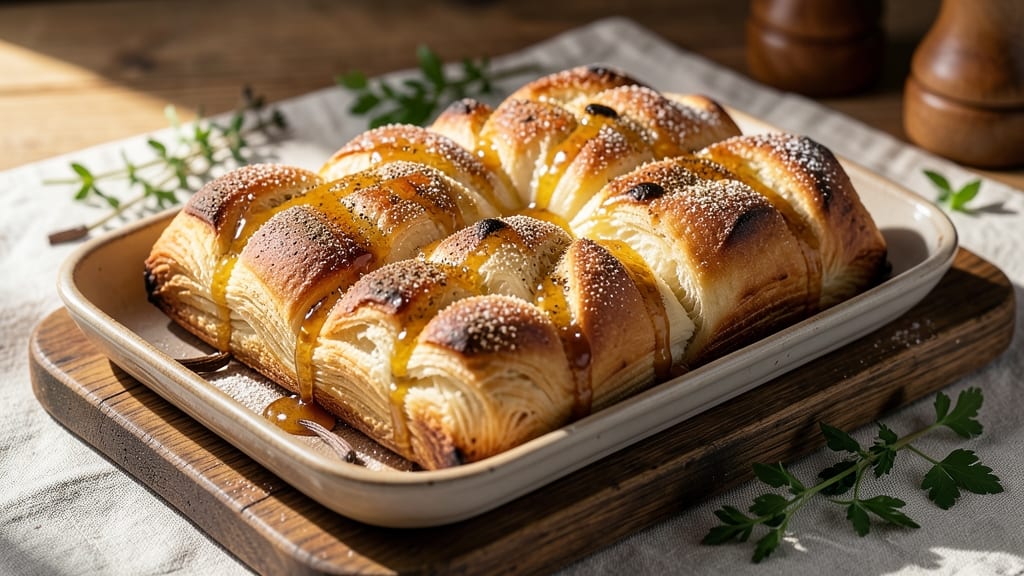
This Armenian sweet bread gata recipe brings the golden swirls of tradition to your kitchen with its signature buttery crust and cardamom-infused dough. 💛 The delicate layers and aromatic spices create a dessert that's as beautiful as it is delicious, perfect for special occasions or family gatherings.
What makes gata truly special is its unique technique of rolling and cutting the dough into intricate patterns before baking.
The process begins with a simple yet flavorful dough that combines flour, butter, and just a touch of cardamom for warmth. The real magic happens when you roll the dough thin, brush it with melted butter, and cut it into diamond shapes before baking until golden.
This traditional method ensures that every bite delivers that perfect balance of crispy edges and tender, buttery layers.
Once baked to a golden finish, gata transforms into delicate, swirled bread that's crisp on the outside and soft within. The cardamom adds a subtle, aromatic depth that pairs beautifully with strong black coffee or Armenian tea.
It's a dessert that feels luxurious yet requires only basic baking skills, making it accessible for home cooks.
Serve warm with a dusting of powdered sugar or drizzle with honey for an extra touch of sweetness. This recipe yields about 12 pieces, perfect for sharing or enjoying over several days as the flavors continue to develop. Let's create this timeless Armenian treat!
Ingredients for armenian sweet bread gata
Twelve simple ingredients transform into golden Armenian gata swirls—crisp, buttery, and cardamom-kissed perfection.
| Ingredient | Amount | Notes |
|---|---|---|
| All-Purpose Flour 🌾 | 4 cups | Sifted for light texture |
| Unsalted Butter 🧈 | 1 cup | Cold, cubed for dough |
| Granulated Sugar 🍚 | ½ cup | For subtle sweetness |
| Ground Cardamom 🌿 | 1 tsp | Freshly ground preferred |
| Large Eggs 🥚 | 1 whole | Room temperature |
| Milk 🥛 | ¼ cup | Warm for activation |
| Baking Powder 🍞 | 1 tsp | For lift and crispiness |
| Salt 🧂 | ½ tsp | Fine sea salt |
| Powdered Sugar 🍚 | ½ cup | For dusting finished gata |
| Melted Butter 🧈 | ¼ cup | For brushing layers |
| Honey 🍯 | 2 tbsp | Optional drizzle |
The cardamom is non-negotiable here—it’s what gives gata its signature warmth. Grab ground cardamom from a spice shop (not the whole pods unless you’re grinding them fresh) for the best flavor. Whole Foods or Trader Joe’s usually carry it in bulk, and a little goes a long way. The butter? Use European-style butter if you can—Plugrá or President—for richer flavor. If you’re in a pinch, regular unsalted butter works fine, but don’t skip the chilling step. Cold butter creates those perfect flaky layers. For the flour, King Arthur or Gold Medal are my go-tos—they’re reliable for delicate pastries.
No cardamom? A pinch of cinnamon (½ tsp) can mimic its warmth, but it won’t be the same. Short on butter? Coconut oil works in a bind, though it’ll lack that signature richness. The dough needs to be cool but pliable—if it cracks when rolling, let it rest 10 more minutes. For the powdered sugar, Confectioners’ sugar is best, but superfine sugar (like Domino) works if you pulse it in a food processor. The honey drizzle is optional, but raw, local honey adds a floral note that pairs beautifully with the cardamom. Pro tip: Brush the melted butter on generously—it’s what makes those golden swirls shine.
Store leftover gata in an airtight container for up to 3 days—it gets even better as the layers crisp up. For longer storage, wrap individually in parchment and freeze for up to 1 month. Reheat in a 200°F oven for 5-7 minutes to restore that buttery crunch. These are perfect for gifting—just tie with a ribbon and add a dusting of powdered sugar. They also freeze beautifully, so double the batch if you’re hosting. Trust me, you’ll want seconds.
Why You'll Love This Recipe
- No-Knead Magic: I swear by this dough—just mix, rest, and roll. The butter and sugar melt into something so tender, you’ll forget you didn’t spend hours shaping it. Honestly, my first attempt was lumpy, but now it’s my go-to when I’m too tired for fuss.
- Cardamom Kiss: That warm, floral spice isn’t just decoration—it’s the star. A pinch of ground cardamom turns ordinary flour and butter into something aromatic and irresistibly sweet, like a hug in bread form. (Yes, even on a Tuesday night.)
- Breakfast or Dessert: Serve it toasted with jam for a lazy morning or drizzle with honey for an after-dinner treat. The same dough works for both, and it freezes beautifully—perfect when you’re prepping ahead or craving something sweet without extra effort.
- Pantry Staple Power: You’re already using butter, sugar, and eggs? This recipe costs next to nothing and stretches far. Leftovers? Toast them the next day or stash them in the freezer for when you need a quick, satisfying bite. My secret weapon for lazy days.
Step-by-step instructions for Armenian sweet bread gata
Let's create these golden, cardamom-scented swirls with a crisp crust and tender center!
👨🍳 Step 1: Make the Dough with Cold Butter
In a large mixing bowl, combine the 4 cups sifted all-purpose flour, 1 tsp baking powder, 0.5 tsp salt, and 1 tsp ground cardamom. Whisk these dry ingredients together until evenly distributed—this ensures the cardamom flavor infuses every bite.
Cut in the 1 cup cold cubed unsalted butter using a pastry cutter or your fingers. Work quickly but thoroughly until the mixture resembles coarse crumbs with pea-sized butter pieces remaining. This cold butter technique creates the signature flaky layers. If the dough starts to stick, chill the bowl for 5 minutes to firm up the butter.
🍳 Step 2: Add Wet Ingredients and Knead
Create a well in the center of your dry mixture and add the 1 whole room-temperature large egg, 0.5 cup granulated sugar, and 0.25 cup warm milk. Mix gently with a wooden spoon until the dough begins to come together, then turn it out onto a lightly floured surface.
Knead the dough for about 3-4 minutes until smooth and elastic. It should be slightly tacky but not sticky. If it feels too dry, add 1 tsp milk at a time. Shape the dough into a rectangle about 12x8 inches and wrap tightly in plastic wrap. Chill in the refrigerator for at least 1 hour—this resting period relaxes the gluten and makes rolling easier.
🥘 Step 3: Layer and Roll the Dough
Preheat your oven to 350°F. On a lightly floured surface, roll out the chilled dough rectangle to about 14x10 inches (it should be thin but not see-through). Spread the 0.25 cup melted butter evenly over the entire surface, leaving a ½-inch border uncovered. Sprinkle 0.25 cup granulated sugar evenly over the butter.
Roll up the dough tightly from the long side into a log, then seal the seam by pinching it gently. Wrap the log in plastic wrap and chill again for 20 minutes. This second chilling prevents the butter from melting during slicing. Once chilled, slice the log into 12 equal pieces (about 1-inch thick). Arrange them in a greased 9x13-inch baking pan with the cut sides down.
🔥 Step 4: Bake to Golden Perfection
Bake the gata in the preheated oven for 30-35 minutes until the tops are golden brown and the edges are lightly crisp. The center should still feel slightly soft when pressed—it'll continue cooking as it cools. Rotate the pan halfway through baking for even browning.
While still warm, brush the tops with 2 tbsp honey (if using) and dust generously with 0.5 cup powdered sugar. Let cool in the pan for 10 minutes before transferring to a wire rack. Serve warm with a dusting of extra powdered sugar—each bite delivers that perfect balance of buttery richness, cardamom warmth, and sweet crunch!
Pro Tips For Making Armenian Sweet Bread Gata
- Chill the Dough Properly: Gata dough needs a real 24-hour cold rest in the fridge—not just a quick overnight. I learned this the hard way when my first batch turned out dense and chewy. The cold time lets the gluten relax and the butter bloom, so it layers like a cloud when baked. Wrap it tightly in plastic and don’t peek—trust the process.
- Use Cold Butter for Layers: Cut that unsalted butter into the flour cold—like, straight from the fridge. Warm butter melts too fast, and you’ll end up with a cake, not flaky layers. Cut it in until the mixture resembles coarse crumbs, then proceed. (Yes, it’ll look weird at first—your future self will thank you.)
- Don’t Overmix the Filling: The sugar-cardamom filling is delicate. Mix it just until combined—overworking it turns it into a sticky mess that soaks into the dough instead of staying in neat pockets. Use a spoon to gently fold, and resist the urge to press it down. Uneven filling is fine; soggy bread isn’t.
- Bake in One Batch: Gata is meant to be baked all at once in a single layer, not in pans. I tried dividing it into loaf pans for convenience, but the texture suffers—too dense, not enough rise. Use a buttered baking sheet and bake until the edges are golden, not just the tops. Patience here makes the difference.
Wine and beer pairings for these flavors
Armenian Coffee Pairing
Traditional Armenian black coffee is the ultimate companion for gata, as its bold, slightly bitter notes cut through the dessert's buttery richness. I recommend using instant Armenian coffee (like Kahve brand) brewed strong—it has a unique, slightly spicy depth that mirrors the cardamom in your gata.
Serve it in small, ornate cups alongside the dessert for an authentic experience. The contrast between the warm, aromatic coffee and the crisp gata is pure magic. ☕
Turkish Tea Balance
For a lighter pairing, Turkish black tea (like Çaykur brand) offers a refreshing contrast to gata's sweetness. Brew it strong and serve it in traditional çaydanlık sets with sugar cubes on the side.
The tea's malty notes complement the cardamom while cleansing your palate between bites. I often serve this during family gatherings when we want a slightly more delicate pairing than coffee. 🍵
Dessert Wine Options
If you prefer wine, Muscat de Alexandrie—a sweet Armenian dessert wine—creates a luxurious pairing. Its floral and honeyed flavors harmonize beautifully with gata's buttery layers.
For a drier option, try Verdelho from Madeira, which balances the sweetness with its nutty, citrusy notes. Serve slightly chilled for the best experience. 🍷
Spiced Milk Alternative
For a non-alcoholic option, spiced milk (made with warm milk, a pinch of cardamom, and honey) mirrors the gata's flavors while offering a comforting contrast. Heat 1 cup whole milk with ½ tsp ground cardamom and 1 tbsp honey, then strain before serving.
This warm beverage enhances the dessert's aromatic qualities. 🥛
Regional Liqueur Finish
End your gata experience with a sip of Armenian brandy (like Artsakh brandy) or Raki, a traditional anise-flavored liqueur. The herbal notes of Raki complement the cardamom beautifully, while the brandy adds a sophisticated finish.
Serve these in small glasses after dessert for a true Armenian culinary journey. 🍸
Nutrition facts
Frequently asked questions
Can I make gata without cardamom?
Yes, but the flavor will be different. Cardamom is essential for traditional gata, but you can substitute ½ tsp cinnamon or ¼ tsp vanilla extract for warmth. The buttery layers will still be delicious, though they'll lack that signature aromatic depth.
Why is my gata dough cracking when I roll it? This usually happens when the dough isn't properly chilled.
How do I store leftover gata?
Store in an airtight container at room temperature for up to 3 days. For longer storage, wrap pieces individually in parchment paper and freeze for up to 1 month. To reheat, warm in a 200°F oven for 5-7 minutes to restore crispness.
Can I use margarine instead of butter?
Margarine works in a pinch, but butter creates the signature flaky layers. For best results, use unsalted butter—European-style butter (like Plugrá) gives the richest flavor. If you must substitute, use coconut oil for a dairy-free option, though the texture will differ slightly.
What's the best way to serve gata?
Serve warm with a dusting of powdered sugar and a drizzle of honey. Pair with Armenian coffee or Turkish tea for an authentic experience. The crispy edges and buttery layers make it perfect for breakfast or dessert gatherings.