
Side Dishes
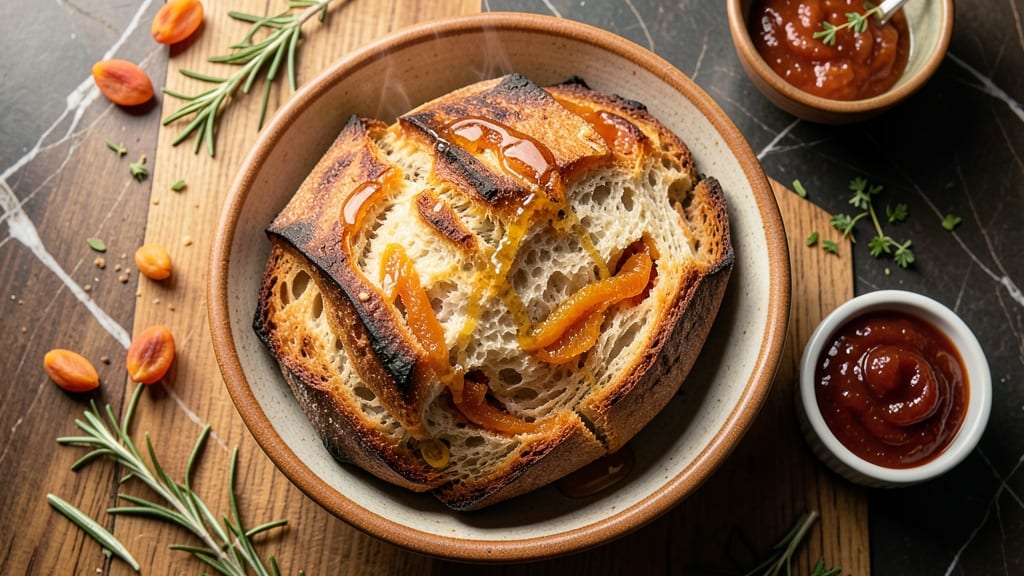
The apricot sourdough bread recipe delivers a showstopping loaf where golden, crispy crust meets tender crumb and bursts of sweet-tart apricot swirls. I developed this recipe after years of baking sourdough, refining the balance between the tangy complexity of fermentation and the natural sweetness of apricots.
The key lies in incorporating apricot puree during bulk fermentation, allowing its flavors to meld seamlessly with the dough while preventing density.
What sets this recipe apart is the technique: a high-hydration dough (75%) creates an open, airy crumb, while a long cold proof (overnight) enhances flavor development. The apricot puree—made from fresh or dried fruit—adds moisture and sweetness without overpowering the sourdough’s signature tang.
Baking with steam ensures that crispy crust you crave, while scoring guides even oven spring.
By the time this loaf emerges from your oven, you’ll have a loaf with a shatteringly crispy crust, a soft yet structured crumb, and pockets of apricot jam that glisten like caramelized jewels.
The aroma alone—warm, fruity, and slightly yeasty—will make your kitchen feel like a Parisian boulangerie. This is sourdough that feels indulgent yet remains rooted in tradition.
Perfect for breakfast toast, charcuterie boards, or gifting to neighbors who’ll be begging for your recipe. The dough is forgiving but requires patience; the reward is a loaf that tastes like summer in every bite. Let’s get baking.
Ingredients for apricot sourdough bread
Four cups flour, a splash of apricot, and patience for a loaf that tastes like summer.
| Ingredient | Amount | Notes |
|---|---|---|
| Active Sourdough Starter 🍞 | ½ cup | Unfed, bubbly starter |
| All-Purpose Flour 🌾 | 4 cups | Bread flour preferred |
| Unsalted Butter 🧈 | ¼ cup | Cold, cubed for dough |
| Granulated Sugar 🍚 | ¼ cup | For apricot swirl |
| Apricot Puree 🍑 | ½ cup | Homemade or store-bought |
| Large Egg 🥚 | 1 whole | Room temperature |
| Salt 🧂 | 1 ½ tsp | Diamond Crystal preferred |
| Instant Yeast 🍞 | ¼ tsp | Active dry works too |
| Whole Milk 🥛 | ¼ cup | Warmed for dough |
| Apricot Jam 🍯 | ¼ cup | For swirls, unsweetened |
| Cornmeal 🌽 | ¼ cup | For dusting parchment |
| Ice Water 💧 | ¼ cup | For shaping dough |
The sourdough starter is non-negotiable here—it’s the soul of this bread. King Arthur or Boudin Bakery starters are my go-to, but any active, bubbly starter will work. If you’re using a discard, feed it first to wake it up. The apricot puree can be homemade (simmer 1 cup pitted apricots with 1 tbsp sugar until soft, then blend) or store-bought—just check for added sugar. For the butter, Plugrá or Land O’Lakes are reliable, but any good-quality unsalted will do. The key is keeping it cold until it melts into the dough. Bread flour gives that perfect open crumb, but all-purpose works in a pinch (the crumb will be slightly denser).
No apricot jam on hand? Peach or plum jam works beautifully, though apricot’s tartness balances the sourdough’s tang perfectly. Short on milk? Water or plant-based milk (like oat) will work, but the dough might be slightly less tender. Diamond Crystal salt is my go-to because it’s finer and dissolves better, but any kosher salt will do—just use the same amount. The egg adds structure, but if you’re avoiding it, 1 tbsp ground flaxseed + 3 tbsp water (let sit 5 minutes) is a great substitute. For the yeast, make sure it’s fresh—if it’s past its prime, your dough might take longer to rise.
This dough is a beast, so plan ahead. Once mixed, it needs 4-6 hours at room temp to ferment fully, or you can refrigerate it overnight for deeper flavor. The cold proof is where the magic happens—it’s worth the wait. After shaping, cover the dough with a damp towel and let it rise until it’s puffy and jiggly. For the jam swirls, use a piping bag or a spoon to create those gorgeous caramelized pockets. Store leftovers wrapped in a bread bag at room temp for 2-3 days, or freeze slices for up to 3 months. Toasting revives stale slices—just pop them in the oven for 5-10 minutes until crispy again.
Why You'll Love This Recipe
- Foolproof Starter Swap: I swear by this—no failed rises here. Just toss in your active starter (the tangy kind you already keep) and let it work its magic while you sip coffee. The apricot puree sweetens the deal without extra fuss.
- Sunshine in Every Slice: That apricot puree? It’s the star. Rich, jammy, and just sweet enough to balance the sourdough’s bite—like a hug from your grandma’s kitchen. The butter makes it melt-in-your-mouth tender.
- Breakfast to Brunch Hero: Toast it for a lazy morning, or serve warm with jam for brunch guests. Honestly, I’ve even used it to soak up yogurt drippings—because why not? Works for quick meals or when company drops by.
- Leftovers That Last: A loaf this good? It’ll vanish fast, but the good news is it freezes like a dream. Pop a slice in the toaster later, and it’s like fresh-baked again. Budget-friendly too—uses pantry staples you already own.
Step-by-step instructions for apricot sourdough bread
Here's how to craft this golden-crusted loaf with tender crumb and fruity swirls.
Prepare the Apricot Swirl Mixture
In a small bowl, combine the 0.5 cup apricot puree with the 0.25 cup granulated sugar and 0.25 cup apricot jam. Warm this mixture in a saucepan over medium-low heat for 3-4 minutes, stirring constantly until it thickens slightly and becomes fragrant. You're looking for a consistency similar to thick syrup—it should coat the back of a spoon but still be pourable. Remove from heat and let it cool completely before using. This mixture will add that signature sweet-tart flavor throughout your bread.
While the mixture cools, prepare a second bowl by whisking together the 1 whole large egg and 0.25 cup whole milk. This egg wash will give your bread that beautiful golden-brown crust. Keep both mixtures at room temperature until ready to use.
Mix the Dough Components
In the bowl of a stand mixer fitted with the dough hook attachment, combine the 4 cups all-purpose flour, 1.5 tsp salt, and 0.25 tsp instant yeast. Mix on low speed for 30 seconds to aerate the flour. Add the 0.5 cup active sourdough starter and mix again until just combined.
In a separate bowl, cut the 0.25 cup unsalted butter into small cubes. Add these to the flour mixture along with the cooled apricot mixture. Mix on low speed until the butter is fully incorporated and the dough begins to come together. This step ensures even distribution of the fruit flavor throughout the dough.
Hydrate and Knead the Dough
With the mixer running on low speed, gradually add the 0.25 cup ice water one tablespoon at a time. The dough will initially resist, but keep mixing until it pulls away from the sides of the bowl and forms a shaggy mass. Increase the speed to medium and knead for 5-7 minutes until the dough becomes smooth and elastic.
Test for readiness by performing the windowpane test: wet one finger and poke the dough. If a thin membrane forms and doesn't tear easily, your dough is properly developed. If it's too sticky, add 1 tablespoon flour at a time until it passes this test. The dough should be soft but not wet—this ensures a tender crumb without making the bread too dense.
First Rise and Shaping
Transfer the dough to a lightly oiled bowl, cover with plastic wrap, and let it rise at room temperature for 1-2 hours, or until it has doubled in size. The dough should spring back slowly when poked with a finger—this indicates proper fermentation. During this time, preheat your oven to 375°F with a Dutch oven inside for 30 minutes to create a steam environment for that crispy crust.
Once risen, turn the dough out onto a lightly floured surface. Gently deflate it by pressing down with your fingers. Using a bench scraper, divide the dough into two equal pieces. Roll each piece into a 12-inch log, then gently press the cooled apricot mixture down the center of each log. Roll the dough up tightly around the filling, sealing the edges to prevent the filling from leaking out during baking.
Second Rise and Baking
Place each shaped loaf seam-side down in the preheated Dutch oven. Cover and let them rise for another 30-45 minutes until they've puffed up noticeably. While they rise, whisk the egg wash in a small bowl. Brush this generously over each loaf, concentrating on the top and sides. Sprinkle with a pinch of salt for extra flavor.
Bake uncovered in the Dutch oven for 30 minutes, then remove the lid and bake for an additional 15-20 minutes until the bread is deep golden brown and sounds hollow when tapped on the bottom. The internal temperature should reach 190-200°F. Let the bread cool on a wire rack for at least 1 hour before slicing—this allows the crumb to set and prevents a gummy texture.
Pro Tips For Making Apricot Sourdough Bread
- STRETCH THE DOUGH: Use a bench scraper instead of wet hands to fold the apricot puree into the dough—it keeps the sticky apricot from weakening the gluten too early. I learned this after three batches where the dough collapsed like a sad soufflé.
- WEIGH THE FRUIT: Measure apricot puree by weight (about 100g for a standard loaf) instead of volume—store-bought puree varies wildly in thickness. My first attempt used a "generous splash," and the bread tasted like apricot jam.
- SKIP THE OVERMIXING: Stop folding the butter into the dough once it’s pea-sized and cold—any longer and you’ll end up with greasy, dense bread. I used to knead it into submission, and the crumb turned out greasy and heavy.
- PROOF IN COOLTH: Let the shaped loaf proof in the fridge overnight (4–6 hours) for deeper flavor and better oven spring—no need to rush. I was skeptical until I tried it, and now it’s my non-negotiable step.
Flavor customization for apricot sourdough bread
Sweet-Tart Balance
Adjust the apricot-to-sugar ratio to suit your taste. For a more pronounced tartness, reduce the 0.25 cup granulated sugar to 0.15 cup and add 1 tsp lemon zest to the apricot mixture. This brightens the flavor and cuts through the richness of the butter.
If you prefer a sweeter loaf, increase the sugar to 0.35 cup and swap 0.1 cup of the apricot jam for honey—it caramelizes beautifully during baking. 🍯
Spiced Variations
Infuse warmth by adding 1 tsp cinnamon and ½ tsp cardamom to the apricot mixture. These spices complement the fruit’s natural sweetness while adding depth to the sourdough’s tang. For a Middle Eastern twist, fold 1 tbsp orange zest into the dough during the final knead—it pairs beautifully with apricot.
Toast the spices in a dry pan for 30 seconds to deepen their flavor before mixing.
Nutty Crunch Add-Ins
For texture contrast, fold ½ cup chopped walnuts or pecans into the dough during the last 2 minutes of kneading. Their bitterness balances the sweetness, and they toast slightly during baking.
For a more decadent touch, press ½ cup sliced almonds onto the loaf’s top before baking—they’ll crisp to golden perfection. Store nuts in the freezer to keep them fresh longer.
Herbaceous Twist
Brighten the flavor profile by mixing 1 tbsp finely chopped fresh rosemary or thyme into the dough during the final knead. The herbs’ piney notes elevate the apricot’s fruitiness, creating a sophisticated balance.
For a Mediterranean vibe, add 1 tsp dried oregano to the apricot mixture. Always use fresh herbs for the best flavor—dried can be overpowering.
Seasonal Fruit Swaps
When apricots are out of season, swap the puree for peach or plum puree—they work identically in texture and sweetness. For winter baking, try cranberry sauce (reduce ½ cup cranberries + 1 tbsp sugar until thick) or fig jam.
Adjust baking times slightly, as denser fruits may require 5-10 extra minutes to caramelize fully. 🍐
Gluten-Free Adaptation
Replace 4 cups all-purpose flour with 3 cups gluten-free 1:1 baking flour (like Bob’s Red Mill) plus 1 tbsp xanthan gum. Add 1 extra tbsp apricot puree to compensate for reduced gluten structure.
Let the dough rest 10 minutes after mixing to hydrate fully. Expect a slightly denser crumb—this is normal with gluten-free sourdough. Proof times may extend by 30-45 minutes due to slower fermentation.
Nutrition facts
Frequently asked questions
Can I use dried apricots instead of fresh for the puree?
Soak ½ cup dried apricots in ½ cup warm water for 30 minutes, then blend until smooth. Strain to remove any fibrous bits, then proceed with the recipe. This method works especially well in winter when fresh apricots aren't available.
Why did my apricot sourdough turn out dense instead of light?
Dense bread usually means one of two things: either the dough didn't ferment long enough (aim for 4-6 hours at room temp or overnight in the fridge), or you over-kneaded it. Try reducing kneading time to 5 minutes and focus on proper proofing next time. Also ensure your starter is active and bubbly before using.
How do I store leftover apricot sourdough?
Wrap cooled slices in plastic wrap or a bread bag and store at room temperature for 2-3 days. For longer storage, freeze slices for up to 3 months. To revive stale slices, toast in a 350°F oven for 5-10 minutes until crispy again. The fruit filling stays fresh longer than regular bread!
Can I make this recipe without a Dutch oven?
Yes! If you don't have a Dutch oven, bake the loaves on a baking sheet lined with parchment paper. For extra steam, place a metal bowl filled with hot water on the lower oven rack during the first 20 minutes of baking. The crust won't be as crispy, but the flavor will still be excellent.
What's the best way to reheat sliced apricot sourdough?
For crispy crust and warm filling, wrap slices in foil and heat at 350°F for 8-10 minutes. For a quick option, toast slices in a toaster or toaster oven until golden. Microwaving works in a pinch but may make the crust soggy. Always reheat from room temperature for best results.