Side Dishes
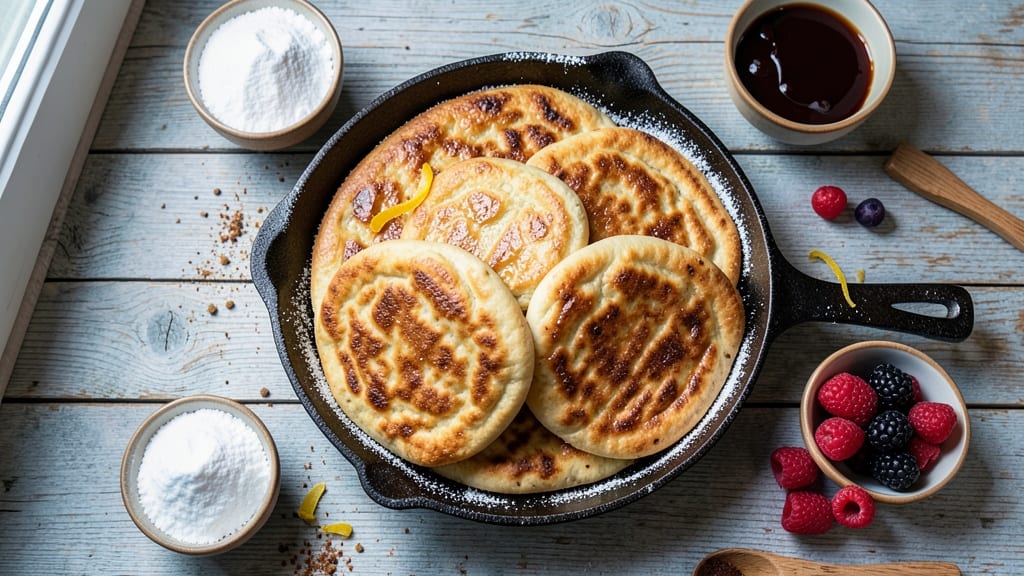
This Apache fry bread recipe delivers the crispy, puffed perfection that's been a beloved staple in Navajo cuisine for generations. The secret lies in a simple dough that transforms into golden, airy bread with just a few minutes in hot oil—each bite is both satisfying and culturally rich.
I've perfected this technique to ensure you achieve that signature texture and flavor every time.
The beauty of Apache fry bread is its simplicity: just flour, baking powder, salt, water, and oil come together to create something extraordinary. What makes this recipe special is how the dough puffs dramatically when fried, creating those irresistible crispy edges while staying soft inside.
The cultural significance runs deep—originally made with ingredients available during the Navajo relocation era, it's now a symbol of resilience and tradition.
By the time you're done, you'll have a batch of perfectly crispy fry bread that's ready to be served with honey, jam, or savory toppings like powdered sugar and cinnamon. The aroma alone will bring warmth to any gathering, making it a dish that's as comforting as it is delicious.
This recipe honors its heritage while being accessible for home cooks.
Whether you're making it for a special occasion or a casual meal, Apache fry bread brings a taste of Navajo culture to your table. The process is straightforward, and the results are always impressive. Let's get started on creating this iconic dish that's been cherished for decades.
Ingredients for apache fry bread
Five core ingredients transform into golden, crispy perfection with just oil and heat.
| Ingredient | Amount | Notes |
|---|---|---|
| All-Purpose Flour 🌾 | 2 cups | Sifted for light texture |
| Baking Powder 🧂 | 1 tbsp | Aluminum-free preferred |
| Salt 🧂 | ½ tsp | Fine sea salt preferred |
| Vegetable Oil 🫒 | ½ cup | High smoke point preferred |
| Water 💧 | ¾ cup | Room temperature |
| Powdered Sugar 🍚 | ¼ cup | For dusting (optional) |
| Cinnamon 🌿 | ½ tsp | Ground for garnish |
| Honey 🍯 | ¼ cup | For dipping (optional) |
| Jam 🍓 | ¼ cup | Any flavor (optional) |
The flour is non-negotiable—King Arthur or Gold Medal gives the best rise. Grab aluminum-free baking powder at Whole Foods or the baking aisle, not the canned stuff. Salt matters here: Diamond Crystal dissolves better than table salt. For oil, vegetable or canola works best—avoid olive oil, it burns. Water should be at room temp, not cold. Pro tip: mix the dry ingredients first, then add wet—this keeps the dough from getting gummy.
No baking powder? Self-rising flour at 1.5 cups plus 0.5 tsp extra salt works in a pinch. Short on oil? Melted butter gives flavor but smokes faster. The powdered sugar and cinnamon are optional but make it feel special—Trader Joe's has great pre-mixed powdered sugar and cinnamon blends. For dipping, honey or jam adds that authentic touch. No honey? Maple syrup is a perfect swap. And if you're feeling fancy, a sprinkle of turbinado sugar before frying adds crunch.
Keep the dough covered in the fridge for up to 2 days—it actually improves as it rests. Fry in batches; don't overcrowd the pan. The bread stays crispy for 15 minutes after frying, so serve immediately or reheat in a 200°F oven for 5 minutes. Store leftovers in an airtight container at room temp for 1 day or freeze for 1 month. Freezing works best if you wrap each piece in foil.
Why You'll Love This Recipe
- Here’s what sold me: that first bite where the outside shatters into golden flakes, but the inside stays soft and pillowy. The secret’s in the hot oil—don’t skimp on heating it properly, or you’ll miss out on that chef’s kiss contrast.
- I’ll be real: this recipe costs pennies per serving. A bag of flour lasts forever, and the oil stretches across multiple batches. Plus, leftovers? Toss them in the freezer and reheat in seconds—no sad, dry bread here.
Step-by-step instructions for Apache fry bread
Here's how to make that iconic, golden-brown fry bread with a crispy exterior and fluffy interior.
Mix the Dough Until Smooth
In a large bowl, combine the 2 cups all-purpose flour and 1 tablespoon baking powder. Whisk them together to break up any lumps in the flour. Then, add the ½ teaspoon salt and mix again. This dry mixture is the foundation of your dough, so make sure it's evenly distributed.
Next, create a well in the center of the dry ingredients and pour in the ½ cup vegetable oil and ¾ cup water. Using a wooden spoon or your hands, gradually mix the wet ingredients into the dry until a shaggy dough forms. Once combined, turn the dough out onto a lightly floured surface and knead gently for about 2 minutes until smooth and elastic. The dough should be soft but not sticky—if it feels too wet, add a little more flour, just a tablespoon at a time.
Shape the Dough into Balls
Divide the dough into 4 equal pieces—this makes it easier to handle and ensures each piece cooks evenly. Roll each piece into a ball, about the size of a tennis ball. If the dough feels too sticky, wet your hands slightly to prevent sticking. The balls should be smooth and uniform, which helps them puff up nicely when fried.
Place the dough balls on a plate, cover them with a clean kitchen towel, and let them rest for 10 minutes. This short rest relaxes the gluten, making the dough easier to shape and preventing the bread from tearing when you fry it. Don’t skip this step—it’s key to getting that perfect puff.
Fry the Dough Until Golden Brown
Heat ½ inch of vegetable oil in a large skillet over medium-high heat. You want the oil to be hot enough so a drop of water sizzles and dances around when you touch it to the oil. Once the oil is hot, carefully place one dough ball into the skillet. The dough will immediately start to puff up—don’t press it down or it won’t rise properly.
Fry each ball for 1 to 2 minutes per side, or until the bread is golden brown and crispy. You’ll know it’s done when it sounds hollow when tapped on the bottom. Use a slotted spoon to carefully remove the fried bread from the oil and place it on a paper towel-lined plate to drain any excess oil. Repeat with the remaining dough balls, adding more oil to the skillet as needed to maintain the same depth.
Serve Warm with Your Favorite Toppings
While the fry bread is still warm, dust it generously with the ¼ cup powdered sugar for a sweet finish. Sprinkle with the ½ teaspoon cinnamon and let it sit for a minute so the sugar and cinnamon stick to the crispy exterior. The contrast of the warm, fluffy bread with the cool, sweet topping is what makes this dish so irresistible.
For serving, offer the ¼ cup honey and ¼ cup jam on the side. The honey adds a rich, smooth sweetness, while the jam brings a fruity tang that pairs perfectly with the crispy bread. Serve immediately so the bread stays warm and crispy—this is where the magic happens! Each bite should be a perfect balance of texture and flavor, with that satisfying crunch on the outside and a soft, pillowy center.
Pro Tips For Making Apache Fry Bread
- Use Lukewarm Water: The dough should be stiff but pliable—like Play-Doh that holds its shape. Cold water makes the dough tough, while hot water activates the baking powder too fast, leading to dense bread. I learned this the hard way after making a batch that tasted like a hockey puck.
- Test Oil Heat with a Pinch: Drop a tiny bit of dough into the oil—if it sizzles and floats immediately, the oil’s ready. If it bubbles weakly or sticks, wait longer. I used to guess, and my bread came out greasy or undercooked. A quick test saves seconds and frustration.
- Skip Overworking the Dough: Mix just until combined—overmixing develops gluten, making the bread tough. Fold the dry ingredients into the wet in the bowl, then scrape it out once. My grandmother swore by this, and she was right: the bread stays light and crispy.
- Shape Balls Quickly: Roll dough into 1-inch balls while the oil’s heating—don’t let them sit. Warm dough sticks better and cooks evenly. I was skeptical until I tried it: the bread puffs higher and crisps faster, even in a crowded pan.
Health benefits of this recipe
Cultural Roots
Apache fry bread carries deep cultural significance, born during the Long Walk of the Navajo in 1864 when the U.S. government forced the Diné people onto barren lands. With limited resources, women adapted simple ingredients—flour, water, and salt—to create nourishing bread.
This dish became a symbol of resilience and community, often shared during gatherings like the Navajo National Holiday. 🌟
Nutrient Balance
While primarily a carbohydrate source, Apache fry bread offers balanced nutrition when served thoughtfully. The whole wheat flour version (swap ½ cup all-purpose for whole wheat) adds fiber and B vitamins.
Pairing with honey or jam provides natural sugars and antioxidants, while powdered sugar and cinnamon add minimal but flavorful calories. The oil used for frying contains heart-healthy fats when using vegetable or canola oil.
Blood Sugar Considerations
Traditional fry bread has a high glycemic index due to refined flour and frying, so portion control matters. For a lower-glycemic option, try reducing the oil to ¼ cup and baking at 375°F for 12-15 minutes instead of frying.
The baked version retains some crispiness while reducing rapid blood sugar spikes. Always pair with protein like scrambled eggs or beans to balance the meal.
Allergen Awareness
This recipe contains wheat flour and egg (if using baking powder with egg wash), making it unsuitable for gluten-free or egg-allergic individuals. For gluten-free adaptations, use 1:1 gluten-free flour blend (like Bob's Red Mill) and xanthan gum.
Egg-free baking powder (like Rumford) works for allergy concerns. Always check labels—some baking powders contain wheat starch.
Heart-Healthy Adaptations
To make fry bread more heart-friendly, replace ½ the vegetable oil with unsweetened applesauce (¼ cup) for moisture while reducing fat. Use an air fryer at 350°F for 8-10 minutes instead of deep-frying to cut oil by 70%.
The result is still crispy but with significantly less saturated fat. Pair with Greek yogurt instead of honey for added protein and probiotics.
Community Tradition
Beyond nutrition, fry bread embodies Navajo values of sharing and hospitality. Serving it at powwows or family gatherings reinforces cultural continuity. The act of breaking bread together—literally and figuratively—strengthens community bonds.
For modern cooks, this dish becomes a bridge between tradition and contemporary life, proving simple ingredients can carry profound meaning. ✨
Nutrition facts
Frequently asked questions
Why does Apache fry bread puff up when frying?
The puffing happens because of the baking powder's leavening action. When heat hits the dough, the baking powder releases gas bubbles that expand rapidly, creating that signature airy interior. The high heat also causes moisture to evaporate quickly, forming the crispy exterior while keeping the inside soft and pillowy.
Can I make Apache fry bread without a skillet?
Yes! Use a heavy-bottomed pot with ½ inch of oil—just make sure it has enough surface area to prevent overcrowding. For an even healthier option, try an air fryer at 375°F for 8-10 minutes, flipping halfway. The texture will be slightly different but still delicious!
What's the best way to store leftover fry bread?
Keep it crispy by storing in an airtight container at room temperature for up to 1 day. For longer storage, freeze individual pieces wrapped in foil for 1 month. To reheat, warm in a 200°F oven for 5 minutes or air fry at 350°F for 2-3 minutes. Never microwave—it makes the bread soggy!
Is there a way to make Apache fry bread gluten-free?
Replace the all-purpose flour with a 1:1 gluten-free flour blend (like Bob's Red Mill) and add ½ teaspoon xanthan gum. The dough will be slightly stickier, so wet your hands when shaping. Fry as usual—just monitor closely since gluten-free dough can brown faster.
What's the secret to getting perfectly golden brown fry bread?
Three things: hot oil (test with a drop of water that sizzles), medium-high heat, and not overcrowding the pan. Fry in batches if needed, and cook until the bread is golden brown** and sounds hollow when tapped. The key is patience—rushing leads to uneven cooking or burning.