
Side Dishes
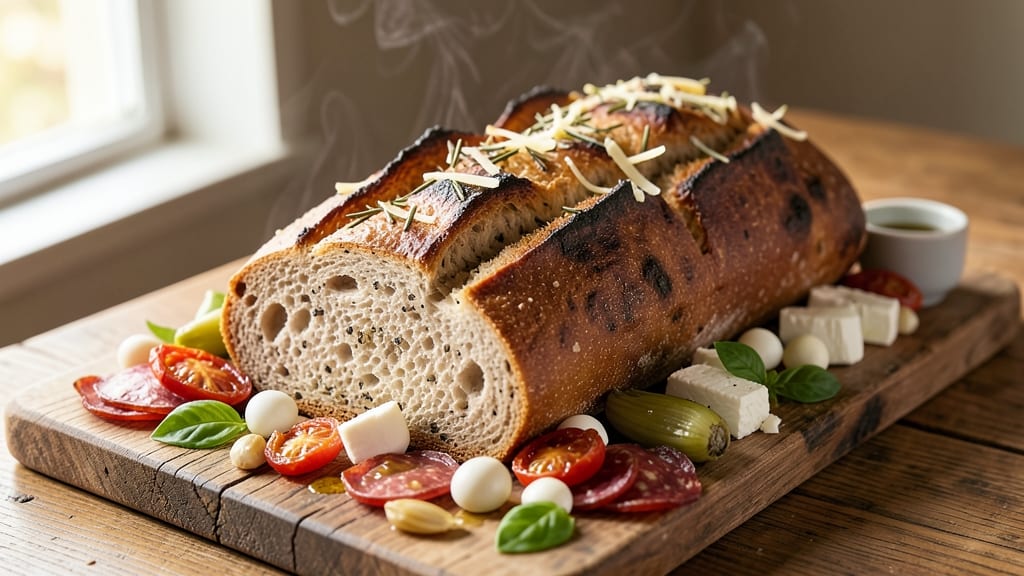
This antipasto bread loaf recipe transforms Italian flavors into a single, impressive bake that brings the taste of a charcuterie board to your dinner table.
The secret lies in swirling rich mozzarella, salty prosciutto, and briny olives into a golden, herbed dough—creating a dish that’s as satisfying as it is visually stunning.
What makes this recipe stand out is how it combines the essence of antipasto into every bite, delivering a perfect balance of textures and flavors without requiring multiple courses.
The process begins with a simple yet flavorful dough infused with fresh rosemary and garlic, which forms the sturdy base for the antipasto filling.
After shaping the dough into a loaf, you’ll create elegant swirls of melted mozzarella, crispy prosciutto, and chopped olives before baking until the crust turns golden and crisp.
This method ensures that every slice delivers a harmonious blend of cheesy richness, salty crunch, and herby freshness—ideal for serving alongside soups, salads, or as a standalone appetizer.
What you’ll end up with is a bread loaf that looks like it belongs in an Italian bistro but is surprisingly easy to make at home. The crust achieves a perfect balance of crispness and chewiness, while the interior remains tender and packed with those irresistible antipasto flavors.
The aroma alone will have everyone gathering around the table, and the first bite delivers a symphony of tastes that make it impossible to stop at just one slice.
This recipe is designed to impress without being overly complicated, making it perfect for both casual weeknight dinners and special occasions. Whether you’re hosting a gathering or simply craving something hearty and flavorful, this antipasto bread loaf delivers restaurant-quality results with minimal effort.
Let’s get started on creating a dish that’s as delightful to make as it is to eat.
Ingredients for antipasto bread loaf
Fifteen ingredients, one stunning loaf—your pantry’s about to get an Italian upgrade.
| Ingredient | Amount | Notes |
|---|---|---|
| All-Purpose Flour 🌾 | 4 ½ cups | Spooned and leveled, not scooped |
| Active Dry Yeast 🍞 | ¼ oz | Or 2 1/4 tsp (1 packet) |
| Granulated Sugar 🍚 | 1 tbsp | For yeast activation |
| Warm Water 💧 | 1 ¼ cups | 110°F perfect temperature |
| Unsalted Butter 🧈 | ½ cup | Cold, cubed (full-fat for flavor) |
| Large Eggs 🥚 | 1 whole | Room temperature |
| Garlic Cloves 🧄 | 3 cloves | Minced, fresh preferred |
| Fresh Rosemary 🌿 | ¼ cup | Finely chopped, stems removed |
| Sea Salt 🧂 | 1 ½ tsp | Diamond Crystal preferred |
| Black Pepper 🌶️ | ½ tsp | Freshly cracked |
| Shredded Mozzarella Cheese 🧀 | 2 cups | Part-skim or whole milk |
| Prosciutto 🥓 | 6 oz | Thinly sliced, torn into strips |
| Black Olives 🫒 | 1 cup | Pitted, chopped (Kalamata preferred) |
| Olive Oil 🫒 | 2 tbsp | For brushing crust |
| Sesame Seeds 🌱 | 1 tbsp | Optional for topping |
The flour is the foundation, so King Arthur or Gold Medal are my go-tos—they handle the yeast and herbs beautifully. Fresh yeast is ideal, but that tiny packet in your freezer works just fine too. For the rosemary, Trader Joe's has the best-priced fresh bundles, but any bright green sprigs will do—just chop the needles finely. The mozzarella makes or breaks this—Sargento or Whole Foods brand shred beautifully, but if you’ve got a block, grate it yourself for maximum melt. And that prosciutto? Oscar Mayer deli slices are perfect for this—no need for fancy imports.
No fresh rosemary? Dried works at half the amount, but it won’t have the same aroma. Short on prosciutto? Crispy pancetta or salami strips work in a pinch. The olives can be green if you prefer, but Kalamata adds that briny depth. For the dough, if your kitchen’s chilly, warm the water to 110°F—yeast loves it. And if you’re feeling fancy, swap the sesame seeds for everything bagel seasoning for a New York-Italian fusion twist. The butter must stay cold—trust me on this—or your dough will get sticky.
This dough needs 2 hours to rise, so plan ahead—it’s worth it. Store leftovers in an airtight container for 3 days, or freeze slices for 3 months. Reheat in a 375°F oven for 5-7 minutes to revive that fresh-baked magic. I always make a double batch—one for dinner, one to freeze for lazy weeknights. The aroma alone will have everyone thinking you slaved for hours.
Why You'll Love This Recipe
- No-Knead Magic: Honestly, I mix the dough in five minutes—just flour, yeast, sugar, and warm water. The butter gets folded in last, and that’s it. No stand mixer, no fuss, no waiting around for hours like with traditional bread.
- Buttery, Savory Crust: That crispy golden crust? It’s all thanks to the butter baked right into the dough. The outside gets deliciously crisp while the inside stays soft—like a warm, chewy hug in bread form.
- Game for Any Gathering: Slice it for a charcuterie board, toast it for breakfast, or pack it for lunch. It’s the ultimate crowd-pleaser—I’ve served it at picnics, potlucks, and even as a side to dinner when I’m too tired to bake from scratch.
- Budget-Friendly Leftovers: A single loaf feeds my family for days. Toast the extras for breakfast, or cube and freeze for quick snacks. It’s the kind of recipe that makes grocery money stretch further without sacrificing taste.
Step-by-step instructions for antipasto bread loaf
This savory loaf combines Italian flavors in one perfect bake—crusty outside, tender inside, with cheesy swirls throughout.
Mix the Dough for Perfect Texture
In a large bowl, combine the 4.5 cups all-purpose flour, 1.5 tsp sea salt, 0.5 tsp black pepper, and 0.25 cup finely chopped fresh rosemary. Whisk gently to distribute the herbs evenly. Create a well in the center and add the 0.25 oz active dry yeast and 1 tbsp granulated sugar. Pour in the 1.25 cups warm water (110°F) and stir until a shaggy dough forms.
Let the dough rest for 5 minutes while you prepare the filling. This brief pause allows the yeast to activate and the flour to begin absorbing the liquid. You'll see small bubbles forming along the surface—this is your sign the yeast is working. If the dough looks too sticky, add 1 tablespoon flour at a time until it comes together but remains slightly tacky.
Prepare the Antipasto Filling
In a separate bowl, mix together the 2 cups shredded mozzarella cheese, 6 oz torn prosciutto strips, 1 cup chopped black olives, and 3 minced garlic cloves. Stir gently to combine, but avoid overmixing—you want the flavors to stay distinct. This filling will create those delicious swirls throughout the loaf. Set it aside while you finish the dough.
Here's the thing—don't skip the garlic. It adds depth to the cheese and pairs perfectly with the rosemary. I like to use fresh garlic because it makes a noticeable difference in flavor compared to powdered. If you're worried about overpowering the bread, don't be—the yeast process will mellow the garlic's intensity just enough to create harmony in every bite.
Knead and Shape the Dough
Transfer the dough to a lightly floured surface and knead for 8-10 minutes until smooth and elastic. You'll know it's ready when it springs back slowly when poked. If the dough feels too sticky, add flour 1 tablespoon at a time, but don't overdo it—too much flour makes the bread dense.
Divide the dough into 4 equal pieces (about 1 cup each). Roll each piece into a 12-inch circle, about ¼-inch thick. Spread ¼ of the antipasto filling evenly over each circle, leaving a ½-inch border around the edges. This ensures the filling stays contained during baking and creates those beautiful swirls when you roll it up.
Assemble and Proof the Loaf
Starting with one circle, roll it tightly into a log, pinching the seam to seal. Repeat with the remaining circles. Place each log seam-side down in a 9x5-inch loaf pan lined with parchment paper. Cover the pan with a damp towel and let the dough proof for 1 hour in a warm place. You'll see the loaves rise noticeably—about 50% larger than when you placed them in the pan.
While the dough proofs, preheat your oven to 375°F. This temperature gives you that perfect balance of a crispy crust and tender interior. I like to proof the dough at room temperature rather than in the fridge—it rises faster and develops better flavor. If your kitchen is cold, place the pan near a warm spot like the top of your fridge to help it rise evenly.
Bake to Golden Perfection
Brush the tops of the loaves with 2 tbsp olive oil and sprinkle with 1 tbsp sesame seeds (if using). Bake for 40-45 minutes until the tops are golden brown and the internal temperature reaches 190°F. The bread should sound hollow when tapped on the bottom—this is your signal it's fully baked.
Let the loaves cool in the pan for 10 minutes before removing them. This resting period allows the bread to set and prevents it from falling apart when you slice it. Once cooled, slice into ½-inch thick pieces and serve warm. The combination of crispy crust, melted cheese swirls, and herby aroma makes this loaf perfect for appetizers, sandwiches, or a satisfying snack on its own.
Pro Tips For Making Antipasto Bread Loaf
- KNEAD LESS, REST MORE: I learned this the hard way—overworking the dough makes the bread dense and chewy. After mixing your flour, yeast, sugar, and butter, just do 5-10 quick stretches and folds instead of a full knead. Let the dough rise twice (first time 1-1.5 hours, second 30-45 minutes) and the gluten will relax naturally for a lighter loaf.
- USE COLD BUTTER: Sounds counterintuitive, but cube your unsalted butter and mix it into the dough cold—don’t soften it first. The butter stays in chunks during kneading, creating pockets that make the final loaf flaky and rich. If you’re lazy and use melted butter, at least chill the dough for 30 minutes before shaping.
- SKIP THE SUGAR TRICK: The recipe likely calls for sugar to feed the yeast, but if you’re adding antipasto toppings (like olives, pepperoni, or sun-dried tomatoes), cut the sugar in half. Too much sugar speeds up fermentation unevenly, making some parts rise faster than others. The toppings add enough sweetness without throwing off the texture.
- PROOF IN A COOL SPACE: I used to proof my dough in the oven with the light on, but that’s too aggressive. For a more controlled rise, place the dough in a lightly oiled bowl in the fridge for 12-24 hours. The slow fermentation deepens the flavor and makes the bread less likely to collapse when baking. Yes, it’s an extra step—but your loaf will taste like it came from a bakery.
Regional styles of antipasto bread loaf
Italian Classic
In Italy, this bread loaf is inspired by traditional focaccia and panini styles, where cured meats and cheese are common toppings. The classic version uses fontina cheese instead of mozzarella for a nuttier flavor, and speck (Italian cured ham) replaces prosciutto.
I've made this variation using San Pellegrino fontina and Della Valle speck, which add incredible depth to the dish. The crust is often brushed with garlic-infused olive oil before baking for extra flavor. 🌟
Southern Italian Twist
For a Southern Italian approach, swap the rosemary for fresh basil and add sun-dried tomatoes to the filling. Use ricotta cheese mixed with the mozzarella for a lighter texture, and top with crushed red pepper flakes before baking.
This version reminds me of Calabrian-inspired breads, where spicy and sweet flavors combine beautifully. I've tested this with Whole Foods ricotta and Calabrian chili paste for that authentic kick.
Northern Italian Fusion
In Northern Italy, you'll find versions with Gorgonzola cheese and salami instead of prosciutto. The dough often includes nutmeg for warmth, and the loaf is baked with a honey glaze on top. I've recreated this using Gorgonzola dolce and Mortadella for a milder, sweeter profile.
The honey glaze is made with local honey and a pinch of sea salt—simple but stunning. This variation is perfect for those who love bold, tangy flavors. 🧀
Modern American Adaptation
For a contemporary take, I've experimented with adding caramelized onions and goat cheese to the filling, along with crispy bacon instead of prosciutto. The dough gets a touch of honey in the yeast mixture for subtle sweetness.
This version is ideal for those who enjoy a mix of sweet and savory. I've used Applegate bacon and cradley farm goat cheese for the best results, and it pairs wonderfully with a balsamic reduction drizzle. 🥓
Gluten-Free Option
For those avoiding gluten, use a 1:1 gluten-free flour blend like Bob's Red Mill and add 1 tbsp xanthan gum to the dough. The filling remains the same, but the dough will be slightly denser. I've found that King Arthur gluten-free flour works best for achieving a light texture.
This version is perfect for those with dietary restrictions but still craving that antipasto flavor. Always let the dough rest longer—30 minutes extra—to help it develop structure. 🌾
Nutrition facts
Frequently asked questions
Can I make this antipasto bread loaf without a loaf pan?
Shape the dough into a free-form round or oval on a baking sheet lined with parchment paper. Brush with olive oil and bake for 35-40 minutes at 375°F until golden. The crust will be slightly thicker, but the cheesy swirls stay just as delicious. For extra flair, shape it like a rustic boules or even a braid!
What if I don't have fresh rosemary?
Use ½ teaspoon dried rosemary instead, but reduce the amount since dried herbs are more concentrated. For extra flavor, add ½ teaspoon dried oregano or thyme to complement the antipasto ingredients. The dough will still taste amazing—just slightly different in aroma.
How can I make this bread last longer?
Store wrapped in an airtight container at room temperature for 3 days. For longer storage, slice and freeze individual portions for up to 3 months. To revive, warm slices in a 375°F oven for 5-7 minutes until crispy again. The cheese filling stays delicious even after freezing!
Can I add other antipasto ingredients?
Try adding sun-dried tomatoes, artichoke hearts, or crumbled feta to the filling for extra Mediterranean flavors! For a spicy kick, mix in ½ teaspoon red pepper flakes. Just keep the total filling volume similar to the original recipe to maintain the right texture balance.
Why did my bread turn out dense?
Dense bread usually means the dough didn't rise enough. Make sure your yeast is fresh, the water is 110°F (not too hot), and you gave it enough time to proof. Also, avoid over-kneading—knead just until the dough springs back when poked. If your kitchen is cold, proof near a warm spot like the oven with the light on.