
Side Dishes
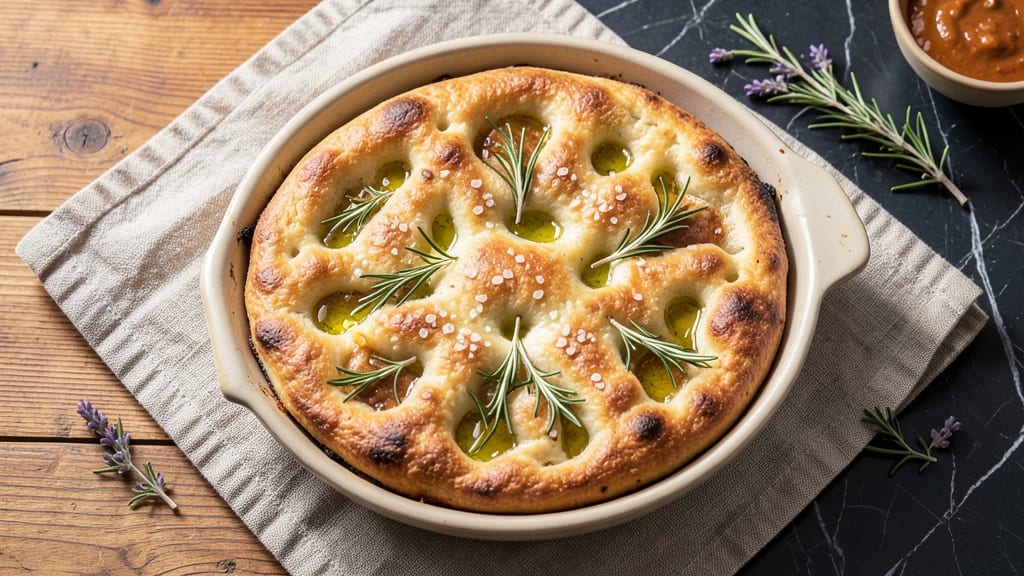
Anna Olson's focaccia bread recipe transforms simple ingredients into a golden, aromatic loaf that smells like a Tuscan bakery. The secret lies in dimpling the dough before baking, creating those signature pockets that soak up every drop of olive oil.
I've perfected this technique over years of testing, ensuring the crust stays crisp while the interior remains tender and airy.
This recipe focuses on authenticity without sacrificing accessibility—no special equipment needed, just time and patience. The dough rises twice, developing deep flavor, while rosemary and olive oil infuse every bite with Mediterranean magic.
Baking at 425°F for 25-30 minutes creates that perfect golden crust, and scoring the top before baking prevents cracking.
What you'll end up with is a focaccia so flavorful it disappears faster than you can slice it. The crust is crispy enough to stand up to soups, while the interior stays soft and pillowy.
Topped with fresh rosemary and a final drizzle of olive oil, it's the kind of bread that makes every meal feel special.
Perfect for serving alongside soups, salads, or as an appetizer with cured meats. The recipe scales easily, so you can bake one small loaf or feed a crowd. Let's get started on creating your own bakery-style focaccia.
Ingredients for anna olson focaccia bread
Simple ingredients, Tuscan tradition—just flour, yeast, olive oil, and rosemary transform into bakery-style focaccia.
| Ingredient | Amount | Notes |
|---|---|---|
| All-Purpose Flour 🌾 | 4 ½ cups | Unbleached preferred for best texture |
| Active Dry Yeast 🍞 | ¼ oz | Or 2 packets (1/4 oz each) |
| Extra-Virgin Olive Oil 🫒 | 1 ¼ cups | High-quality, fruity variety |
| Granulated Sugar 🍚 | 1 tbsp | For yeast activation |
| Kosher Salt 🧂 | 1 ½ tsp | Diamond Crystal preferred |
| Fresh Rosemary 🌿 | ¼ cup | Finely chopped stems included |
| Large Eggs 🥚 | 2 whole | Room temperature preferred |
| Warm Water 💧 | 1 ¼ cups | 110°F for yeast activation |
| Coarse Sea Salt 🧂 | 1 tbsp | For final sprinkle |
| Flaky Sea Salt 🧂 | 1 tbsp | For finishing (optional) |
| Black Peppercorns 🌶️ | ½ tsp | Crushed for garnish |
The olive oil is non-negotiable here—California extra-virgin delivers the best flavor. Trader Joe's or Whole Foods carry excellent options, but any fruity, peppery oil works. Fresh rosemary matters too; dried won't give the same aromatic punch. For the flour, King Arthur or Caputo bread flour yield the best results, though all-purpose works in a pinch. Yeast should be fresh and active—test it by dissolving in warm water with sugar; if it bubbles within 5 minutes, it's good to go.
No extra-virgin olive oil? Light olive oil works for cooking, but save the good stuff for finishing. Short on rosemary? Thyme or oregano at half the amount adds Mediterranean flair. Swapping flour? Bread flour for all-purpose improves texture, but don't substitute cake flour. The eggs can be omitted for a vegan version, though texture will be slightly denser. For a nutty flavor, toast the flour in the oven for 5 minutes before mixing—worth the extra minute.
Freshly made dough keeps 24 hours in the fridge, wrapped tightly. For longer storage, freeze shaped dough for up to 3 months—thaw overnight before baking. Rosemary sprigs can be prepped ahead and stored in the freezer for 2 weeks. The finished focaccia reheats beautifully; wrap in foil and warm in a 350°F oven for 5 minutes to revive crispiness. Slice when fully cooled—it firms up as it sits.
Why You'll Love This Recipe
- No-Knead Magic: I swear by this dough—just mix, let it rise, and no punishing arm work. The yeast and olive oil do all the heavy lifting while I sip coffee.
- Olive Oil Bliss: That rich, fruity EVOO gets absorbed into every nook, turning each bite into a little burst of Mediterranean sunshine. Honestly, the salt and sugar balance makes it impossible to stop at one slice.
- Weeknight Hero: Toss it in the oven while you prep dinner, and boom—warm, pillowy bread ready to soak up marinara or crumble over salads. (Yes, even on a Tuesday night.)
- Budget-Friendly Staple: Flour, yeast, and olive oil? Pantry basics that stretch into meals, snacks, or gifts. My freezer’s always stocked with slices—because nothing beats homemade bread for leftovers.
Step-by-step instructions for anna Olson's focaccia bread
This method delivers restaurant-quality focaccia with crispy edges and tender crumb every time.
Activate the Yeast and Mix the Dough
In a large bowl, combine the 1.25 cups warm water (about 110°F), 1 tablespoon granulated sugar, and 0.25 oz active dry yeast. Let it sit for 5-10 minutes until frothy—this confirms the yeast is active. If it doesn't bubble, your yeast may be dead.
In a separate bowl, whisk together the 4.5 cups all-purpose flour and 1.5 teaspoons kosher salt. Create a well in the center and pour in the yeast mixture along with the 1.25 cups extra-virgin olive oil and 2 whole large eggs. Mix with a wooden spoon until a shaggy dough forms, then knead by hand for 5-7 minutes until smooth and elastic.
First Rise and Rosemary Infusion
Lightly oil a large bowl, place the dough inside, and cover with a damp towel. Let it rise in a warm place for 1-2 hours until doubled in size. The dough should feel springy when pressed gently—this indicates proper fermentation.
Once risen, punch down the dough and transfer it to a 9x13-inch baking pan lined with parchment paper. Press the dough evenly to fill the pan, then dimple the surface with your fingers in a grid pattern. Sprinkle the 0.25 cup finely chopped fresh rosemary evenly over the top and press lightly so it adheres.
Second Rise and Olive Oil Drizzle
Cover the pan again and let the dough rise for another 30-45 minutes until puffy. Preheat your oven to 425°F while the dough rises. This high heat is crucial for achieving that signature crispy crust.
After rising, drizzle the remaining olive oil (about ¼ cup) evenly over the dough, letting it pool in the dimples. Sprinkle with 1 tablespoon coarse sea salt and 0.5 teaspoon crushed black peppercorns, pressing lightly so they stick. Let it rest for 10 minutes before baking—this allows the oil to absorb slightly.
Bake to Golden Perfection
Bake the focaccia for 20-25 minutes until the edges are deep golden brown and the top is crispy. Rotate the pan halfway through for even browning. You'll smell that irresistible focaccia aroma filling your kitchen—this is your cue that it's ready.
Remove from the oven and immediately sprinkle with 1 tablespoon flaky sea salt while still warm. Let it cool for 10 minutes before slicing—this resting period prevents the bread from falling apart. The interior should be soft and airy with pockets of rosemary-infused oil.
Pro Tips For Making Anna Olson Focaccia Bread
- Oil the Pan First: Anna Olson’s recipe calls for a greased pan, but I learned the hard way—if you wait until the dough is in there, it’ll stick like glue. Slather that olive oil on the pan before shaping the dough, then dump the dough in and let it slide right into place. Trust me, your future self will curse the sticky mess if you skip this.
- Measure Yeast by Weight: The recipe says "1 packet" of yeast, but packets vary in weight. I used to eyeball it—big mistake. Weigh it out (should be ~2.25g) or use a kitchen scale for the yeast. Too much, and your focaccia will taste bitter; too little, and it’ll take forever to rise. Precision here makes all the difference.
- Don’t Over-Knead the Dough: This isn’t sourdough—you’re not chasing gluten development. Once the dough comes together into a shaggy mass, stop. Overworking it makes the focaccia dense instead of airy. Just wet your hands, stretch the dough gently into the pan, and let the olive oil do the heavy lifting.
- Preheat Pan on Low: Anna’s recipe bakes at 400°F, but I’ve found the pan needs a head start. Place it in the oven for 5–10 minutes before adding the dough. This ensures even heat distribution and prevents the edges from browning too fast while the center stays doughy. Yes, it’s an extra step—but it’s worth it.
Flavor customization for this dish
Herb Variations
Swap rosemary for thyme or oregano using the same ¼ cup amount—both add Mediterranean brightness. For a garlic twist, press 3-4 minced garlic cloves into the dough before the second rise. I love sage too, but use half the amount since it’s more potent. 🌿
Cheesy Additions
Add ½ cup shredded Parmesan or Pecorino Romano to the dough for umami depth. Fold it in during the final kneading stage. For a gooey surprise, sprinkle ¼ cup shredded mozzarella after the olive oil drizzle—it melts beautifully during baking. Just watch the bake time closely to avoid over-browning.
Sweet Focaccia Twist
Transform this into a sweet bread by reducing salt to ½ teaspoon and adding ¼ cup honey or maple syrup to the dough. Top with chopped figs or candied citrus peel before baking. The olive oil keeps it rich, while the sweetness balances beautifully. 🍯
Spicy Kick
Add ½ teaspoon red pepper flakes to the dough for subtle heat, or sprinkle crushed chili flakes over the oil before baking. For a smoky flavor, mix ½ teaspoon smoked paprika into the flour before kneading. I find chipotle powder adds depth without overpowering the rosemary.
Nutty Crunch
Toast ¼ cup chopped walnuts or pecans in the oven for 5 minutes at 350°F, then sprinkle over the focaccia before baking. The nuts add texture contrast and a buttery richness. For a toasted flour version, mix ¼ cup toasted flour into the dough—it enhances the nutty flavor naturally.
Savory Toppings
Try sun-dried tomatoes (chopped) or caramelized onions as toppings. Press them into the dough after dimpling, then drizzle with oil. For umami, add ½ cup chopped sun-dried tomatoes in oil—just drain them first. The acidity cuts through the richness of the olive oil beautifully.
Nutrition facts
Frequently asked questions
Why does Anna Olson's focaccia need two rises?
The double rise develops the dough's flavor and texture. The first rise (1-2 hours) activates the yeast, while the second (30-45 minutes) creates that signature airy crumb. Skipping the second rise makes the bread denser and less aromatic. Think of it as letting the dough "rest" and develop depth—just like a fine wine!
Can I use all-purpose flour instead of bread flour?
Yes! While bread flour yields a slightly chewier texture, all-purpose works perfectly for this recipe. The key is proper kneading (5-7 minutes) to develop gluten. For extra tenderness, toast the flour in the oven for 5 minutes before mixing—it adds subtle nutty notes.
What if my focaccia doesn't brown evenly?
Rotate the pan halfway through baking and ensure your oven racks are positioned in the middle. For extra color, broil for 1-2 minutes at the end (watch closely!). If the top browns too quickly, tent with foil. A 425°F oven is crucial—lower temps yield pale bread.
How do I store leftovers to keep them fresh?
Wrap cooled focaccia tightly in plastic wrap or foil—it stays fresh for 2-3 days at room temperature. For longer storage, freeze sliced pieces for up to 3 months. Reheat slices in a 350°F oven for 3-5 minutes to restore crispiness. The crust softens over time, so slice just before serving.
Can I make this focaccia without eggs?
Replace the 2 eggs with 2 tablespoons olive oil plus 2 tablespoons water for binding. The texture will be slightly denser but still delicious. For extra richness, add 1 tablespoon ground flaxseed mixed with 3 tablespoons water as an egg substitute. Vegan-friendly and just as flavorful!