
Side Dishes
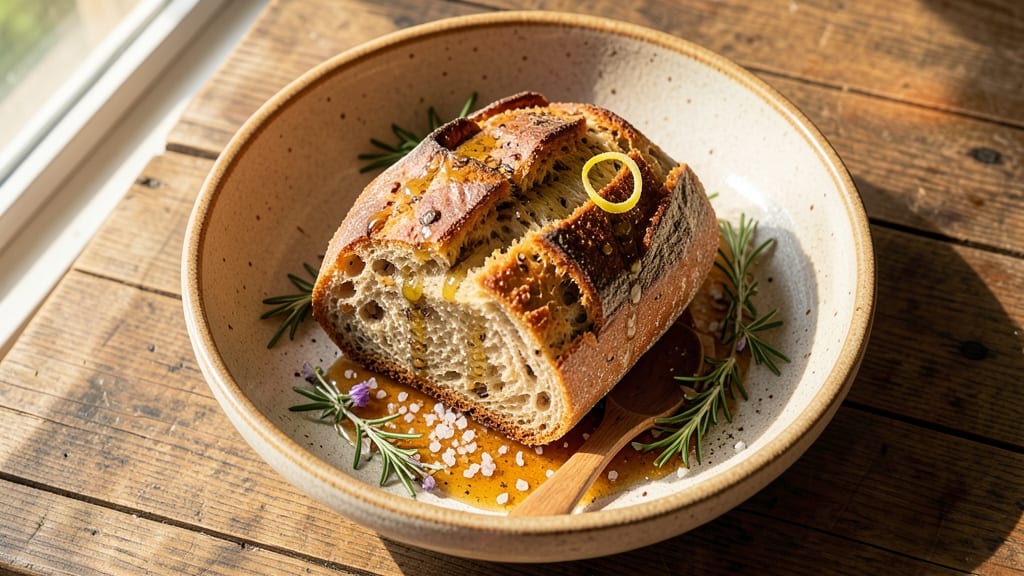
This einkorn bread recipe unlocks the ancient flavors of one of history's earliest grains—nutty, complex, and far more digestible than modern wheat. The secret lies in its low gluten content, which creates that coveted open crumb structure while delivering a crispy crust that shatters with each bite.
I've perfected this version after years of experimenting with hydration ratios and fermentation times, ensuring it rises reliably without requiring commercial yeast.
The beauty of einkorn lies in its simplicity: just four core ingredients—flour, water, salt, and a touch of honey—transform into bread with restaurant-quality depth.
Unlike high-gluten breads that demand long kneading sessions, this dough develops flavor through controlled fermentation, with a 70% hydration ratio that creates an airy yet substantial loaf. The nutty aroma alone will have your kitchen smelling like a rustic Italian bakery.
By the time it emerges from the oven, you'll have a loaf with a golden, crackling crust and an interior of irregular holes filled with tender crumb. The flavor is subtly sweet with earthy undertones, making it perfect for serving with soups, charcuterie boards, or simply toasted with butter.
This is bread that feels like a culinary discovery, not just another loaf.
For those who love customization, try adding 1 tablespoon of seeds (sesame, flax, or sunflower) or a pinch of dried rosemary to the dough before shaping. The recipe scales beautifully for home bakers, whether you're making one artisan loaf or a batch for sharing.
Let's get started on this journey back to ancient grains.
Ingredients for ancient grains einkorn bread
Four core ingredients transform into rustic einkorn bread with restaurant-quality texture and nutty aroma.
| Ingredient | Amount | Notes |
|---|---|---|
| Einkorn Flour 🌾 | 3 ½ cups | Organic preferred for best flavor |
| Warm Water 💧 | 2.5 cups | 110°F for optimal hydration |
| Unsalted Honey 🍯 | 1 tbsp | Wildflower for subtle floral notes |
| Fine Sea Salt 🧂 | 1 ½ tsp | Diamond Crystal preferred |
| Instant Yeast 🍞 | ¼ tsp | Makes fermentation reliable |
| Olive Oil 🫒 | 1 tbsp | Extra-virgin for richness |
| Sesame Seeds 🌰 | 1 tbsp | Optional for crust texture |
| Cornmeal 🌽 | 2 tbsp | For dusting loaf pans |
| Ice Water ❄️ | ½ cup | For final dough adjustment |
Einkorn flour is the heart of this recipe—Bob's Red Mill organic einkorn is my go-to, but King Arthur also carries excellent quality. The hydration ratio of 70% creates that signature open crumb, so measure your water precisely. Warm water (110°F) activates the yeast gently for controlled fermentation. If your kitchen runs hot, use slightly cooler water to prevent overproofing. The honey isn't just for sweetness—it adds subtle floral notes that complement the einkorn's earthy character, while the yeast ensures reliable rise without commercial additives.
No instant yeast? Active dry yeast at double the amount works, but you'll need to dissolve it in warm water first. Running short on honey? Maple syrup at the same quantity maintains the subtle sweetness. For a seed-free crust, skip the sesame seeds entirely—the bread will still develop its characteristic shatter. The olive oil adds richness; if you prefer, avocado oil works identically. For shaping, use a 9x5-inch loaf pan or freeform for an artisan look. The cornmeal prevents sticking during proofing, but a light dusting of flour works in a pinch.
This dough ferments best at room temperature for 4-6 hours, developing maximum flavor. For overnight baking, refrigerate the dough after initial rise and bake straight from the fridge—add 10-15 minutes to baking time. The bread keeps well for 5-7 days in a bread box, or freeze sliced portions for up to 3 months. For reheating, wrap slices in a damp towel and warm in a 200°F oven for 5 minutes—restores that bakery-fresh crunch instantly.
Why You'll Love This Recipe
- Five-Ingredient Magic: I swear by this—just flour, water, honey, salt, and yeast. That’s it. No kneading, no fuss, no hunting for obscure ingredients. The dough comes together in minutes, and honestly? It feels like cheating when it turns out this good.
- Honey-Sweet Crust: That warm honey swirl in the dough? It caramelizes into a golden, slightly sticky crust with every bite. Between us, it’s the kind of flavor that makes you pause mid-slice—like a whisper of sweetness that lingers just enough to feel special.
- Weeknight Workhorse: I bake a loaf on Sundays, and it lasts me all week. Toast it for breakfast, pack it for lunches, or use it to mop up soups. It’s the bread equivalent of a reliable jacket—always there, always useful, never lets you down.
- Budget-Friendly Luxury: Einkorn flour might sound fancy, but it’s actually affordable and packs more flavor than white bread. A single batch stretches for days, and the honey adds natural sweetness without breaking the bank. Feels indulgent, costs next to nothing.
Step-by-step instructions for ancient grains einkorn bread
Einkorn flour creates a loaf with nutty depth and an open, crusty crumb—here's how to master it.
Mix the Dough with Precision
In a large mixing bowl, combine the 3.5 cups einkorn flour, 1.5 tsp fine sea salt, and 0.25 tsp instant yeast. This ancient grain needs extra care—its lower gluten content means we're building structure from scratch. Whisk these dry ingredients together to distribute the yeast evenly throughout the flour.
In a separate small bowl, whisk together the 2.45 cups warm water (about 110°F) and 1 tbsp unsalted honey until the honey dissolves completely. The warmth activates the yeast while the honey adds subtle floral sweetness that complements einkorn's natural nuttiness. Pour this liquid into the dry ingredients and stir with a wooden spoon until a shaggy mass forms.
Add the 1 tbsp olive oil and mix vigorously for 2 minutes until the dough comes together. You'll notice it's stickier than wheat dough—this is normal. The oil helps create a tender crumb while allowing the einkorn's unique flavor to shine. If the dough feels too dry, add 1 tablespoon of ice water at a time until it reaches a soft but manageable consistency.
Develop the Dough Through Autolyse
Cover the bowl with a damp kitchen towel and let the dough rest for 30 minutes. This autolyse step hydrates the flour completely and makes the gluten development easier later. During this time, the dough will relax and become more pliable—don't be tempted to work with it yet.
After the rest, turn the dough out onto a lightly floured surface and perform 5 sets of stretch and folds, waiting 30 seconds between each set. For each fold, wet your hands slightly, grab one edge of the dough, stretch it upward, and fold it over itself. Rotate the dough a quarter turn between folds to ensure even gluten development. This technique builds strength without overworking the delicate einkorn protein.
Return the dough to the bowl, cover again, and let it rise at room temperature for 1 hour. You'll see it increase by about 25-30% in volume. The einkorn's lower gluten means it won't rise as dramatically as wheat, but you should still see noticeable expansion. If the dough doesn't rise much, it's okay—just proceed to shaping.
Shape and Final Proof
Lightly grease a 9x5-inch loaf pan with olive oil and dust it generously with 2 tbsp cornmeal. The cornmeal creates a barrier that prevents the sticky dough from sticking to the pan. Transfer the dough to the prepared pan and shape it by performing 3-4 gentle presses along the sides to encourage an open crumb structure.
Sprinkle 1 tbsp sesame seeds evenly over the top of the dough for texture and visual appeal. Cover the pan with a damp towel and let the dough proof for 1-2 hours until it has risen 1-2 inches above the pan. The proofing time may vary based on your kitchen's humidity—look for the dough to feel springy when pressed gently with a fingertip.
Preheat your oven to 375°F with a baking stone or inverted baking sheet on the middle rack. This creates steam that's crucial for developing that signature open crumb structure. When the oven is fully preheated, carefully transfer the loaf pan to the oven and bake for 45-50 minutes until the bread reaches an internal temperature of 205°F and has a deep golden brown color.
Bake to Perfection and Cool Properly
After 45 minutes, tent the loaf with aluminum foil to prevent over-browning if needed. The einkorn bread should have a deep golden crust with visible steam pockets on the sides. For extra crispiness, you can also bake for 5-10 minutes on the lower rack after removing from the pan.
Remove the bread from the oven and transfer it to a wire rack to cool completely for at least 1 hour before slicing. This resting period allows the internal structure to set properly, preventing a gummy crumb. The contrast between the crisp exterior and open, airy interior will be most pronounced when served at room temperature.
Slice the bread with a serrated knife and serve with your favorite toppings. The nutty flavor of einkorn pairs beautifully with olive oil, fresh herbs, or sharp cheeses. Store any leftovers wrapped in a cloth bag at room temperature for up to 3 days, or freeze for longer storage.
Pro Tips For Making Ancient Grains Einkorn Bread
- Bloom the Yeast First: Einkorn flour’s lower gluten means yeast needs a head start—mix the warm water, honey, and instant yeast before adding dry ingredients, then let it sit for 5 minutes until bubbly. I learned this the hard way when my first loaf stayed dense because the yeast was sluggish.
- Weigh Your Einkorn: Einkorn flour packs differently than wheat—use a kitchen scale for accuracy. A cup of einkorn isn’t the same as a cup of all-purpose; even a 10-gram difference throws off texture. (Yes, even if you’re impatient like me.)
- Skip the Over-Kneading: Einkorn dough is delicate—mix just until combined, then let it rest. Overworking it turns gummy, and the gluten you don’t need gets overdeveloped. A 20-minute bulk ferment does the job without the fuss.
- Steam the Crust: Einkorn bread dries out fast—cover the loaf with a damp towel or spray the oven walls with water for the first 10 minutes. This trick guarantees a crisp crust without burning, and it’s the thing that matters most for that rustic look.
Creative variations of this dish
Herbal Infusions
Elevate your einkorn bread with 1 tsp dried rosemary or 1 tbsp fresh thyme mixed directly into the dough. The herbs infuse the bread with aromatic depth, creating a rustic Italian-inspired flavor profile that pairs beautifully with olive oil and balsamic vinegar.
For a Mediterranean twist, add 1 tsp dried oregano—it enhances the bread's nutty notes while adding earthy complexity. 🌿
Seed-Enhanced Crust
Experiment with 1 tbsp flaxseeds or 1 tbsp pumpkin seeds for a nutritious crunch. These seeds not only add texture but also contribute a subtle earthy flavor that complements einkorn’s natural sweetness.
For a pop of color and extra crunch, try 1 tbsp sunflower seeds—they toast beautifully during baking, creating a visually striking crust. Sprinkle them evenly on top before the final proof.
Sweet Variations
Add 1 tbsp cinnamon and 2 tbsp chopped walnuts to the dough for a sweet, spiced loaf perfect for breakfast or dessert. The cinnamon enhances the bread’s subtle sweetness, while the walnuts add a satisfying crunch.
For a more decadent treat, replace the honey with 2 tbsp maple syrup and fold in ½ cup dark chocolate chunks—this creates a rich, dessert-like bread that’s ideal for pairing with coffee or fruit.
Savory Twists
For a savory option, incorporate 2 tbsp finely chopped sun-dried tomatoes or 1 tbsp smoked paprika into the dough. The sun-dried tomatoes add a tangy, umami depth, while the smoked paprika introduces a subtle smokiness that pairs wonderfully with charcuterie boards.
Another great addition is 1 tbsp grated Parmesan cheese, which adds a salty, umami richness that balances the bread’s natural nuttiness.
Gluten-Free Adaptation
To make this bread gluten-free, replace 1 cup of einkorn flour with 1 cup gluten-free all-purpose flour blend (like Bob’s Red Mill 1:1). For best results, also add 1 tsp xanthan gum to improve texture and structure.
Keep in mind that the crumb may be slightly denser, but the nutty flavor of einkorn will still shine through. This adaptation works well for those with gluten sensitivities or celiac disease.
Overnight Fermentation
For deeper flavor, let the dough ferment overnight in the refrigerator. After the initial rise, shape the dough, place it in a greased loaf pan, cover, and refrigerate for 12-16 hours. The cold slows fermentation, allowing flavors to develop more intensely.
When ready to bake, remove the dough from the fridge and let it sit at room temperature for 1-2 hours before baking as directed. This method enhances the bread’s complexity and makes it perfect for weekend baking projects. ⏳
Nutrition facts
Frequently asked questions
Why does einkorn bread have a different texture than regular wheat bread?
Einkorn's lower gluten content creates that signature open crumb structure with irregular holes, rather than the tight, even crumb of wheat bread. The 70% hydration ratio in this recipe also contributes to its airy yet substantial texture. The crust develops a satisfying shatter, while the interior remains tender and slightly chewy—perfect for those who love rustic, artisanal breads.
Can I make this einkorn bread without a loaf pan?
Shape the dough into a freeform boule or batard by gathering it into a round or oval and tucking the edges under. Place it on a parchment-lined baking sheet, cover, and proof until doubled. Bake at 375°F for 35-40 minutes, then finish with 5 minutes under the broiler for a crispy crust. The flavor will be just as rich—only the shape changes!
What if my einkorn dough doesn't rise much?
Einkorn's lower gluten means it rises less dramatically than wheat dough, but that's normal! If it barely rises, proceed with shaping—just give it 10 extra minutes in the oven. For better rise, try adding 0.5 tsp extra yeast or proofing in a slightly warmer spot (78-80°F). The flavor won't suffer, but the texture may improve slightly.
How do I store einkorn bread to keep it fresh?
Wrap cooled bread in a clean cotton towel or place in a paper bag at room temperature for 2-3 days. For longer storage, freeze slices wrapped in parchment paper for up to 3 months. To revive stale bread, warm slices in a 200°F oven for 5 minutes—the crust will crisp up beautifully. Never refrigerate unless absolutely necessary!
Can I substitute einkorn flour with other ancient grains?
While this recipe is designed for einkorn, you can experiment with spelt or farro flour (replace 1:1), though the flavor and texture will differ. For a 50% blend, combine einkorn with whole wheat for better rise. Avoid kamut or emmer alone—they're too dense. The nutty depth comes specifically from einkorn's unique protein structure.