
Side Dishes
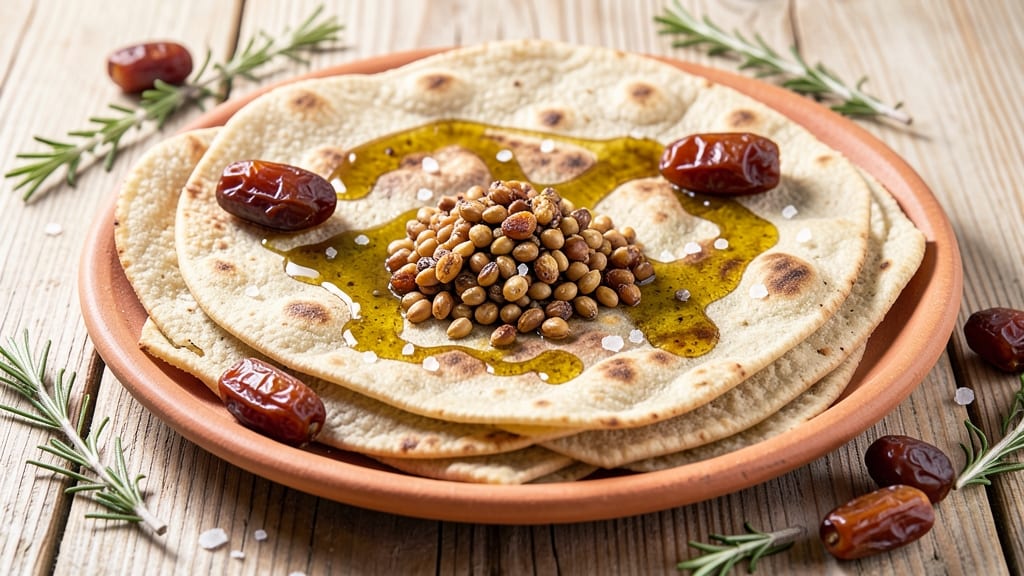
This ancient Egypt bread recipe transports you to the Nile Valley with its earthy, nutty flavor and time-honored fermentation secrets. 🌾 Made with emmer wheat—the grain of pharaohs—this recipe recreates the simple yet sophisticated breads baked in clay ovens over 3,000 years ago.
The slow fermentation develops deep, complex flavors, while the absence of modern shortcuts preserves the authenticity of this historical staple.
Unlike modern breads, this recipe relies on traditional techniques that ancient Egyptians perfected: soaking whole grains, natural fermentation, and baking in high-heat clay or stone.
The result is a dense, slightly chewy crust with a tender interior, often enriched with barley or sweetened with dates—a nod to the sweet ta’amiya breads enjoyed by both commoners and royalty.
The process is straightforward but requires patience, rewarding you with bread that tastes like a direct connection to antiquity.
What makes this bread truly special is its versatility and cultural significance. Serve it flat like aish baladi for dipping in olive oil and za’atar, or shape it into sweet loaves studded with dates for a taste of Egypt’s golden age.
The aroma of freshly baked bread, infused with the scent of ancient grains, will fill your kitchen—and your home—with the spirit of the Nile. This isn’t just bread; it’s a piece of history you can hold, taste, and share.
Ready to bring the past to life? The recipe requires just five core ingredients—emmer wheat, water, a pinch of salt, and time—and delivers bread that’s as nutritious as it is nostalgic.
Whether you’re recreating an ancient feast or simply craving something deeply authentic, this is the bread that will transport you back to the banks of the Nile.
Ingredients for ancient egypt bread
Five ingredients, three thousand years of tradition—this bread brings ancient Egypt to your kitchen.
| Ingredient | Amount | Notes |
|---|---|---|
| Emmer Wheat Berries 🌾 | 2 cups | Whole, unprocessed berries (not flour) |
| Filtered Water 💧 | 3 ½ cups | Room temperature preferred |
| Sea Salt 🧂 | ½ tsp | Fine grain for even distribution |
| Barley Flour 🌾 | ½ cup | For enrichment (optional) |
| Dates 🍇 | ¼ cup | Pitted, chopped (for sweet version) |
| Olive Oil 🫒 | 2 tbsp | For dough shaping (extra-virgin) |
| Sesame Seeds 🌱 | 1 tbsp | For topping (optional) |
| Za'atar Spice Blend 🌿 | 1 tbsp | For serving (optional) |
Emmer wheat berries are the heart of this recipe. Bob's Red Mill or specialty grain stores like Terrasanta carry them—look for whole, unprocessed berries, not pre-ground flour. The berries need soaking overnight, so plan ahead. If you can't find emmer wheat, spelt berries work as a close substitute. For the barley flour, check the bulk section of Whole Foods or Trader Joe's—it adds a nutty depth that ancient Egyptians loved. The dates? Medjool dates from Costco are perfect—they're sweet, plump, and easy to chop.
No emmer wheat? Spelt or einkorn berries will work, though the flavor will differ slightly. For the sweet version, figs or raisins can replace dates, but dates give that authentic Egyptian sweetness. The olive oil matters—use extra-virgin for richness, but any good-quality oil will do. If you're making the savory version, skip the dates and dates. For the za'atar, Penzeys sells a great blend, or mix your own with sumac, sesame, and thyme. The sesame seeds? Toast them lightly before sprinkling for extra crunch—a quick 2-minute pan toast makes all the difference.
The soaked berries keep in the fridge for 5 days if you want to prep ahead. Once baked, the bread stays fresh for 3 days at room temperature, wrapped in a clean kitchen towel. For longer storage, freeze the baked loaves for up to 3 months. Reheat in a 350°F oven for 5-10 minutes to restore that fresh-from-the-clay-oven warmth. This bread is magical reheated—almost like it just came out of an ancient Egyptian oven.
Why You'll Love This Recipe
- I’ll be real: soaking emmer wheat overnight might sound like work, but it’s actually less fuss than kneading modern bread dough. Just toss the berries in water, let them sit, then blend—no yeast, no waiting hours, no stress. That’s ancient efficiency for your modern life.
- No-Grain Headache: I’ll be real: soaking emmer wheat overnight might sound like work, but it’s actually less fuss than kneading modern bread dough. Just toss the berries in water, let them sit, then blend—no yeast, no waiting hours, no stress. That’s ancient efficiency for your modern life.
- Sweet-Savory Magic: The dates caramelize into this deep, chewy richness while the barley flour adds a nutty bite—like a cross between honey cake and whole-grain toast. Honestly, it’s the kind of bread that makes you pause mid-bite just to savor it.
- Lunchbox Hero: Between us, this bread holds up way better than store-bought for sandwiches or snacks. Pack it with hummus, smear it with tahini, or eat it plain—it’s my go-to for school lunches or office breakers. (Yes, even on a Tuesday.)
Step-by-step instructions for ancient Egyptian emmer wheat bread
Unlock the secrets of Pharaonic baking with this ancient technique that transforms humble emmer wheat berries into golden, flavorful crust.
🔥 Step 1: Soak the Emmer Wheat Berries Overnight
Place the 2 cups of emmer wheat berries in a large bowl and cover them completely with the 3.5 cups of filtered water. Add the ½ teaspoon of sea salt and stir gently to distribute. The water should be at room temperature to encourage even hydration and fermentation.
Cover the bowl with a clean kitchen towel or plastic wrap and let it soak at room temperature for 12-24 hours. You'll know it's ready when the berries have swollen significantly and the water takes on a slightly cloudy, fermented appearance. This soaking period mimics the ancient Egyptian method of pre-fermenting grains to improve digestibility and flavor. Don't skip this step—it's the foundation of authentic texture.
👨🍳 Step 2: Create the Dough and Ferment
After soaking, drain the berries through a fine-mesh strainer, reserving the fermented liquid. In a large mixing bowl, combine the soaked berries with the ½ cup of barley flour and 2 tablespoons of olive oil. Using your hands or a wooden spoon, knead the mixture until it forms a shaggy, sticky dough—it won't be smooth like modern bread dough.
This dough will be wetter than you're used to, but that's exactly what we want for authentic Egyptian texture. Cover the bowl again and let it ferment at room temperature for 4-6 hours, or until it's noticeably puffier and smells slightly tangy. The fermentation develops natural sweetness and improves digestibility, just as ancient bakers discovered. If working with a sweet version, fold in the ¼ cup of chopped dates during this fermentation period.
🍳 Step 3: Shape and Rest the Dough
Lightly dust a clean surface with a bit of the reserved fermented liquid or a few tablespoons of the barley flour. Transfer the dough to the surface and divide it into 4 equal portions. Gently shape each portion into a round loaf, about 3 inches in diameter, using your hands. The dough will be sticky—don't overwork it.
Place the shaped loaves on a parchment-lined baking sheet, spacing them about 2 inches apart. Cover loosely with a towel and let them rest for 30 minutes at room temperature. This resting period allows the gluten to relax slightly, making them easier to handle and preventing cracking during baking. The dough should feel slightly springy when pressed gently with your finger.
🔥 Step 4: Bake for Ancient Egyptian Crust
Preheat your oven to 375°F. While the oven heats, brush the tops of the loaves with a bit more olive oil and sprinkle generously with the 1 tablespoon of sesame seeds. Bake for 30-35 minutes until the crust is deep golden brown and the internal temperature reaches 190°F when measured with an instant-read thermometer.
Here's where the magic happens: the high heat creates that characteristic Egyptian crust while keeping the interior tender. If your oven runs hot, start checking at the 25-minute mark—the bread should sound hollow when tapped on the bottom. Remove from the oven and let cool on a wire rack for 10 minutes before serving.
🍽️ Step 5: Serve with Authentic Flavors
While still warm, brush the tops with a bit more olive oil if desired. Serve with a sprinkle of za'atar spice blend for that authentic Egyptian touch. This bread pairs beautifully with hummus, olive tapenade, or fresh vegetables. The combination of nutty emmer wheat, sweet dates (if used), and savory za'atar creates a flavor profile that transports you back to ancient kitchens along the Nile.
For best results, enjoy within 2 days—this bread develops maximum flavor when served fresh from the oven. Store leftovers in an airtight container at room temperature. The fermentation process gives it a naturally long shelf life compared to modern breads.
Pro Tips For Making Ancient Egypt Bread
- SOAK EMMER OVERNIGHT: I learned this the hard way—rushing the soak leaves your emmer berries chewy and unyielding. Use filtered water (chlorine ruins the texture) and let them sit in a warm spot for 12–14 hours. The berries should swell to nearly double size; if they’re still hard after soaking, you’re not done.
- GRIND BARLEY COARSE: Skip the fine flour—ancient Egyptian bread relied on texture. Pulse your barley in a food processor until it’s roughly like cornmeal, with some whole grains still intact. This mimics traditional grinding and gives the bread that satisfying bite. (Yes, it’ll take longer to bake.)
- STEAM FIRST, THEN BAKE: After shaping, place your loaves in a preheated Dutch oven with a metal bowl of boiling water on the bottom. Seal the lid and bake at 425°F (220°C) for 20 minutes—this traps steam and creates that dense, airy crumb. I know, it’s an extra step, but it’s the thing that matters most for authentic texture.
- SALT THE WATER, NOT THE DOUGH: Dissolve the sea salt directly into the filtered water before mixing with soaked emmer and barley. This ensures even distribution—no salty pockets or bland patches. (And yes, even if you’re impatient like me, resist the urge to skip this.)
Creative variations of this dish
Sweet Date Loaves
Transform this bread into Egypt’s beloved ta’amiya by incorporating ¼ cup chopped dates during the 4-6 hour fermentation. Fold them into the dough after kneading, and shape into small, round loaves. Brush with olive oil and sprinkle with toasted sesame seeds before baking at 375°F for 30 minutes.
The caramelized dates create a sweet, chewy center that ancient Egyptians enjoyed with milk or honey. 🍇
Savory Barley Flatbread
For a closer match to aish baladi, replace half the emmer wheat with barley flour and shape the dough into thin, round flatbreads. Roll each portion to ¼-inch thickness and bake on a preheated 450°F stone or cast-iron skillet for 8-10 minutes until puffed and golden.
Serve with za’atar and olive oil for dipping—just like in ancient Egyptian taverns. 🌾
Honey-Glazed Crust
After baking, drizzle the warm loaves with 1 tablespoon honey mixed with ½ teaspoon cinnamon. Let it absorb for 5 minutes before serving. This technique mimics the sweetened breads reserved for temples and royalty.
For extra richness, add 1 tablespoon crushed pistachios to the sesame seed topping before baking. 🍯
Whole-Grain Seed Mix
Boost nutrition like ancient Egyptian bakers by adding 2 tablespoons ground flaxseeds or 1 tablespoon poppy seeds to the dough during fermentation. These seeds were common in pharaonic diets for their health benefits.
Toast the seeds lightly in a dry pan for 2 minutes before mixing to enhance flavor. The result is a nutty, hearty bread perfect for hearty stews. 🌱
Herbed Olive Oil Dip
Serve with a modern twist on an ancient pairing: mix ¼ cup olive oil with 1 tablespoon za’atar, 1 minced garlic clove, and a pinch of salt. Drizzle over warm bread or use as a dip.
This combination was popular in Egyptian households over 3,000 years ago—the perfect way to experience history in every bite. 🫒
Nutrition facts
Frequently asked questions
Can I substitute emmer wheat if I can't find it?
Yes! Spelt or einkorn berries work as close substitutes, though the flavor will differ slightly. For a more modern approach, you can use whole wheat berries or even bulgur wheat, but the texture won't be identical. If using flour, mix 2 cups whole wheat flour with 1 cup water and let it soak for 4 hours before proceeding with the recipe.
How do I know when the dough is properly fermented?
The dough is ready when it's noticeably puffier (about 50% larger) and smells slightly tangy—like yogurt or sourdough starter. Press your finger gently into the dough; if it springs back slowly, it's perfect. Over-fermented dough will smell sharp and may collapse when baked. For best results, ferment at 75°F—warmer temperatures speed it up, cooler temperatures slow it down.
Can I bake this bread without a traditional clay oven?
Use a cast-iron skillet or baking stone preheated to 450°F for a closer match to ancient Egyptian baking. For flatbreads like aish baladi, bake on the stone for 8-10 minutes. If using a regular oven, bake at 375°F as directed. The key is high, dry heat—this creates that signature crisp crust while keeping the interior tender.
Why does my dough look too wet or sticky?
The dough will naturally be stickier than modern bread dough—this is normal! Ancient Egyptians used minimal flour to preserve nutrients. If it's extremely wet, add 1-2 tablespoons of barley flour at a time until it's manageable. Avoid overworking it, as this can develop gluten and alter the texture. For shaping, wet your hands slightly to prevent sticking. The stickiness ensures a moist, tender crumb—just like the bread of the pharaohs!
How should I store leftovers to keep them fresh?
Wrap cooled loaves in a clean kitchen towel and store at room temperature for up to 3 days. For longer storage, freeze baked bread in an airtight container for 3 months. To reheat, warm at 350°F for 5-10 minutes until crispy again. The fermentation process naturally preserves this bread longer than modern breads—just like the ancient Egyptian bakers intended!