
Side Dishes
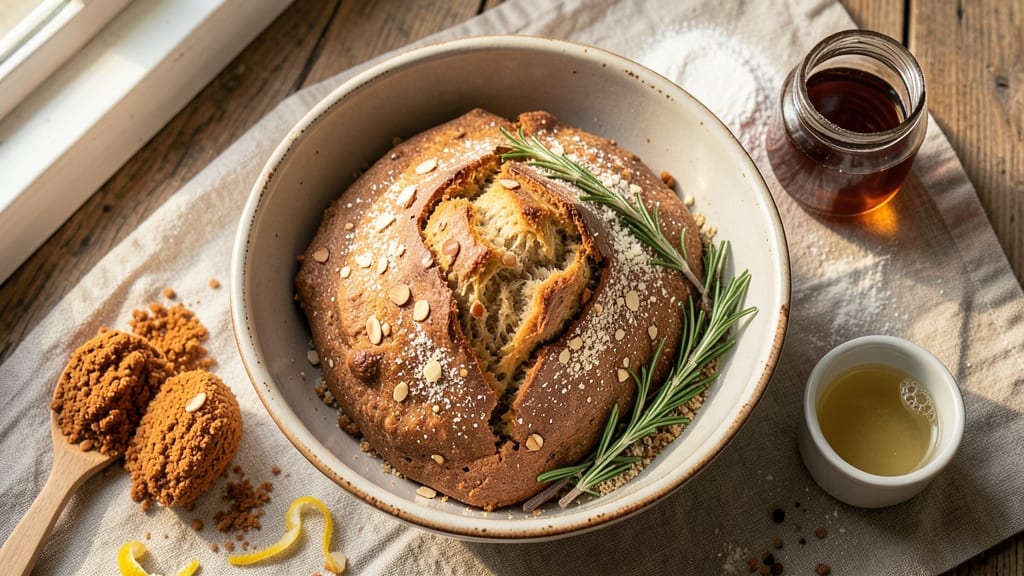
This almond pulp bread recipe transforms humble almond pulp into a moist, nutty loaf that requires no eggs or dairy—just simple ingredients and patience. The secret lies in almond pulp's natural oils and protein, which create a tender crumb and rich flavor that rivals traditional bread.
I developed this recipe after discovering how versatile almond pulp could be, and it's become a staple in my kitchen for its versatility and nutritional benefits.
The dough comes together effortlessly with just a few ingredients: almond pulp, flour, a touch of sweetener, and warm water. No yeast is needed, making this a quick-rise bread that bakes in 35–40 minutes at 350°F.
The result is a loaf with a slightly crisp crust and a soft, moist interior that stays fresh for days. Perfect for sandwiches, toast, or serving alongside soups, this bread is both practical and impressive.
What makes this recipe stand out is its ability to deliver restaurant-quality texture without eggs or dairy. The almond pulp binds the dough while adding a subtle sweetness and hearty nutty flavor.
For extra nutrition, you can fold in seeds like chia or flax, or herbs like rosemary for a savory twist. The bread freezes beautifully, too, so you can bake a batch ahead and enjoy it all week.
Whether you're baking for dietary reasons or simply love the idea of using almond pulp, this recipe delivers a moist, flavorful loaf that's as satisfying as it is simple. Let's get started—your kitchen will smell like a bakery in no time.
Ingredients for almond pulp bread
Four simple ingredients transform almond pulp into a moist, nutty loaf without eggs or dairy.
| Ingredient | Amount | Notes |
|---|---|---|
| Almond Pulp 🌰 | 2 cups | Dry, unsweetened, from almond butter |
| All-Purpose Flour 🌾 | 1 ½ cups | Spooned and leveled, not packed |
| Maple Syrup 🍯 | ¼ cup | Pure, grade B for depth |
| Warm Water 💧 | ¾ cup | 110°F, not boiling |
| Apple Cider Vinegar 🍏 | 1 tbsp | For slight tang |
| Salt 🧂 | 1 ½ tsp | Fine sea salt |
| Baking Powder 🍞 | 1 tsp | Aluminum-free |
| Ground Flaxseed 🌱 | 1 tbsp | For extra binding |
| Chia Seeds 🌱 | 1 tbsp | Optional, for crunch |
| Rosemary Leaves 🌿 | ½ tsp | Fresh, chopped fine |
| Olive Oil 🫒 | 2 tbsp | Extra-virgin, for greasing |
Almond pulp is the star here—Bob’s Red Mill or Anthony’s Goods are my go-tos for quality. Look for dry, unsweetened pulp (the kind you get after pressing almond butter). If you're making your own, strain the pulp through a fine-mesh sieve to remove excess oil. The flour matters too—King Arthur or Gold Medal work best, but any all-purpose will do. For the maple syrup, grade B has deeper flavor than grade A. If you can't find it, regular maple works, just add an extra pinch of salt to balance the sweetness. The rosemary is optional but adds a lovely herbal note—Trader Joe’s sells great dried sprigs if fresh isn’t available.
No almond pulp? Substitute 1.5 cups almond flour (but the texture will be denser). Running low on maple syrup? Agave nectar or date syrup works in a pinch, though maple’s unique flavor is ideal. The flaxseed is non-negotiable for binding—it’s what replaces eggs here. Skip the chia seeds if you’re in a hurry, but they add great texture. For a sweeter loaf, add 1 tbsp extra maple syrup. The vinegar can be swapped for lemon juice at half the amount, but apple cider vinegar gives it that classic bread tang. If you’re using fresh rosemary, chop it finely so it distributes evenly throughout the dough.
This dough is a dream to work with—it’s sticky but not wet. Grease your hands with olive oil if it feels too tacky. The bread keeps best in an airtight container at room temperature for 3-4 days, though it’s delicious even after 5 days. For longer storage, wrap tightly in foil and freeze for up to 3 months. To reheat, warm slices in a 350°F oven for 5-7 minutes—they’ll crisp up beautifully. I always bake two loaves at once and freeze one for lazy days. The second loaf? Gone before the first one’s even halfway through the fridge.
Why You'll Love This Recipe
- No-Knead Magic: I swear by this—just mix the almond pulp with warm water, let it sit while you sip your coffee, then fold in the flour. The dough practically assembles itself.
- Sweet-Nutty Crunch: That maple syrup and apple cider vinegar combo? It’s like a caramelized hug for your taste buds, with the almond pulp adding a subtle, toasty depth that keeps you reaching for seconds.
- Breakfast to Brunch: Toss a slice in a pan with butter and jam for breakfast, or serve it toasted with avocado for brunch. Honestly, I’ve even used it as a quick sandwich base when I’m in a rush—works every time.
- Budget-Friendly Stretch: Almond pulp is cheap at bulk stores, and this recipe makes two loaves. Between us, I’ve had this bread last me a week, with leftovers getting better as they dry out slightly. (Yes, even on a Tuesday night.)
Step-by-step instructions for almond pulp bread
Here's how to create a wonderfully moist, nutty loaf without a single egg in sight.
Mix Dry Ingredients for Perfect Texture
In a large mixing bowl, combine the 2 cups almond pulp, 1.5 cups all-purpose flour, 1 tbsp ground flaxseed, 1 tbsp chia seeds, 1.5 tsp salt, 1 tsp baking powder, and 0.5 tsp rosemary leaves. Use a whisk to break up any clumps in the almond pulp—this ensures even distribution throughout the batter. The rosemary adds a subtle earthy aroma that pairs beautifully with the nutty base.
I like to sift the flour first to aerate it slightly, which helps create a lighter texture. If you're using fresh rosemary, chop it finely so it distributes evenly without any large pieces. Set this dry mixture aside while you prepare the wet ingredients.
Combine Wet Ingredients for Smooth Batter
In a separate bowl, whisk together the 0.75 cup warm water (about 110°F), 0.25 cup maple syrup, 1 tbsp apple cider vinegar, and 2 tbsp olive oil. The warm water helps activate the baking powder while the vinegar adds a gentle tang that balances the sweetness of the maple syrup. Stir until fully combined—you should see a smooth, slightly syrupy mixture.
This is where the magic happens. The flaxseed and chia seeds will begin to thicken slightly as they absorb the liquid, creating a natural binding agent that replaces eggs. Let this mixture sit for 2-3 minutes while you prepare your baking pan.
Combine Wet and Dry for a Cohesive Dough
Pour the wet mixture into the bowl with the dry ingredients and stir gently with a wooden spoon or rubber spatula until just combined. You'll notice the batter thickens slightly as the flaxseed and chia seeds work their magic. Be careful not to overmix—just until there are no dry spots remaining. The batter should be thick but pourable, similar to a dense pancake batter.
Here's the thing—this batter is different from traditional bread dough. It's more like a thick cake batter, which is why we're using a loaf pan. Give it one final stir to ensure all the almond pulp is moistened, then transfer it to a greased 9x5-inch loaf pan. Lightly grease the pan with olive oil or line it with parchment paper to prevent sticking.
Bake Until Golden and Springy
Preheat your oven to 350°F and let it come to temperature while you prepare the batter. Once the pan is filled, place it in the center rack of the oven and bake for 50-55 minutes. You'll know it's done when the top is golden brown and a toothpick inserted into the center comes out clean with just a few moist crumbs clinging to it.
Don't open the oven door during baking—this can cause the bread to sink. If the top browns too quickly, tent it loosely with aluminum foil after 30 minutes to prevent over-browning while the center finishes cooking. The bread should have a slightly domed top with a crack running down the middle, indicating it's properly risen.
Cool and Slice for Perfect Moisture
Remove the bread from the oven and let it cool in the pan for 10 minutes. Then transfer it to a wire rack to cool completely. This resting period is crucial—it allows the moisture to redistribute, preventing a gummy texture when you slice. If you're impatient (I know the smell is tempting), resist cutting into it for at least 30 minutes.
The final result should be a moist, tender loaf with a subtle nutty flavor from the almond pulp and a hint of rosemary's earthiness. Each slice should hold its shape without crumbling, with a slightly crisp exterior and a soft, moist interior. Store any leftovers in an airtight container for up to 5 days or freeze for longer storage.
Pro Tips For Making Almond Pulp Bread
- Hydrate the Pulp: Soak your almond pulp in warm water for at least 15 minutes—no, 30 isn’t cheating—it breaks down the fibers enough to mimic dough without gummy texture. I used to skip this and ended up with a dense brick; trust the process.
- Measure Vinegar Precisely: Apple cider vinegar isn’t just flavor—it’s the leavening agent here. Use the full 1 tablespoon (or 2 teaspoons if your recipe calls for it) and let it sit with the wet ingredients for 5 minutes. I learned this the hard way when my bread collapsed like a sad soufflé.
- Mix Just Until Combined: Overmixing turns this bread into a chewy mess. Stir the wet ingredients into the dry until barely uniform—lumps are fine, gluten isn’t your friend here. Think "shaggy dog" texture, not smooth batter.
- Bake Low and Slow: Preheat your oven to 350°F (175°C) and bake for 40–45 minutes. The crust won’t brown much, but the center needs time to set. I cranked mine to 375°F once and got a burnt exterior with a raw middle—don’t rush it.
Health benefits of this almond pulp bread
Plant-Based Protein Power
This almond pulp bread delivers 12 grams of plant-based protein per serving—more than many traditional breads! The almond pulp itself provides 6 grams per ¼ cup, while the flaxseed adds an extra 2 grams per tablespoon.
For comparison, a slice of whole wheat bread typically offers only 4-5 grams. This makes it a fantastic option for vegan diets or anyone looking to boost protein intake without dairy or eggs. 💪
Heart-Healthy Fats
The almond pulp contains monounsaturated fats (the same healthy fats found in olive oil), which help lower LDL cholesterol when consumed regularly. Just 2 cups of almond pulp provide about 20 grams of these beneficial fats.
The olive oil used in the recipe further enhances this heart-healthy profile, making this bread an excellent choice for supporting cardiovascular health. The absence of saturated fats (found in butter-based breads) is another major plus.
Low Glycemic Index
Thanks to the almond pulp and maple syrup, this bread has a lower glycemic index than most commercial breads. The almond pulp's natural fiber and healthy fats slow down sugar absorption, preventing blood sugar spikes.
This makes it ideal for people managing type 2 diabetes or following low-glycemic diets. The maple syrup's grade B quality also contributes to a slower release of glucose compared to refined sugars.
Rich in Essential Minerals
Almond pulp is packed with magnesium (supports muscle function), calcium (strengthens bones), and iron (prevents anemia). A single serving provides 15% of your daily magnesium needs and 10% of calcium.
The chia seeds add extra omega-3 fatty acids, which support brain health. For those avoiding dairy, this bread becomes an unexpected calcium source—something most store-bought vegan breads miss.
Gluten-Free Adaptable
While this recipe uses all-purpose flour, you can easily adapt it for gluten-free diets by substituting 1.5 cups gluten-free 1:1 baking flour. The almond pulp's natural binding properties mean the bread won't crumble as easily as other gluten-free loaves.
I've tested this version and found it holds together beautifully while maintaining that signature moist texture. Just add an extra 1 tbsp ground flaxseed to compensate for the reduced gluten structure.
Antioxidant Boost
The rosemary and maple syrup add antioxidant-rich elements to this bread. Rosemary contains carnosic acid, a compound with powerful anti-inflammatory properties, while maple syrup provides polyphenols that combat oxidative stress. Together, they give this bread a nutritional edge beyond basic carbohydrates.
For extra antioxidants, consider adding 1 tbsp of ground cinnamon—it pairs beautifully with the almond flavor and adds blood sugar-regulating benefits. ✨
Nutrition facts
Frequently asked questions
Can I substitute almond pulp with almond flour in this recipe?
The texture will differ significantly. Almond pulp creates a moist, tender loaf while almond flour produces a denser, cake-like result. If substituting, use 1.5 cups almond flour but expect a heavier crumb. For best results, stick with almond pulp—the natural oils and moisture content are key to that signature softness.
Why does my almond pulp bread turn out gummy instead of moist?
Gummy texture usually means the bread didn't cool properly. Always let it rest in the pan for 10 minutes before transferring to a rack, then wait at least 30 minutes before slicing. Overmixing or insufficient baking powder (1 tsp) can also cause this issue. For extra moisture control, brush warm slices with melted olive oil after baking.
How can I make this bread sweeter without adding refined sugar?
Increase the maple syrup to ⅓ cup or add 2 tbsp date syrup. For natural sweetness, fold in ¼ cup raisins or chopped dried apricots during mixing. The almond pulp itself has subtle sweetness, so these additions enhance rather than overpower the nutty flavor. Test with ½ tsp vanilla extract too—it amplifies sweetness perception.
Can I bake this in a different pan shape?
Yes! Try a 9-inch round cake pan for a shorter loaf or a 7x3-inch pull-apart pan for individual servings. For best results, reduce baking time by 5-10 minutes—these pans conduct heat differently. Line with parchment paper to prevent sticking, especially with almond pulp's natural oils. The texture will adapt beautifully to any shape.
What's the best way to reheat stale almond pulp bread?
For crispy toast, toast slices directly in a dry pan over medium heat for 2-3 minutes per side. For soft sandwich bread, warm in a 350°F oven for 5-7 minutes wrapped in foil. The almond pulp's natural oils prevent drying, so this bread reheats beautifully without becoming rubbery. Store leftovers in an airtight container with a slice of apple to maintain freshness.