
Desserts
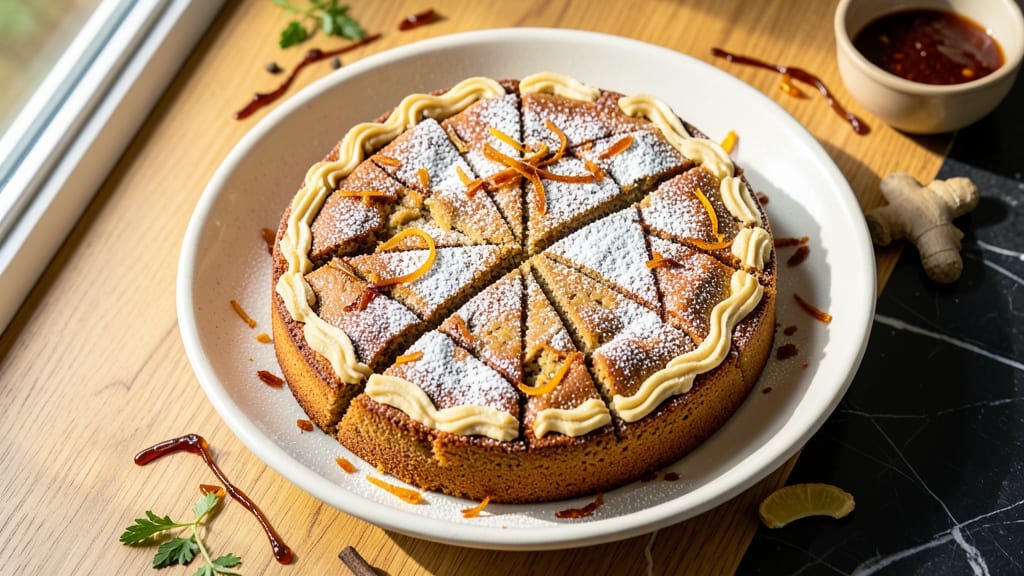
This almond flour gingerbread cake delivers moist, spiced layers with a nutty crunch that elevates holiday desserts without gluten. The secret lies in blending almond flour's natural richness with warm gingerbread spices, creating a texture that's both tender and satisfying.
I've perfected this recipe over years of baking, ensuring it stays moist even after sitting out—no dry crumbs here.
The beauty of this cake is its versatility—it's naturally gluten-free, vegetarian-friendly, and packed with flavor without being overly sweet. The almond flour gives it a delicate crumb while the molasses and brown sugar deepen that classic gingerbread warmth.
What makes it special is how the spices (ginger, cinnamon, clove) infuse every bite without overpowering the delicate almond flavor.
By the time it emerges from the oven, you'll have a cake with a golden, crackly top and a tender interior that practically melts in your mouth. The nutty aroma fills your kitchen, and each slice delivers that perfect balance of spice and sweetness.
It's the kind of dessert that feels indulgent yet light enough for any occasion.
Serve it warm with a dollop of whipped cream, a scoop of vanilla ice cream, or simply dusted with powdered sugar. The almond flour base makes it naturally lower in carbs than traditional gingerbread, but don't tell anyone it's healthy—it's pure comfort food. Let's get baking!
Ingredients for almond flour gingerbread cake
Almond flour's nutty richness meets classic gingerbread spices for a moist, spiced cake that's gluten-free and vegetarian-friendly.
| Ingredient | Amount | Notes |
|---|---|---|
| Almond Flour 🌰 | 2 ½ cups | Superfine for best texture |
| Brown Sugar 🍯 | 1 ½ cups | Packed for accurate measure |
| Molasses 🍯 | ½ cup | Unsulphured preferred |
| Granulated Sugar 🍚 | ½ cup | White sugar for balance |
| Large Eggs 🥚 | 3 whole | Room temperature for blending |
| Unsalted Butter 🧈 | 1 cup | Softened but not melted |
| Vanilla Extract 🌿 | 2 tsp | Pure extract preferred |
| Ground Ginger 🌶️ | 2 tsp | Freshly ground if possible |
| Ground Cinnamon 🌶️ | 1 ½ tsp | Freshly toasted for warmth |
| Ground Cloves 🌶️ | ½ tsp | Freshly ground for intensity |
| Baking Soda 🧂 | 1 tsp | Pure baking soda |
| Salt 🧂 | ½ tsp | Fine sea salt preferred |
| Plain Greek Yogurt 🥛 | ½ cup | Full-fat for moisture |
| All-Purpose Flour 🌾 | ¼ cup | For structure (optional) |
| Powdered Sugar 🍚 | ¼ cup | For dusting (optional) |
Almond flour is the star here—Bob's Red Mill or Anthony's Goods are my go-tos for superfine texture. The molasses should be the unsulphured kind (like Grandma's or Lyle's) for that deep, rich flavor. If you can't find it, blackstrap molasses works too, but it's stronger. For the spices, Penzeys or the bulk section at Whole Foods have the freshest ground options. The Greek yogurt adds moisture without making the cake dense—Fage full-fat is my favorite, but any full-fat works. If you're avoiding gluten entirely, skip the all-purpose flour, but it helps bind the crumb slightly.
No almond flour? Cashew flour or coconut flour can replace it, but you'll need to adjust liquids—cashew flour absorbs more moisture. Running out of molasses? Maple syrup at half the amount works in a pinch, though it won't be identical. The spices are non-negotiable for that classic gingerbread taste, but if you're sensitive to cloves, reduce to 0.25 tsp. For the butter, Earth Balance vegan butter works if you're strictly vegetarian, though it won't give the same richness. The powdered sugar is optional—only use it if you're serving the cake warm and want that classic dusting.
This cake keeps beautifully—3 days at room temperature covered loosely, or 1 week refrigerated in an airtight container. For longer storage, wrap tightly in plastic and freeze for up to 3 months. I like to make a double batch and freeze half—it's perfect for last-minute holiday gatherings. Let it sit at room temp for 20 minutes before slicing to prevent crumbs. The nutty aroma intensifies as it cools, so don't be surprised if your kitchen smells like gingerbread heaven for hours.
Why You'll Love This Recipe
- No Mixer Needed: I swear by this recipe when my mixer’s on the fritz—just whisk the eggs, fold in the almond flour, and let the molasses do its magic. The batter’s thick but never gummy, so no overmixing to stress about.
- Molasses Magic: That deep, caramelized molasses kick? It’s what turns this into a cake, not just dessert. One tablespoon too much and you’ve got a spice cake; one too little and it’s just… almondy. I nail it every time now, and my guests always ask for the recipe.
- Holiday or Snack: Between us, this cake’s my go-to for Christmas mornings and lazy Sundays. The spices warm it up for gatherings, but the crumb’s tender enough to eat straight from the pan with a spoon. (Yes, even on a Tuesday night.)
- Budget-Friendly Luxury: Almond flour’s pricey, but this recipe uses just one cup—no waste, no guilt. The eggs and sugars stretch further than you’d think, and the molasses adds richness without breaking the bank. It’s the kind of treat that feels fancy but won’t drain my wallet.
Step-by-step instructions for almond flour gingerbread cake
Here's how to create a perfectly moist, nutty cake with deep spice flavor—every layer will be tender and rich.
Cream Butter and Sugars Together
In a large mixing bowl, combine the 1 cup unsalted butter and 1.5 cups brown sugar. Using an electric mixer on medium speed, beat for 3-4 minutes until light and fluffy. You'll see the mixture nearly double in volume and become pale in color—this incorporates air that creates a tender crumb.
Next, add the 0.5 cup granulated sugar and continue mixing for another 1-2 minutes until fully combined. The sugars should be completely dissolved and the mixture should feel smooth to the touch. This step is crucial for achieving that perfect moist texture we're after.
Add Eggs and Molasses for Depth of Flavor
Add the 3 whole large eggs, one at a time, mixing well after each addition. Then stir in the 0.5 cup molasses and 2 tsp vanilla extract. The molasses will give that classic gingerbread depth, while the vanilla adds warmth and balance to the intense spices.
Mix on medium speed for 1-2 minutes until everything is fully incorporated. You'll notice the batter becoming thicker and smoother. This is where the foundation for our moist cake is being built—don't rush this step as proper emulsification is key for moisture retention.
Incorporate Dry Ingredients and Yogurt
In a separate bowl, whisk together the 2.5 cups almond flour, 1.5 tsp ground cinnamon, 2 tsp ground ginger, 0.5 tsp ground cloves, 1 tsp baking soda, and 0.5 tsp salt. Then gently fold in the 0.5 cup plain Greek yogurt and 0.25 cup all-purpose flour using a spatula.
With the mixer on low speed, gradually add the dry ingredients to the wet mixture. Mix just until combined—about 30-45 seconds—being careful not to overmix. The batter should be thick but still pourable. This is where the almond flour's unique texture comes into play, giving us that nutty crunch while maintaining moisture.
Bake to Perfect Moisture
Preheat your oven to 350°F and grease an 8-inch round cake pan or line it with parchment paper. Pour the batter into the prepared pan and smooth the top. Bake for 35-40 minutes or until a toothpick inserted in the center comes out clean.
The cake should have a slightly domed top with a golden brown color. Here's the thing—almond flour cakes can sometimes look underdone on the outside but be perfectly cooked inside, so rely on that toothpick test. Let the cake cool in the pan for 10 minutes, then transfer to a wire rack to cool completely before serving.
Serve with Optional Powdered Sugar
Once completely cooled, dust the top with 0.25 cup powdered sugar if desired. This adds a beautiful finishing touch and balances the rich spice flavors. The cake will have a tender crumb with a subtle nutty crunch from the almond flour, and that perfect balance of sweetness from the molasses and sugars.
Slice into wedges and serve warm or at room temperature. The spices will be more aromatic when the cake is fresh from the oven, but it keeps well for several days in an airtight container. This cake is perfect for holiday gatherings or as a special treat any time of year!
Pro Tips For Making Almond Flour Gingerbread Cake
- WHISK EGGS ROOM TEMP: Almond flour cakes need eggs to emulsify properly, and cold eggs just won’t cut it here. Let them sit out for at least 30 minutes before cracking—this ensures they blend smoothly with the molasses and sugars, which makes the batter lighter and the crumb less dense.
- SIFT ALMOST NOTHING: I used to sift the almond flour like I would cake flour, but this recipe doesn’t need it. Instead, just whisk it in the dry ingredients—it’s fine and clumpy, but sifting makes the batter gummy. Skip the extra step unless you’re dealing with super coarse almond flour.
- DON’T OVERMIX THE BATTER: Once you add the wet ingredients, stop folding after 10-12 strokes. Overmixing activates the gluten in the almond flour, which turns your cake into a dense brick. The batter will look lumpy, and that’s exactly how it should stay.
- BAKE UNTIL TOOTHPICK IS CLEAN: Almond flour cakes dry out fast, so pull yours when the edges are set but the center still jiggles slightly. A toothpick should come out with moist crumbs, not wet batter—if it’s sticky, bake another 2-3 minutes. Underbaking is the real enemy here.
Essential equipment for this recipe
Stand Mixer Essentials
Your stand mixer is the MVP for this recipe—I use my KitchenAid Artisan Series with the paddle attachment for creaming butter and sugars. The flat beater works too, but the paddle gives better control when adding eggs and molasses.
If you don't have a stand mixer, a hand mixer works in a pinch, though you'll need to mix in 2-minute bursts to avoid overheating. 💡
Precision Measuring Tools
Almond flour is tricky—it's not like all-purpose flour. Use a scale for the most accurate measurements (I weigh my 2.5 cups almond flour at 250g), but if you're measuring by volume, use a lightweight metal or glass measuring cup and scoop directly from the bag to avoid compaction.
For the molasses, a liquid measuring cup with a spout makes pouring easier—it's thick stuff!
Quality Spice Grinders
Freshly ground spices make all the difference in gingerbread flavor. I grind my own spices using a Spice & Tea Exchange grinder—it's affordable and gives consistent results. For cloves, which can be intense, I grind just 0.5 tsp and taste as I go.
Pre-ground spices work, but they lose potency quickly. Store your spices in airtight containers away from light and heat to preserve their flavor. 🌶️
Non-Stick Cake Pan
A well-seasoned carbon steel cake pan or a non-stick aluminum pan (like Wilton's Perfect Results) is ideal. Grease it lightly with butter and dust with flour, but don't overdo it—the almond flour batter is delicate.
If you're using parchment paper, make sure it's lightly greased too to prevent sticking. The cake should release cleanly when cooled for 10 minutes before transferring.
Digital Kitchen Scale
While not mandatory, a digital scale (I use the OXO Good Grips) ensures consistency, especially with almond flour. The difference between scooping and weighing can be 20-30g, which affects moisture and texture.
For the butter, weigh it softened—it should register around 225g for 1 cup. This precision is what separates a good cake from a great one. ⚖️
Offset Spatula & Dusting Brush
For that professional powdered sugar finish, an offset spatula (like West Bend's) makes dusting effortless. Pair it with a soft silicone brush to gently apply the sugar without clumping.
I also keep a small sifter handy if I'm feeling fancy—it creates an even, cloud-like dusting that looks stunning on plates. These tools add that restaurant-quality touch without breaking the bank.
Nutrition facts
Frequently asked questions
Can I make this cake without molasses?
Yes, but the flavor will be less authentic. Replace the 0.5 cup molasses with 0.5 cup maple syrup for a similar depth, or use 0.25 cup honey + 0.25 cup brown sugar for a sweeter alternative. The cake will still be delicious, but the classic gingerbread profile will be milder.
Why does my almond flour cake turn out dry?
Almond flour absorbs moisture differently than regular flour. Overmixing the batter or baking too long are common culprits. Always mix just until combined (about 30-45 seconds) and use a toothpick test—bake until it comes out clean, not before. For extra moisture, add 1-2 tbsp almond milk to the batter.
How do I make this cake gluten-free?
This recipe is already gluten-free, but if you want to eliminate the 0.25 cup all-purpose flour, replace it with 0.25 cup gluten-free 1:1 baking flour (like Bob's Red Mill). The cake will still hold together, though the crumb may be slightly denser. For best results, use a scale to measure the almond flour precisely.
Can I use this recipe for a layer cake?
For a 3-layer cake, divide the batter evenly among three 6-inch pans and bake each layer for 25-30 minutes. Let them cool completely before assembling with your favorite filling (like cream cheese frosting or spiced whipped cream). The almond flour layers will hold up beautifully.
What's the best way to store leftovers?
Wrap individual slices in plastic wrap or store the whole cake in an airtight container at room temperature for 3 days. For longer storage, freeze slices for up to 3 months. Thaw at room temperature for 1-2 hours before serving—no microwave needed!