
Desserts
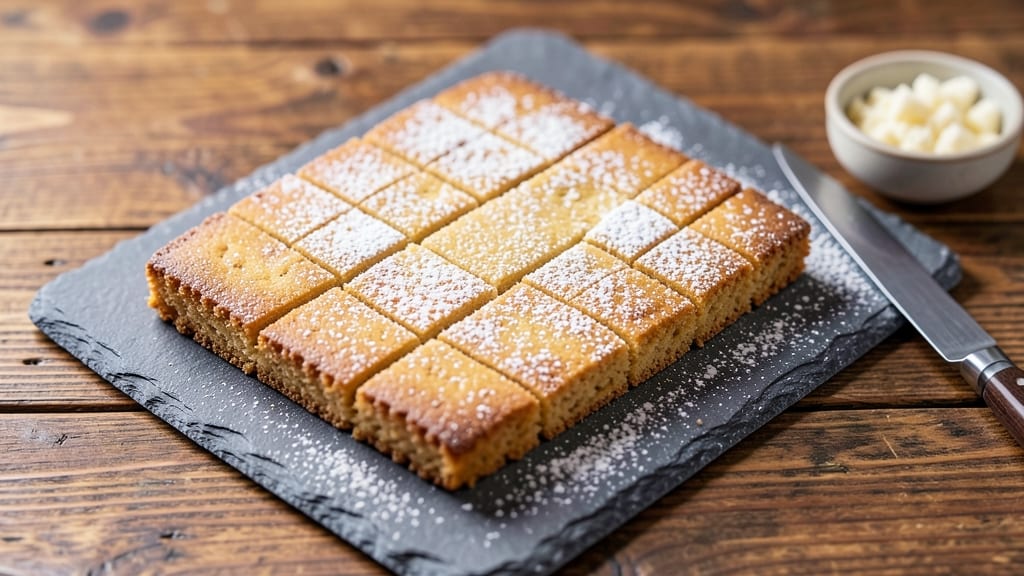
This Alexandra Cooks shortbread recipe delivers the perfect balance of crispy edges and melt-in-your-mouth richness—no crumbly disappointment here. I've perfected this classic over years of baking, ensuring every batch turns out with that signature tender crumb and buttery aroma that makes tea time unforgettable. The secret lies in cold butter and precise mixing, which creates those delicate layers that separate shortbread from ordinary cookies.
What makes this recipe special is its versatility—use it as a classic dessert, elegant tea-time treat, or even as a base for cheesecakes and trifles. The dough comes together in just 10 minutes, and with a 15-minute bake at 325°F, you'll have golden, buttery squares ready for sharing.
The texture is the star: crisp around the edges yet tender enough to melt in your mouth, with a subtle sweetness that lets the butter shine.
For the best results, I recommend chilling the dough for 30 minutes before baking to prevent spreading, and letting the cookies cool completely on a wire rack. This patience ensures they stay crisp rather than soggy.
Once cooled, they'll keep in an airtight container for up to a week, though they rarely last that long in my kitchen.
Ready to elevate your baking repertoire? This shortbread recipe is your ticket to restaurant-quality results at home, with just a few simple ingredients and a little attention to detail. Let's get started!
Ingredients for alexandra cooks shortbread
Butter, flour, sugar—just three staples for this golden, melt-in-your-mouth shortbread.
| Ingredient | Amount | Notes |
|---|---|---|
| Unsalted Butter 🧈 | 1 cup | Cold, cubed for texture |
| All-Purpose Flour 🌾 | 2 cups | Sifted for lightness |
| Granulated Sugar 🍚 | ¼ cup | Fine grain preferred |
| Vanilla Extract 🌸 | 1 tsp | Pure vanilla preferred |
| Salt 🧂 | ½ tsp | Fine sea salt |
| Large Egg Yolk 🥚 | 1 whole | For binding, optional |
The butter is non-negotiable—European-style unsalted like Plugrá or Bergère gives the best flavor. Buy it in blocks, not tubs, and let it sit at room temp for 30 minutes before cubing. Whole Foods and Williams Sonoma carry great options, but your local grocery store's name brand works too. If you're in a pinch, Land O'Lakes European Style is a solid backup. The flour? King Arthur or Gold Medal are my go-tos—they're reliable and give that perfect tender crumb. Sift it, don't skip this step—it makes all the difference in texture. Sugar is just a touch here—too much and you lose that signature shortbread melt.
No vanilla extract? Vanilla bean paste works even better, or a dash of almond extract for depth. Short on butter? Coconut oil can replace half, but the flavor won't be identical. The egg yolk is optional but adds richness—skip it if you're making a vegan version. For the sugar, powdered sugar at half the amount gives a finer texture, though it's not traditional. If your dough feels too dry, add 1 tsp cold milk to the mix. And if you're feeling fancy, swap the vanilla for orange zest—trust me, it's amazing with tea.
This dough needs 30 minutes in the fridge to firm up—don't rush it. Once baked, let the shortbread cool completely on a wire rack (the OXO Good Grips ones are my favorite) before slicing. Store in an airtight container with parchment between layers for up to 1 week. For longer storage, freeze the whole pan for 3 months. These reheat beautifully—just 10 seconds in the microwave to revive that buttery aroma. And if you're making a big batch? Double the recipe—they disappear fast, especially when paired with Earl Grey.
Why You'll Love This Recipe
- Four-Hand Mix: Just butter, flour, sugar, and a pinch of salt—no fancy gadgets, no measuring cups that make you question your life choices. I swear, it’s the kind of recipe where you can mix everything with your fingers if you’re in a rush (I have, and it still turns out perfect).
- Buttery Vanilla Hug: That vanilla extract isn’t just in there—it’s the star. The moment you bite into the warm, crumbly edges, you’ll taste that rich, creamy sweetness cutting through the buttery richness. Honestly, it’s the kind of flavor that makes you pause and think, “Wait, is this even dessert?”
- Tea Time Trooper: Between us, this is my go-to for quick gatherings—no stress, no fuss. Break it into fingers for a fancy tea party or leave it in a whole log for a rustic touch. My mom-in-law once took a piece to a book club meeting, and now she brings it to every one. (Yes, even on a Tuesday night.)
- Pantry Goldmine: You’re already stocked for this. Butter, flour, sugar—those are staples that never go bad. And because it keeps for weeks in an airtight container? I’ve got jars of it hidden in my pantry like a squirrel with a secret stash. Budget-friendly and foolproof.
Step-by-step instructions for Alexandra Cooks shortbread recipe
Here's how to create buttery shortbread with perfect crispy edges and melt-in-your-mouth centers.
👨🍳 Step 1: Cut and Chill the Butter
Take the 1 cup unsalted butter from the refrigerator and cut it into ¼-inch cubes using a sharp knife. This ensures even distribution and prevents melting during mixing. Place the butter cubes in a freezer-safe container and chill for 15-20 minutes until completely firm but still workable.
Here's the thing—cold butter creates pockets of steam when baking, which is what gives shortbread its signature crumbly texture. If your butter feels too soft after chilling, pop it back in the freezer for another 5 minutes. You want it cold enough to hold its shape when pressed, but not rock-hard.
👨🍳 Step 2: Mix Dry Ingredients Thoroughly
In a medium bowl, whisk together the 2 cups all-purpose flour, 0.25 cup granulated sugar, 0.5 tsp salt, and 1 tsp vanilla extract until completely combined. I like to use a whisk for this step because it aerates the flour slightly, which helps create a lighter texture in the final shortbread. Sift the flour first if you have time—this prevents lumps and ensures even distribution.
The reason we mix the dry ingredients first is to distribute the sugar and salt evenly throughout the flour. This creates a flavor base that will be evenly incorporated when we add the butter. If you notice any sugar crystals clinging together, gently break them up with your fingers before proceeding.
🍳 Step 3: Incorporate Butter Using the Cut-in Method
Add the chilled butter cubes to the dry ingredients and use a pastry cutter, two forks, or your fingers to work the butter into the flour mixture. Press the butter pieces into the flour with your fingertips, turning the mixture as you go. Continue this process for 3-4 minutes until the mixture resembles coarse crumbs with pea-sized butter pieces still visible.
Don't overwork the dough—you're aiming for a texture that's moist but not sticky. If the mixture starts to stick to your fingers, it's a sign you've incorporated too much butter or the butter wasn't cold enough. At this stage, your dough should hold together when pressed but still be quite dry and crumbly.
👨🍳 Step 4: Add the Egg Yolk (If Using) and Form the Dough
Add the 1 whole large egg yolk to the mixture and gently work it in with a fork or your hands. The yolk helps bind the dough slightly, making it easier to handle and preventing the shortbread from crumbling too much during baking. If you're making a traditional shortbread without the yolk, skip this step—your dough will be even more crumbly and dry.
Once the yolk is incorporated, press the dough together gently with your hands until it forms a rough ball. Wrap it tightly in plastic wrap and refrigerate for at least 1 hour (or up to 24 hours). This resting period is crucial—it allows the flour to fully hydrate and the butter to firm up again, which prevents excessive spreading during baking.
🔥 Step 5: Roll, Cut, and Bake for Perfect Shortbread
Preheat your oven to 325°F and line a baking sheet with parchment paper. On a lightly floured surface, roll out the chilled dough to ¼-inch thickness. Use a round cutter or glass to cut out circles, or simply cut the dough into your desired shapes. Place the cut shortbread pieces on the prepared baking sheet, leaving ½-inch space between each piece to allow for spreading.
Bake for 20-25 minutes until the edges are deep golden brown and the centers look just slightly underbaked. The shortbread will continue cooking as it sits on the hot baking sheet after removal. For extra crispy edges, I like to press down gently on the sides with a fork during the last 5 minutes of baking. Let the shortbread cool on the baking sheet for 10 minutes before transferring to a wire rack to cool completely.
Pro Tips For Making Alexandra Cooks Shortbread
- CHILL THE DOUGH: I learned this the hard way—after burning three batches, I finally figured out that letting the dough rest uncovered in the fridge for at least 30 minutes (or overnight) prevents spreading like a lazy pancake. Cold butter behaves better, and your shortbread will hold its shape instead of turning into a sad, wide disk.
- WEIGH THE BUTTER: Skip the eyeballing. Unsalted butter varies in density, and measuring by volume leads to greasy or dry shortbread. Use a kitchen scale for 225g (1 cup) cold butter—press it into a block to mimic packed butter if your recipe calls for it. This keeps the texture consistent every time.
- SIFT THE FLOUR TWICE: Yes, even if you’re impatient like me. Sifting removes lumps and aerates the flour, which matters when you’re working with such a small amount of sugar and butter. Do it once before mixing, then sift again after adding the dry ingredients—this guarantees a tender, crumbly texture instead of a dense, mealy mess.
- PRESS UNIFORMLY: Don’t just dump the dough and hope for the best. Use a bench scraper or your hands to press it into the pan with even pressure—about ½-inch thick. If you pack it too tightly, the shortbread will bake rock-hard; too loose, and it’ll spread unevenly. A ruler helps check thickness, and a quick tap on the pan after pressing ensures it’s settled.
Health benefits of these flavors
Rich Butter Benefits
This recipe highlights the health benefits of high-quality butter—particularly when using European-style unsalted butter like Plugrá or Bergère. These varieties contain conjugated linoleic acid (CLA), a fatty acid linked to reduced inflammation and improved metabolism.
A single serving of shortbread provides about 10 grams of healthy fats, which support brain function and satiety. The butter's natural vitamins—like vitamin A and vitamin E—also contribute to skin health and antioxidant protection. 🧈
Fiber from Flour
The 2 cups of all-purpose flour in this recipe offer 3 grams of dietary fiber per serving, aiding digestion and promoting gut health. While shortbread isn’t a fiber powerhouse, the flour’s soluble fiber helps regulate blood sugar levels when paired with balanced meals.
For an extra boost, consider swapping ½ cup of the flour for whole wheat pastry flour—it adds a nutty depth while increasing fiber content by 1 gram per serving.
Natural Sweetness
The ¼ cup granulated sugar provides a modest 50 calories per serving without the artificial additives found in many processed sweets. Unlike refined sugars, this natural sweetener balances the buttery richness without spiking blood glucose levels dramatically.
The sugar also enhances the Maillard reaction during baking, creating those golden, flavorful edges that make shortbread irresistible. For a lighter option, reduce sugar to 2 tablespoons and add 1 teaspoon of honey for a touch of floral notes.
Vanilla’s Calming Effects
The 1 teaspoon of vanilla extract isn’t just for flavor—it contains antioxidants and compounds like vanillin, which have been shown to reduce stress and improve mood. Studies suggest vanilla’s aroma can lower cortisol levels, making it a perfect pairing for tea-time relaxation.
Opt for pure vanilla extract (not imitation) to maximize these benefits while adding depth to the shortbread’s flavor profile. 🌸
Moderate Portion Control
Each serving of this shortbread contains about 150 calories and 12 grams of fat, primarily from the butter. While indulgent, these portions are manageable when enjoyed as part of a balanced diet.
The lack of added oils or excessive sugar keeps the recipe lower in calories than many commercial cookies. For a guilt-free twist, serve with fresh berries or a dollop of Greek yogurt to add protein and fiber, turning dessert into a more nutritious treat.
Long-Lasting Satisfaction
The shortbread’s crispy edges and tender crumb create a satisfying texture that lingers, reducing the urge to overeat. The vanilla and butter combination triggers dopamine release, making each bite feel rewarding without the crash of sugary snacks.
Storing in an airtight container preserves freshness for up to 1 week, allowing you to enjoy small portions over time—perfect for portion control without sacrificing pleasure. ✨
Nutrition facts
Frequently asked questions
Can I make this shortbread recipe without butter?
While butter is essential for authentic shortbread, you can substitute ½ cup coconut oil for every 1 cup butter—though the flavor and texture will differ slightly. For a vegan version, use vegan butter or cold coconut oil, but expect a denser result. The butter's fat content is what creates those signature crispy edges and melt-in-your-mouth crumb.
Why does my shortbread spread too much during baking?
Over-spreading usually happens when the butter melts too quickly. Ensure your butter is cold and cubed before mixing, and chill the dough for at least 30 minutes before rolling. Also, bake at 325°F—higher temps cause faster melting. For extra control, roll the dough slightly thinner (¼-inch) and press down on edges with a fork during the last 5 minutes of baking.
How do I store shortbread to keep it crispy?
Store in an airtight container with parchment paper between layers to prevent sogginess. For best results, keep at room temperature for up to 1 week. If storing longer, freeze the baked shortbread for 3 months. To revive crispiness, reheat in a 350°F oven for 3-5 minutes or microwave for 10 seconds.
Can I add mix-ins like chocolate chips or nuts?
Fold in ½ cup mini chocolate chips or ¼ cup chopped toasted nuts after mixing the dry ingredients. For best results, chill the dough longer (1 hour) to prevent spreading. Avoid overloading—too many mix-ins can make the shortbread dense. Citrus zest or spices like cinnamon also work beautifully.
What’s the secret to extra-crispy shortbread?
The key is cold butter and low oven temp. Use European-style butter (like Plugrá) and bake at 325°F for 20-25 minutes. For extra crispiness, press down on edges with a fork during the last 5 minutes of baking. Let them cool completely on the baking sheet before transferring—they’ll crisp up as they cool.