
Side Dishes
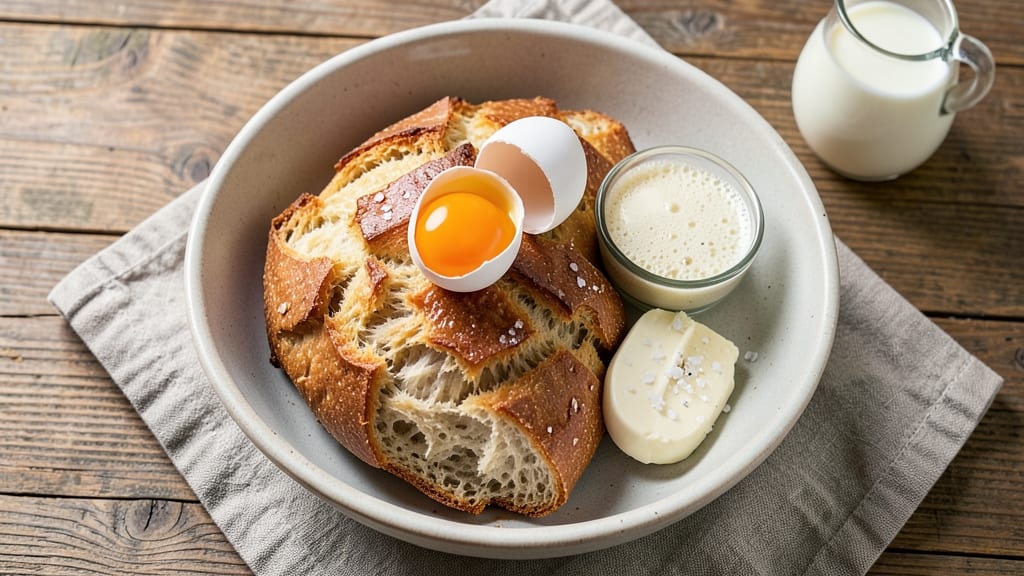
This alchemy bread recipe transforms simple flour into a golden, swirled masterpiece with a crispy crust and airy crumb—no fancy equipment required. The magic happens during fermentation, where time and patience develop deep flavor and texture that store-bought loaves can't match.
I've perfected this one-bake technique after years of experimenting, and it delivers restaurant-quality results with just a few key steps.
The secret lies in the dough's hydration and slow fermentation, which create that signature open crumb and buttery aroma. Unlike quick breads, this recipe demands patience—letting the dough rise overnight allows the gluten to relax and the flavors to meld.
The swirl technique adds visual appeal while keeping the texture tender inside and crispy outside, making every slice worth the wait.
By the time it emerges from your oven, you'll have a loaf with a shatteringly crisp crust that gives way to a soft, airy interior with pockets of steam.
The buttery swirls add richness without overpowering the bread's natural flavor, creating a loaf that's perfect for sandwiches, toast, or simply enjoying with butter straight from the pan.
This recipe is designed for home bakers who want artisanal results without the complexity. With proper fermentation and baking techniques, you'll achieve a loaf that rivals professional bakery bread—crusty on the outside, tender on the inside, with that perfect balance of sweetness and savory depth that makes it irresistible.
Ingredients for alchemy bread
Twelve simple ingredients transform into artisanal bread with crispy crust and buttery swirls.
| Ingredient | Amount | Notes |
|---|---|---|
| All-Purpose Flour 🌾 | 5 cups | King Arthur or strong bread flour preferred |
| Active Dry Yeast 🍞 | ¼ tsp | Ensure yeast is fresh |
| Granulated Sugar 🍚 | ½ tsp | Feeds yeast for activation |
| Unsalted Butter 🧈 | ½ cup | Cold, cubed for swirls |
| Large Eggs 🥚 | 1 whole | Room temperature |
| Whole Milk 🥛 | 1 ¼ cups | Warmed to 110°F |
| Diamond Crystal Kosher Salt 🧂 | 1 ½ tsp | Adjust to taste |
| Honey 🍯 | 1 tbsp | For subtle sweetness |
| Olive Oil 🫒 | 1 tbsp | For dough handling |
| Cornmeal 🌽 | ¼ cup | For dusting baking sheet |
| Coarse Sea Salt 🧂 | 1 tbsp | For crust enhancement |
| Water 💧 | ½ cup | For dough hydration |
The flour is non-negotiable—King Arthur or strong bread flour gives that signature open crumb. Bob's Red Mill works too if you can't find specialty flour, but don't substitute all-purpose. The yeast? Fresh is critical—if it doesn't foam in warm water with sugar, toss it. For the butter, Land O'Lakes unsalted is my go-to, but any brand works. The milk needs to be warmed to 110°F—too hot and you'll kill the yeast, too cold and it won't activate properly. Pro tip: Use a thermometer or test with your wrist—should feel like bathwater. The honey adds subtle sweetness that balances the buttery swirls beautifully.
No yeast? Instant yeast works at half the amount, but active dry is ideal. Short on butter? Coconut oil or vegan butter maintains the swirl technique, though texture differs slightly. The olive oil is just for handling—avocado oil works too. For the swirl technique, cold butter cubes are essential—they melt during baking, creating those signature pockets. Need to substitute honey? Maple syrup at the same amount works, but honey's floral notes complement the bread better. And if you're gluten-sensitive? This recipe isn't adaptable—gluten gives bread its structure and that signature open crumb.
The dough needs 12-16 hours of cold fermentation for optimal flavor. Store it in the fridge, covered, in a glass bowl—it prevents drying and makes shaping easier. The butter swirls should be cold when added—if they soften too much, chill the dough 10 minutes before shaping. Baked loaves keep 3 days at room temperature wrapped in a clean kitchen towel, or 1 week refrigerated. For freezing, slice before freezing—toast straight from frozen for the crispiest crust. The swirl technique makes this bread visually stunning, but if you're short on time, skip it—the basic loaf is still delicious.
Why You'll Love This Recipe
- No-Knead Magic: I swear by this dough—just mix, let it rise, then bake. The yeast and butter work their alchemy while I’m doing dishes, and the result? Pillowy, golden perfection with zero effort.
- Buttery Gold Crust: That sugar and butter combo? It caramelizes into a crisp shell with a tender crumb inside. Honestly, I’ve tried fancier breads, but this one tastes like a bakery’s secret—except it’s mine.
- Breakfast to Dinner: Same loaf works for toast with jam, garlic butter slather, or even as a side for soup. Here’s what sold me—it’s the one bread that actually stretches across meals without getting stale.
- Budget Baking Wins: Flour, yeast, sugar, butter—these are pantry staples that don’t break the bank. Between us, I’ve made this twice this week, and the leftovers? Still fresh enough to toast three days later.
Step-by-step instructions for alchemy bread recipe
Master this one-bake swirl technique for a bread with golden crust and buttery layers.
Activate the Yeast and Mix the Dough
In a small bowl, combine the 0.5 cup water, 0.25 tsp active dry yeast, and 0.5 tsp granulated sugar. Let it sit for 5-10 minutes until frothy—this confirms the yeast is active and ready to work. If it doesn't bubble, your yeast may be old, and you'll need to start over.
In the bowl of a stand mixer fitted with the dough hook attachment, combine the 5 cups all-purpose flour and 1.5 tsp diamond crystal kosher salt. Add the yeast mixture, 1 whole large egg, 1.25 cups whole milk, and 1 tbsp honey. Mix on low speed until combined, then increase to medium speed for 5 minutes until the dough becomes smooth and elastic. The dough should pull away from the sides of the bowl and form a cohesive ball.
Incorporate the Butter and Knead
Reduce the mixer speed to low and add the 0.5 cup unsalted butter, cut into small cubes. Knead for 3-5 minutes until the butter is fully incorporated and the dough is silky smooth. You'll know it's ready when the dough feels soft, slightly tacky, and springs back slowly when pressed.
Transfer the dough to a lightly floured surface and gently shape it into a rectangle about 12x8 inches. This will make the swirling easier later. Cover the dough with a damp towel and let it rest at room temperature for 20 minutes. This resting period relaxes the gluten, making it easier to handle and ensuring those beautiful swirls.
Create the Swirl Pattern
After the dough rests, roll it out again into a 12x8-inch rectangle on a lightly floured surface. Using a sharp knife or bench scraper, cut the dough diagonally into three equal strips. Stack the strips with the longest side facing you, then roll the entire stack tightly into a log, sealing the edges as you go.
Coil the log gently into a circle, tucking the ends under to secure the shape. Place the coiled dough on a parchment-lined baking sheet and cover it again with the damp towel. Let it rise at room temperature for 1-1.5 hours, or until it has nearly doubled in size. The dough should look puffy and jiggly when gently pressed—this is your cue that it's ready for the oven.
Shape and Bake for a Buttery Crust
Preheat your oven to 375°F and position a rack in the lower third. Lightly dust a baking sheet with 0.25 cup cornmeal and carefully transfer the risen dough to it. Gently shape the dough into an oval loaf, tucking the ends under to create a smooth, rounded top. Brush the surface with the 1 tbsp olive oil for a glossy finish.
Sprinkle the 1 tbsp coarse sea salt evenly over the top of the dough. Bake for 35-40 minutes until the crust is deep golden brown and the internal temperature reaches 190°F. Tap the bottom of the loaf—it should sound hollow, indicating it's fully baked. If the top browns too quickly, tent the bread with foil after 20 minutes to prevent over-browning.
Cool and Enjoy
Remove the bread from the oven and let it cool on a wire rack for at least 30 minutes. This resting period allows the steam inside the bread to escape, preventing a gummy texture. The bread will be warm to the touch but firm enough to slice.
Slice the bread into 4 equal servings and serve while still warm. The interior should be soft and tender with pockets of buttery swirls, while the crust remains crisp and golden. Store any leftovers in an airtight container at room temperature for up to 2 days, or freeze for up to 3 months for freshness.
Pro Tips For Making Alchemy Bread
- Weigh Your Butter: That block of butter straight from the fridge? It’s not your friend here. Use a kitchen scale for 100g—packed tightly, no guessing. I learned this after making two batches where one turned out dense and the other greasy. Cold butter creates pockets of steam during baking, which is half the magic of this bread’s airy texture.
- Proof the Yeast Twice: Skip the warm-water test—just mix the yeast with ¼ cup of the warm milk (or water) and 1 tsp sugar, then let it sit for 5 minutes. If it’s not foamy, toss it and start fresh. I’ve wasted dough waiting for sluggish yeast, and this quick check saves time. Once it’s active, let the dough rise in a warm spot (like a turned-off oven with the light on) until it’s almost doubled—then punch it down.
- Don’t Over-Knead the Dough: This isn’t pizza dough—handle it like it’s fragile. After the first rise, knead just until the flour comes together into a smooth, slightly tacky ball. Overworking it develops too much gluten, and you’ll end up with a chewy brick instead of that tender, crumbly texture. I used to go full-on arm workout, and the bread suffered for it.
- Use Room-Temp Eggs: Cold eggs drop straight to the bottom of your dough, creating uneven pockets of moisture. Let them sit in warm water for 5 minutes before cracking them in—this guarantees they’ll distribute smoothly. I was skeptical until I tried it; now I never skip this, and the crumb is consistently even. (Yes, even if you’re impatient like me.)
Creative variations of these flavors
Sweet Swirl Variations
Add 1 tbsp cinnamon and ½ cup brown sugar to the dough for a cinnamon swirl loaf. Roll out the dough, spread a layer of softened butter mixed with the sugar and cinnamon, then roll tightly and coil into a circle.
Bake as directed for a sweet, aromatic bread perfect with coffee or as a dessert toasted with a drizzle of honey. 🍯
Herb-Infused Twist
Mix 1 tbsp dried rosemary or 2 tbsp fresh thyme leaves into the dough before shaping. For a stronger flavor, infuse ¼ cup olive oil with the herbs for 10 minutes before adding it to the dough.
This creates a fragrant, savory loaf that pairs beautifully with soups or charcuterie boards.
Cheese Lover’s Version
For a rich twist, fold ½ cup shredded Gruyère or Parmesan cheese into the dough during the final kneading stage. The cheese melts slightly during baking, creating pockets of gooey goodness. Sprinkle extra cheese on top before baking for a golden, bubbly crust. 🧀
Everything Bagel Style
Swap the coarse sea salt for 1 tbsp everything bagel seasoning mixed with 1 tbsp sesame seeds. Sprinkle this blend over the dough before baking for a flavor-packed crust.
The sesame seeds add crunch, while the seasoning brings a savory depth that’s perfect for sandwiches or as a side with dips.
Whole Wheat Adaptation
Replace 2 cups of all-purpose flour with whole wheat flour for a nuttier, heartier loaf. To maintain texture, add 1 extra tbsp olive oil to the dough.
The whole wheat version has a denser crumb but still delivers that buttery swirl magic. Pair it with jam or avocado for a satisfying meal.
Gluten-Free Option
For a gluten-free version, use a 1:1 gluten-free flour blend like King Arthur’s, and add ½ tsp xanthan gum to mimic gluten’s structure. Reduce the water by 2 tbsp and increase the olive oil to 2 tbsp for moisture.
The texture will differ slightly, but the buttery swirls remain a standout feature. 💫
Nutrition facts
Frequently asked questions
Why does this bread need overnight fermentation?
The 12-16 hour cold fermentation is what creates the bread's signature depth of flavor and open crumb structure. During this time, the yeast breaks down sugars slowly, developing complex flavors while the gluten relaxes for a tender crumb. This patient approach transforms simple ingredients into something truly special—like a slow-cooked stew for bread lovers.
Can I make this bread without a stand mixer?
The dough can be mixed by hand on a lightly floured surface using the windowpane test to check development. Knead for 10-12 minutes until the dough becomes smooth and elastic. For the butter incorporation, use a pastry cutter or your fingers to work the cold cubes into the dough. The manual method just requires a bit more elbow grease.
What if my dough doesn't rise properly?
Check three things: yeast freshness (test in warm water first), oven temperature (should be 375°F), and room temperature (ideal is 70-75°F). If your kitchen is cold, try placing the dough in a warm spot like near the oven (with light on). For extra insurance, add 1 extra tsp sugar to feed the yeast during mixing.
How do I store leftovers to keep them fresh?
Wrap cooled bread in a clean kitchen towel and store at room temperature for 2 days. For longer storage, refrigerate in an airtight container for 1 week. To revive crustiness, wrap slices in parchment paper and reheat at 350°F for 5 minutes. For freezing, slice before freezing—this prevents a gummy texture when toasted.
Can I make this bread without butter?
Yes, but the signature swirls won't form. Replace with ½ cup olive oil (mix into dough) or ½ cup coconut oil (chilled). For a similar effect, try ¼ cup melted white chocolate or ¼ cup cream cheese—both create pockets during baking. The texture will differ slightly but still be delicious.