
Side Dishes
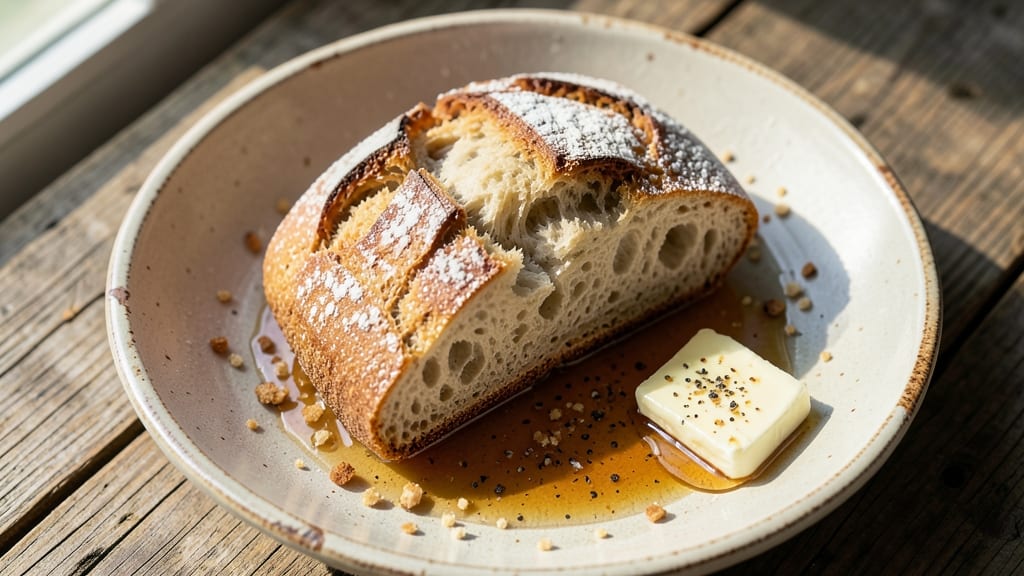
This active dry yeast no-knead bread delivers bakery-style perfection with minimal effort—crisp golden crust and a tender, airy crumb that’s impossible to resist. The secret lies in a slow fermentation process that develops deep flavor while creating that signature open crumb structure, all without a single knead.
I’ve perfected this recipe after years of testing, and it consistently produces bread so good, even experienced bakers are impressed by the results.
The beauty of this method is its simplicity: just mix, rest, shape, and bake. Active dry yeast activates beautifully with warm water and sugar, while the Dutch oven creates that iconic steam environment for an ultra-crisp crust.
No stand mixer or special skills required—just patience, which pays off in a loaf that’s both impressive and foolproof. The dough’s natural elasticity and gluten development happen during the overnight rest, eliminating the need for manual kneading.
What you’ll end up with is a loaf that’s crusty on the outside and pillowy soft inside, with an open crumb structure and subtle sweetness from the honey. The aroma alone will have everyone gathering around your kitchen, and the texture—chewy yet tender—is exactly what homemade bread should be.
This recipe builds confidence in home bakers while delivering restaurant-quality results every time.
Perfect for sandwiches, toast, or simply enjoying with butter, this bread keeps well for days and freezes beautifully. Whether you’re a beginner or an experienced baker looking for a reliable method, this no-knead approach delivers consistent, satisfying results with minimal effort. Let’s get started on creating your perfect loaf.
Ingredients for active dry yeast bread recipe no knead
Pantry staples plus two key tools—Dutch oven and patience—transform simple ingredients into bakery-quality bread.
| Ingredient | Amount | Notes |
|---|---|---|
| Active Dry Yeast 🍞 | ¼ tsp | Single-use packet preferred |
| All-Purpose Flour 🌾 | 3 cups | High-protein for better structure |
| Warm Water 💧 | 1 ½ cups | 110°F (43°C) for ideal activation |
| Granulated Sugar 🍚 | 1 tbsp | Feeds yeast for faster rise |
| Unsalted Butter 🧈 | ½ cup | Cold, cubed for flavor and richness |
| Honey 🍯 | 1 tbsp | Subtle sweetness and moisture |
| Kosher Salt 🧂 | 1 ½ tsp | Diamond Crystal preferred |
| Dutch Oven 🔥 | 1 whole | 5-7 quart capacity recommended |
| Cornmeal 🌽 | 2 tbsp | For dusting and crispy bottom |
| Ice Water ❄️ | 1 cup | For shaping and firming dough |
| Coarse Sea Salt 🧂 | 1 tbsp | For final crust sprinkle |
| Extra-Virgin Olive Oil 🫒 | 1 tbsp | For greasing Dutch oven |
The yeast is your workhorse here, so grab active dry yeast from the baking aisle—not instant yeast. King Arthur or Bob's Red Mill brands stay fresh longer, but any single-use packet works. Flour matters too—King Arthur or White Lily high-protein flours develop better gluten naturally. For the Dutch oven, Lodge or Le Creuset are the gold standards, but any heavy pot with a lid will do. Preheat it empty for 30 minutes to get it scorching hot—this creates that iconic crust. The butter should be cold when you cube it; Plugrá or Land O'Lakes work well, but avoid salted versions.
No Dutch oven? A heavy pot with a lid works in a pinch, but the crust won't be as crisp. Short on honey? Maple syrup at the same amount keeps the moisture. Using bread flour? Reduce yeast by 0.1 tsp since it's stronger. The ice water is non-negotiable for shaping—it firms up the dough so it holds its shape when you transfer it to the hot Dutch oven. Pro tip: Line your counter with parchment before shaping to avoid sticking. Store-bought yeast? Check the expiration date—it loses potency fast, and you'll end up with a flat loaf if it's past its prime.
This dough is a marathon, not a sprint. First rise takes 12-18 hours at room temp, so plan ahead. Shape the dough the night before if possible—it develops more flavor overnight. For the final bake, preheat the Dutch oven for 45 minutes to get it screaming hot. The bread keeps best in a bread box or paper bag for 2-3 days, but it freezes beautifully too—slice before freezing for perfect toasting later. Leftovers? Toast with butter and honey for a restaurant-worthy breakfast.
Why You'll Love This Recipe
- I’ll be real: I rarely bake just one loaf. The beauty of this recipe is how it keeps—days in the freezer, wrapped tight, or even as toasted slices in the fridge. My kids grab it for sandwiches, I toss it into soups, and honestly? The second loaf is always gone faster than the first. That’s the mark of a winner.
- No-Knead Magic: I’ll admit, I was skeptical—mixing flour, yeast, and water seemed too basic. But that warm butter swirled into the dough? The crust gets this golden, crackly perfection while the inside stays soft and pillowy. It’s the kind of bread that makes you pause mid-slice, just to admire it.
- Pantry Staple Power: Honestly, if you’ve got flour, yeast, and butter, you’re already halfway there. No fancy ingredients, no last-minute grocery runs. I’ve made this with whatever butter I had in the fridge—salted or unsalted—and it still comes out rich. That sugar? Just enough to feed the yeast without overpowering the bread’s natural taste.
- Weeknight Wonder: Between us, this is my go-to when I forget to plan. Toss the dough together in the morning, let it rise while I’m at work, and by dinnertime, I’ve got fresh bread with zero effort. It’s the kind of recipe that turns “what’s for dinner?” into “oh, we’re having bread?”—and then someone inevitably asks for toast.
Step-by-step instructions for Dutch oven no-knead bread
This method delivers restaurant-quality crust with a soft, airy interior—no kneading required.
Activate the Yeast with Warm Water and Sugar
In a large bowl, combine the 1.5 cups warm water (tested at 110°F—yeast should activate within 5-10 minutes) with the 1 tbsp granulated sugar and 0.25 tsp active dry yeast. Let it sit for 5 minutes until frothy. If it doesn’t bubble, your yeast may be dead—start over with fresh yeast.
This activation step is critical. The sugar feeds the yeast, while the warm water creates the perfect environment for fermentation. Stir gently to avoid killing the yeast cells—just enough to dissolve the sugar completely. If you’re using a single-use packet, tear it open directly into the water for convenience.
Mix the Dough with Flour, Butter, Honey, and Salt
Add the 3 cups all-purpose flour and 1.5 tsp kosher salt to the yeast mixture. Stir with a wooden spoon until combined, then cut in the 0.5 cup cold unsalted butter (cubed) using your fingers or a fork. The butter should coat the flour evenly—this creates pockets of flavor and moisture.
Next, drizzle in the 1 tbsp honey and mix until fully incorporated. The honey adds subtle sweetness and helps retain moisture in the finished loaf. At this stage, the dough will be shaggy and sticky—don’t worry, it won’t come together until we add the ice water later. This is the beauty of no-knead: simplicity without fuss.
Incorporate Ice Water for Structure and Shape
Gradually add the 1 cup ice water while stirring vigorously. The cold water firms up the dough and helps develop gluten without overworking it. Mix until a rough, sticky dough forms—it should pull away from the sides of the bowl but still feel tacky. If it’s too wet, add 1-2 tablespoons more flour; if too dry, add 1 tablespoon more ice water.
Cover the bowl with a damp towel or plastic wrap and let it rest at room temperature for 12-18 hours. This long fermentation develops deep flavor and a light, airy crumb. I place mine in a warm spot (like near the oven with the light on) to speed up the process slightly, but patience here is key—don’t rush it.
Preheat Dutch Oven and Shape the Dough
Preheat your Dutch oven (with lid) in the oven at 475°F for 30 minutes. Meanwhile, dust a clean surface with 2 tbsp cornmeal and turn out the dough. It will be sticky—wet your hands to prevent sticking. Gently shape it into a round loaf by folding the edges toward the center and tucking them under.
Place the shaped dough seam-side up in the preheated Dutch oven. Sprinkle the top with 1 tbsp coarse sea salt and 1 tbsp extra-virgin olive oil (drizzled lightly). The salt enhances flavor, while the oil promotes browning. The dough will rise slightly in the oven—this is normal and indicates it’s ready for baking.
Bake for a Crispy Crust and Pillowy Crumb
Cover the Dutch oven with the lid and bake for 30 minutes. Then remove the lid and bake for another 10-15 minutes until the crust is deep golden brown and the internal temperature reaches 205-210°F (use an instant-read thermometer). Tap the bottom—it should sound hollow.
Let the bread cool in the Dutch oven for 10 minutes, then transfer to a wire rack. The crust will firm up as it cools, but the crumb will remain soft and open. Slice with a serrated knife for clean cuts—this bread is best enjoyed warm, straight from the oven, with a pat of that same unsalted butter you used in the dough.
Pro Tips For Making Active Dry Yeast Bread Recipe No Knead
- MEASURE WATER TEMPERATURE: I learned this the hard way—yeast dies if your water’s too hot or too cold. Use your wrist or a thermometer to confirm it’s between 105°F and 110°F (like a warm bath, not a sauna). Too hot? Let it cool 5 minutes. Too cold? Microwave it for 20 seconds.
- STIR THE DOUGH VIGOROUSLY: Skip the lazy mix. After adding yeast, flour, and water, stir with a wooden spoon for 30 seconds until no dry bits remain. I used to half-ass this, and my dough always needed extra time to rise. This step guarantees even hydration and a smoother texture.
- COVER LOOSELY FOR RISE: Plastic wrap pressed tight traps moisture and kills your bread’s rise. Instead, drape a clean kitchen towel over the bowl—just enough to block drafts. I was skeptical until I tried it: the dough puffs higher, and the crust stays crisp without sticking.
- USE COLD BUTTER FOR FLAKES: Cut that unsalted butter into tiny cubes and fold them into the dough last, then chill the shaped loaf for 15 minutes before baking. The butter stays solid longer, creating those golden, buttery layers. I skip this, and my bread turns out dense—worth the wait.
Regional styles of this recipe
Italian Rustic Focaccia
This variation transforms your no-knead dough into a golden, olive oil-rich focaccia perfect for Italian meals. Replace the 1 tbsp honey with 2 tbsp extra-virgin olive oil and add 1 tsp dried rosemary or 1 tbsp fresh rosemary leaves to the dough.
Shape the dough into a flat oval on a parchment-lined baking sheet instead of a round loaf. After baking, dimple the top with your fingers and drizzle with another 2 tbsp olive oil, then sprinkle with flaky sea salt and coarse black pepper.
Bake uncovered at 450°F for 20-25 minutes until puffed and golden. 🌿
German Pretzel Loaf
For a pretzel-inspired twist, dissolve 1 tbsp baking soda in 1 cup hot water and use this instead of ice water when mixing the dough.
Shape the dough into a round loaf and bake as directed, but after the initial 30 minutes covered, brush the crust with 1 egg white mixed with 1 tbsp water, then sprinkle generously with coarse sea salt.
Return to the oven for 5-10 minutes until the crust turns deep brown and crackly. Serve warm with mustard or beer cheese for a German-inspired treat. 🍺
French Fougasse
Create a rustic fougasse by shaping the dough into an irregular oval with torn edges—think of it as a cross between bread and flatbread. Press your fingers into the dough to create pockets, then bake in the Dutch oven for 30 minutes covered, followed by 10 minutes uncovered.
After baking, brush the crust with melted garlic butter and sprinkle with flaky sea salt. This variation is perfect for serving with charcuterie boards or alongside soups. 🧀
Herbed Garlic Bread
Infuse your no-knead loaf with bold flavors by adding 2 minced garlic cloves and 1 tbsp chopped fresh parsley to the dough. After shaping, make deep slashes in the top with a sharp knife before baking.
Once baked, brush the crust with a mix of melted butter and minced garlic, then sprinkle with grated Parmesan cheese and extra parsley. This version is ideal for garlic bread lovers and pairs perfectly with pasta dishes. 🧄
Seeded Whole Grain Loaf
For a nutritious twist, replace 1 cup all-purpose flour with 1 cup whole wheat flour and stir in 2 tbsp seeds (sunflower, pumpkin, or sesame) into the dough. Shape and bake as usual, but sprinkle the top with an additional 1 tbsp seeds before baking.
The seeds add crunch and nutrition, making this loaf perfect for health-conscious bakers. Store in an airtight container for up to 4 days or freeze for longer storage. 🌾
Nutrition facts
Frequently asked questions
Why does this recipe use ice water instead of regular water?
The ice water serves two key purposes: it firms up the sticky dough for easier shaping, and the cold temperature helps develop gluten naturally during the long fermentation. This creates a better structure without needing to knead. The contrast between warm water (for yeast activation) and ice water (for dough shaping) is what gives this bread its signature texture.
Can I make this bread without a Dutch oven?
Yes, but your crust won't be as crispy. Use a heavy oven-safe pot with a lid instead, and preheat it for 45 minutes to mimic the steam environment. For best results, bake on the middle rack and cover tightly with foil during the first 30 minutes, then uncover for the final 10 minutes to brown the crust.
What if my dough doesn't rise after 18 hours?
Check your yeast first—it may be expired. Test it by mixing 1 packet yeast + 1 tsp sugar + 2 tbsp warm water and waiting 5-10 minutes for bubbles. If no bubbles appear, start fresh. Also ensure your kitchen is warm (70-75°F) and the dough is covered loosely to allow airflow. If it still doesn't rise, try adding 0.1 tsp more yeast and letting it rest another 4-6 hours.
How do I store this bread to keep it fresh?
Wrap the cooled loaf in a clean kitchen towel or place in a paper bag to prevent drying. Store at room temperature for 2-3 days or freeze for up to 3 months. For reheating, wrap frozen slices in foil and warm in a 350°F oven for 5-7 minutes. The crust stays crispy while the crumb remains soft when properly stored.
Can I add herbs or seeds to this dough?
For flavor, mix in 1 tbsp dried herbs (like rosemary or thyme) or 2 tbsp seeds (sesame, sunflower) with the flour. For seeds, sprinkle an extra 1 tbsp on top before baking. Just reduce flour by 1-2 tbsp to maintain dough consistency. The no-knead method accommodates these additions beautifully while keeping the process simple.