
Side Dishes
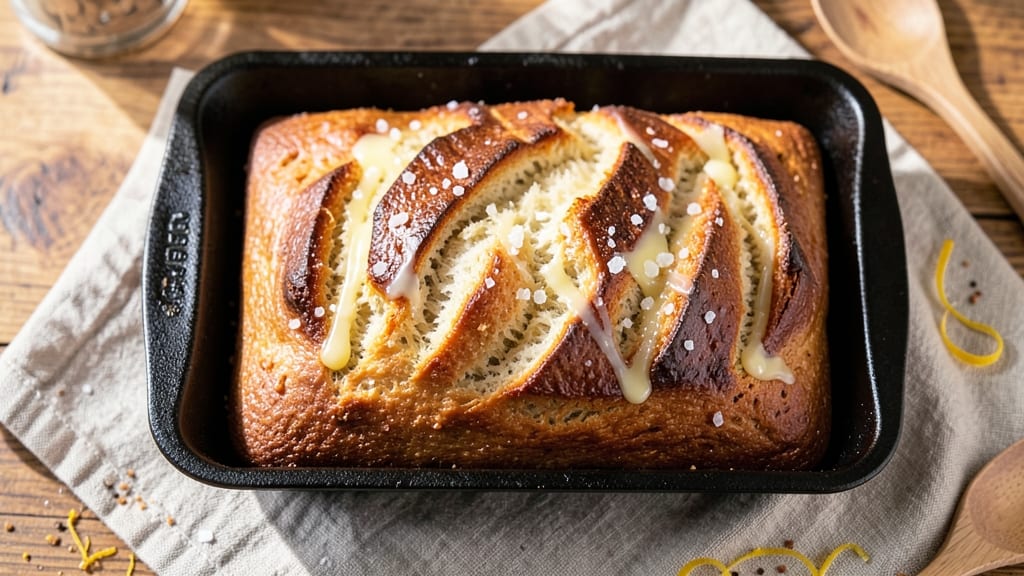
This 9x5 loaf pan bread recipe delivers the perfect marriage of a crispy, golden crust and a tender, airy interior—no fancy equipment required. The secret lies in precise hydration and a controlled bake, transforming simple ingredients into artisanal-quality bread that rivals bakery loaves.
I developed this method after years of experimenting with home baking, ensuring every slice meets that ideal balance of texture and flavor.
What sets this recipe apart is its adaptability—whether you prefer a classic white bread, hearty whole wheat, or a seed-studded variation, the foundation remains the same. The dough comes together with just five key ingredients, and the shaping technique guarantees an even rise.
Baking at a precise temperature for the right amount of time creates that coveted crust while keeping the crumb light and fluffy.
By the time you pull that loaf from the oven, you’ll have a loaf with a crusty crown that crackles satisfyingly and a pillowy crumb that melts in your mouth.
The aroma alone will have everyone gathering around the table. This recipe is designed for confidence—no more guessing or failed attempts. Here’s how to achieve it every time.
The beauty of this method is its versatility—use it for sandwiches, toast, or even French toast. Optional add-ins like garlic, herbs, or seeds can customize the flavor without compromising the texture. Let’s get started on baking bread that tastes like it came from a professional bakery.
Ingredients for 9x5 loaf pan bread
Five essential ingredients plus optional add-ins create artisanal-quality bread every time.
| Ingredient | Amount | Notes |
|---|---|---|
| All-Purpose Flour 🌾 | 3 ½ cups | Spooned and leveled for accuracy |
| Active Dry Yeast 🍞 | ¼ tsp | Freshly opened for potency |
| Granulated Sugar 🍚 | ¼ cup | For yeast activation |
| Unsalted Butter 🧈 | ½ cup | Softened to room temperature |
| Whole Milk 🥛 | ¾ cup | Warmed to 110°F for optimal hydration |
| Diamond Crystal Kosher Salt 🧂 | 1 ½ tsp | Adjust to taste after baking |
| Large Eggs 🥚 | 1 whole | Room temperature for even mixing |
| Cornmeal 🌽 | 2 tbsp | For dusting loaf pan |
| Ice Water 💧 | ¼ cup | Reserved for final dough adjustment |
| Poppy Seeds 🌻 | 1 tbsp | Optional for seed-studded variation |
| Garlic Powder 🧄 | ½ tsp | Optional flavor enhancement |
| Dried Parsley 🌿 | ½ tsp | Optional herb addition |
The flour is the foundation—opt for King Arthur or Gold Medal for consistent results. Yeast potency matters: check the expiration date and store it in the fridge. For the butter, Land O'Lakes or Plugrá brands soften evenly at room temperature. The milk should be warmed to 110°F—use a thermometer to avoid over-heating. Diamond Crystal kosher salt is preferred over table salt due to its larger crystals, which dissolve more evenly. Eggs should be room temperature to incorporate smoothly into the dough.
No yeast? Instant yeast works at half the amount, but active dry requires proofing first. Substitute butter with vegetable shortening for a lighter crumb, though texture will differ slightly. Whole milk unavailable? Warm water with 1 tbsp melted butter mimics its richness. For the optional add-ins, poppy seeds or sesame seeds work equally well, while dried herbs like thyme or rosemary can replace parsley. If your dough feels too sticky, add 1 tbsp more flour gradually to reach the ideal consistency.
Store the baked loaf in a paper bag at room temperature for up to 3 days to maintain freshness. For longer storage, wrap tightly in plastic wrap and freeze for up to 3 months. To reheat, wrap the loaf in foil and warm in a 350°F oven for 10 minutes. For best results, shape the dough into a 9x5 loaf pan lined with parchment paper, leaving space for expansion. The crust will crisp up further as it cools.
Why You'll Love This Recipe
- No-Knead Magic: I swear by this—just mix the flour, yeast, sugar, and warm milk, let it rise once, then bake. The butter works its way into the dough while you’re doing other things, so by the time it’s done, you’ve got golden, pillowy bread with zero fuss.
- Buttery Crust Secret: That crispy top with a soft center? It’s all in the butter and sugar combo. The milk keeps it tender, but the butter gives it that rich, slightly sweet edge that makes you reach for seconds before the sandwich even gets made.
- Meal Prep MVP: This loaf keeps beautifully for days—perfect for slicing and freezing. Toast straight from the freezer? Yes, please. (Honestly, I make two loaves every Sunday so I’m never scrambling for bread midweek.)
- Budget-Friendly Staple: Five basic ingredients, one pan, and you’ve got bread that costs pennies per slice. The yeast and sugar are minimal, the flour is cheap, and the butter stretches further than you’d think—especially when you’re making toast or garlic bread for the whole family.
Step-by-step instructions for 9x5 loaf pan bread
This method delivers a professional-quality bread with a crisp crust and tender interior—every time.
Activate the Yeast and Mix the Dough
In a small bowl, combine the 0.75 cup whole milk (warmed to 110°F) with the 0.25 cup granulated sugar and 0.25 tsp active dry yeast. Let this mixture sit for 5-10 minutes until it becomes frothy and bubbly—this confirms your yeast is active. If it doesn't bubble, your yeast may be dead, and you'll need to start over.
In the bowl of a stand mixer fitted with the dough hook attachment, combine the 3.5 cups all-purpose flour and 1.5 tsp diamond crystal kosher salt. Mix on low speed for 30 seconds to aerate the flour. Add the 0.5 cup unsalted butter (softened) and mix until fully incorporated. Pour in the yeast mixture and mix on low speed until combined, about 1 minute. The dough will begin to pull away from the sides of the bowl.
Develop the Dough for Optimal Texture
With the mixer running on medium speed, gradually add the 1 whole large egg and mix until fully incorporated. The dough should begin to come together into a shaggy mass. If the dough is too sticky to handle, add 1 tablespoon of ice water at a time until it forms a cohesive ball that cleans the sides of the bowl.
Continue mixing on medium speed for 5-7 minutes until the dough is smooth and elastic, pulling away from the sides of the bowl. The dough should pass the "windowpane test"—stretch a small piece between your fingers, and if it's thin enough to see light through without tearing, it's ready. If it tears easily, knead for another 2-3 minutes.
First Rise and Prepare the Loaf Pan
Lightly grease a 9x5-inch loaf pan with butter or oil, then dust it generously with 2 tbsp cornmeal, tapping out any excess. This creates a non-stick barrier and prevents the bread from sticking to the pan. Transfer the dough to the prepared pan, shaping it gently to fit snugly.
Cover the pan loosely with plastic wrap or a damp kitchen towel and let the dough rise in a warm place for 1-1.5 hours, or until it has risen to about 1 inch above the rim of the pan. The dough should feel springy when pressed gently with a finger—this indicates it's ready for baking. Avoid over-rising, as this can cause a dense loaf.
Shape and Second Rise for Crust Development
Preheat your oven to 375°F. Once the dough has risen, gently remove it from the pan and place it on a lightly floured surface. Shape the dough into a smooth, rectangular loaf, tapering the ends slightly for a classic look. Transfer it back to the prepared pan, seam-side up.
Cover the pan again and let the dough rise for an additional 30-45 minutes until it has risen slightly more and feels firm to the touch. This second rise enhances the bread's oven spring and ensures a light, airy crumb. While the dough rises, position a baking sheet on the middle rack of your oven and place an empty metal bowl on the lower rack. This creates steam, which helps develop a crisp crust.
Bake to Golden Perfection
Bake the bread for 30-35 minutes until the top is deep golden brown and sounds hollow when tapped on the bottom. The internal temperature should reach 190-200°F when measured with an instant-read thermometer. If the top browns too quickly, tent the loaf with aluminum foil to prevent over-browning while it continues to bake.
Remove the bread from the oven and let it cool in the pan for 10 minutes before transferring it to a wire rack. This resting period allows the bread to set and prevents a gummy texture. For added flavor, sprinkle the top with 1 tbsp poppy seeds, 0.5 tsp garlic powder, and 0.5 tsp dried parsley while still warm. Serve the bread at room temperature for the best texture and flavor.
Pro Tips For Making 9x5 Loaf Pan Bread
- Warm the Milk First: Cold milk kills yeast faster than you’d think—especially in this recipe where yeast is the backbone. Heat the milk to about 110°F (just warm to the touch) before mixing it with yeast and sugar. I learned this the hard way when my dough took twice as long to rise because the yeast was sluggish.
- Grease That Pan: Skip the parchment paper here—this bread needs direct contact with fat to get that classic pull-apart crust. Use a pastry brush to coat the 9x5 pan with melted butter, then sprinkle a light dusting of flour (just enough to prevent sticking). Trust me, your bread will thank you when it doesn’t tear at the edges.
- Don’t Overproof the Dough: This recipe’s rise time is deceptive—whole milk and butter make dough rise faster than you’d expect. Stop shaping when the dough springs back slowly (not instantly) when poked. Overproof it, and your loaf will collapse like a sad soufflé. I used to eyeball it and always ended up with a dense brick.
- Rotate the Pan Mid-Bake: Your oven’s heat isn’t even, and that’s especially noticeable in a 9x5 pan. After 20 minutes, swap the pan from front to back (or top to bottom if using both racks). This guarantees even browning—no more pale centers or over-browned edges. It’s a 30-second fix for a common frustration.
Perfect pairings for 9x5 loaf pan bread
Butter Spreads
Whipped Land O'Lakes butter mixed with a pinch of Diamond Crystal kosher salt makes an instant classic pairing. For extra flavor, add 1 tsp honey and ½ tsp garlic powder to create a sweet-savory twist. I love spreading this on warm bread slices straight from the oven. 🧈
Jam and Honey
A drizzle of strawberry jam or local wildflower honey elevates every slice. For a breakfast treat, layer thick-cut bacon between two slices with a smear of jam. The contrast of sweet and smoky is unbeatable. I keep small jars of jam in the fridge for quick assembly. 🍓
Cheese Pairings
Sharp aged cheddar or creamy brie melts beautifully on toasted bread. For a gourmet touch, combine ½ cup shredded cheddar with 2 tbsp sour cream and 1 tbsp dill pickles (chopped) to create a tangy cheese spread. Warm the bread slightly to enhance the flavors. 🧀
Breakfast Combinations
Turn your bread into French toast by dipping slices in a mixture of 2 eggs, ¼ cup milk, and 1 tsp vanilla extract, then pan-frying in butter until golden.
Top with powdered sugar and fresh berries for a decadent breakfast. I make this on weekends when I want something special. 🍳
Lunch and Dinner Wraps
Use the bread as a sandwich wrap by lightly toasting and spreading with cream cheese. Layer with turkey slices, spinach, and tomato slices, then roll tightly. This creates a sturdy, flavorful wrap that holds together perfectly. 🥪
Dessert Twists
For dessert, brush warm bread with melted butter and sprinkle with cinnamon sugar before baking for 5 minutes at 350°F. Serve with vanilla ice cream or whipped cream for a simple but impressive treat.
I've even used this technique to make bread pudding by cubing the bread and baking it in custard. 🍰
Nutrition facts
Frequently asked questions
Why does my bread stick to the 9x5 loaf pan?
Even with cornmeal, bread can stick if the pan isn't properly prepared. Always grease the pan with butter or oil first, then dust generously with cornmeal, tapping out excess. For extra insurance, line the pan with parchment paper cut to fit snugly. Chill the dough for 15 minutes before shaping to help it hold its form and prevent spreading.
Can I substitute whole wheat flour for all-purpose?
Yes, but replace only half the all-purpose flour with whole wheat for best results. Whole wheat absorbs more liquid, so add 1-2 tablespoons extra water if needed. The texture will be denser, but still delicious. For a lighter result, use a 70/30 all-purpose/whole wheat blend. Avoid 100% whole wheat—it won't rise properly in this recipe.
How do I fix a dense, heavy loaf?
Dense bread usually means underproofed dough or over-kneading. Next time, let the dough rise until it's 1 inch above the pan rim and feels springy when pressed. If your dough tears easily during kneading, it's overworked—stop when it passes the windowpane test. Also check your yeast: it should be fresh (within 4 months of opening) and dissolved properly in warm milk.
What's the best way to store homemade bread?
For short-term storage (3 days), keep the loaf wrapped in a paper bag at room temperature to maintain freshness. For longer storage, slice the bread and freeze the pieces between parchment paper. To reheat, toast slices directly or wrap the whole loaf in foil and warm at 350°F for 10 minutes. Never refrigerate—it dries out bread faster.
Can I make this bread without a stand mixer?
Mix the dough by hand in a large bowl, using a wooden spoon first to combine ingredients, then your hands to knead. Work the dough on a lightly floured surface for 8-10 minutes until smooth and elastic. The kneading process develops gluten, which gives bread its structure. Just be prepared for slightly more arm work—it's great exercise for your dough muscles!