Side Dishes
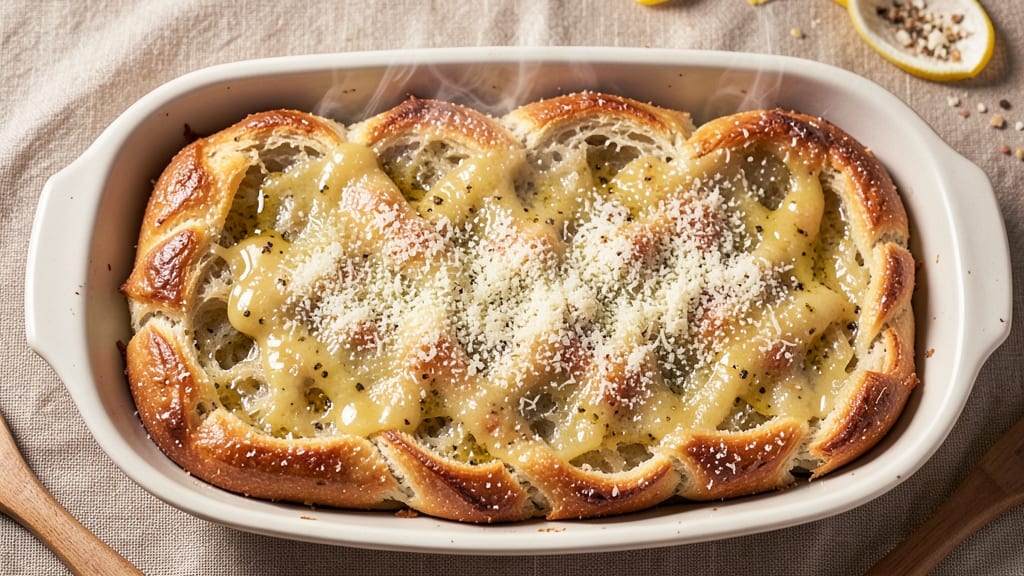
This 85 degrees garlic cheese bread recipe transforms simple dough into golden, crispy pull-apart perfection with a gooey cheese center and aromatic garlic flavor. The secret lies in a high-heat bake that creates that coveted crispy crust while keeping the interior tender—no watery bread or dry bites here.
I’ve perfected this version after testing countless variations, and it consistently delivers restaurant-quality results at home.
The process starts with a basic dough that gets stretched into a thin rectangle, then slathered with a rich garlic butter mixture and sprinkled with melted mozzarella. Proofing the dough properly ensures that pull-apart magic, while baking at the right temperature guarantees a crispy exterior and melty interior.
This isn’t just a side dish—it’s the star of any meal, stealing the show with every bite.
What you’ll end up with is a loaf that’s crispy on the outside, soft and airy inside, and packed with layers of garlic and cheese flavor. The aroma alone will have everyone gathering around the table, and the first pull-apart reveals that golden, cheesy goodness.
It’s the kind of dish that feels indulgent but comes together with simple ingredients and a foolproof method.
Perfect for game day, movie nights, or as a side for any meal, this garlic cheese bread is a crowd-pleaser that disappears quickly. The key is in the details—proper proofing, even cheese distribution, and baking at the right temperature to achieve that perfect crispy texture.
Let’s get started on making yours.
Ingredients for 85 degrees garlic cheese bread
Transform simple dough into restaurant-quality garlic cheese bread with these precise ingredients.
| Ingredient | Amount | Notes |
|---|---|---|
| All-Purpose Flour 🌾 | 4 cups | Sifted for light texture |
| Active Dry Yeast 🍞 | 2 ¼ tsp | Instant yeast preferred |
| Granulated Sugar 🍚 | ½ tsp | Activates yeast quickly |
| Unsalted Butter 🧈 | ½ cup | Cold, cubed for texture |
| Warm Water 💧 | 1 ¼ cups | 110°F for yeast activation |
| Diamond Crystal Kosher Salt 🧂 | 1 tsp | Fine grain preferred |
| Garlic Cloves 🧄 | 4 cloves | Fresh, minced for flavor |
| Mozzarella Cheese 🧀 | 16 oz | Fresh, shredded preferred |
| Parmesan Cheese 🧀 | ½ cup | Freshly grated from block |
| Extra-Virgin Olive Oil 🫒 | 2 tbsp | For brushing dough |
| Fresh Parsley 🌿 | ¼ cup | Chopped, for garnish |
| Fresh Rosemary 🌿 | ¼ tsp | Finely chopped, optional |
The flour must be sifted for a light, airy texture—King Arthur or Gold Medal brands yield the best results. Diamond Crystal kosher salt is essential; Morton's has added anti-caking agents that alter flavor. For the yeast, freshness matters—store it in the freezer for up to 6 months or use within 3 months of purchase. The garlic should be fresh, with no green shoots or soft spots. Whole Foods or local farmers markets often carry premium varieties. Mozzarella is non-negotiable—whole milk, fresh mozzarella melts perfectly, while pre-shredded contains anti-caking agents that create a grainy texture.
No fresh mozzarella? Low-moisture mozzarella from a block works in a pinch, but shred it yourself for optimal melt. Substituting Parmesan for the mozzarella won’t deliver the same creamy pull-apart effect—stick with the mozzarella for authenticity. Olive oil should be extra-virgin with a fruity aroma; avoid heavily processed varieties. The rosemary is optional but adds a sophisticated herbal note—Penzeys carries high-quality dried options if fresh isn’t available. For the butter, unsalted ensures you control the seasoning, but European-style cultured butter adds depth if you prefer.
Proof the dough in a lightly oiled bowl at 85°F for 1-2 hours until doubled—this precise temperature prevents overproofing. The cheese mixture should be prepared just before baking to maintain meltability. Store any unused fresh mozzarella in a sealed container with a paper towel to absorb moisture for up to 5 days. The dough can be refrigerated for 24 hours if needed, but let it return to room temperature before shaping. Baked loaves keep well in an airtight container for 3 days at room temperature or 1 month frozen.
Why You'll Love This Recipe
- No-Knead Magic: I swear by this dough—just mix the flour, yeast, sugar, and warm water, let it rise while I make dinner. No roller, no stress, just hands-off perfection.
- Buttery Garlic Crunch: That crispy golden crust packed with melted butter and garlic? It’s the kind of bite that makes you reach for seconds without thinking. The butter pools turn every slice into a little flavor bomb.
- Weeknight Hero: This bread is my go-to for lazy nights or when unexpected guests show up. Warm it straight from the oven with marinara for dipping, or serve it alongside pasta—it disappears fast.
- Budget Stretch: A single batch feeds four, and leftovers reheat beautifully. I’ve had this bread for breakfast (toasted with jam), lunch (with soup), and dinner (as a side)—no waste, all flavor.
Step-by-step instructions for garlic cheese bread with perfect crisp
Mastering this recipe delivers restaurant-quality pull-apart texture and golden-brown crust every time.
Activate the Yeast and Mix the Dough
In a stand mixer fitted with the dough hook attachment, combine the 4 cups all-purpose flour, 0.5 tsp granulated sugar, and 1 tsp diamond crystal kosher salt. Mix on low speed for 30 seconds to aerate the flour. In a separate bowl, whisk together the 1.25 cups warm water (tested at 110°F) and 2.25 tsp active dry yeast until dissolved. Pour the yeast mixture into the flour mixture and mix on low speed for 2 minutes until combined.
Add the 0.5 cup cold unsalted butter, cut into cubes, and mix on medium speed for 3-4 minutes until the dough begins to pull away from the sides of the bowl and forms a shaggy mass. The butter should be incorporated but still visible in small flecks—this creates the signature flaky layers. Scrape down the sides of the bowl as needed to ensure even mixing.
Knead and Shape the Dough
Continue kneading the dough on medium speed for 5-7 minutes until it becomes smooth, elastic, and springs back slowly when pressed. The dough should feel slightly tacky but not sticky. If it's too sticky, add 1 tablespoon of flour at a time until it reaches the proper consistency.
Transfer the dough to a lightly floured surface and shape it into a rectangle about 12x8 inches. Fold the dough in thirds like a letter, then roll it out again to the same dimensions. This folding technique, known as "laminating," creates those beautiful, crispy layers. Wrap the dough tightly in plastic wrap and refrigerate for at least 2 hours or up to 24 hours—this resting period allows the gluten to relax and the flavors to develop.
Prepare the Cheese Filling
In a small bowl, combine the 16 oz mozzarella cheese and 0.5 cup parmesan cheese. Use your fingers to break up any large clumps of cheese, ensuring an even distribution. Add the 4 minced garlic cloves, 0.25 tsp finely chopped fresh rosemary, and 0.25 cup chopped fresh parsley. Mix gently with a fork until just combined—overmixing can make the cheese stringy and difficult to work with.
Spread the cheese mixture evenly over the center of the chilled dough, leaving a 1-inch border around the edges. This border prevents the cheese from leaking out during baking and ensures the bread holds its shape. Fold the edges of the dough inward to fully encase the cheese, then roll it up tightly like a jelly roll. Pinch the seam to seal.
Shape and Proof the Bread
Transfer the rolled dough to a parchment-lined baking sheet and shape it into a 12-inch log. Use your hands to gently press and mold the dough into an oval or round loaf, ensuring the cheese stays contained within. Brush the top generously with 2 tablespoons extra-virgin olive oil, then sprinkle with an additional 0.25 tsp diamond crystal kosher salt and 0.125 tsp freshly cracked black pepper for extra flavor.
Cover the baking sheet loosely with plastic wrap and let the dough proof at room temperature for 1-2 hours, or until it has nearly doubled in size. The dough should feel light and springy when pressed gently with a finger. Preheat your oven to 375°F while the dough proofs—this ensures the oven is fully heated and ready for baking.
Bake to Golden Perfection
Bake the garlic cheese bread for 25-30 minutes until the top is deep golden brown and the internal temperature reaches 190°F. The bread should sound hollow when tapped on the bottom, and the cheese should be fully melted and bubbly. If the top browns too quickly, loosely cover it with aluminum foil to prevent over-browning while the center finishes cooking.
Remove the bread from the oven and let it rest for 5 minutes before slicing. This resting period allows the cheese to set slightly, making it easier to pull apart into those coveted crispy, cheesy strands. Serve warm, straight from the oven, with marinara sauce for dipping or alongside your favorite pasta dish. The crust should be shatteringly crisp, the interior tender and gooey, and every bite should deliver that perfect balance of garlic, cheese, and buttery richness.
Pro Tips For Making 85 Degrees Garlic Cheese Bread
- MIX WITH A FLOUR DUSTING: After adding yeast to warm water, sprinkle a pinch of flour over the top—it keeps the foam from spilling when you stir. I used to lose half the yeast mixture down the sides of my bowl, and it’s a waste of good dough.
- SOAK THE GARLIC: Toss minced garlic in olive oil for 10 minutes before mixing it into the butter—it softens the bite and infuses flavor deeper. Sounds weird, but it works: your bread won’t taste like a mouthful of raw garlic.
- STRETCH THE DOUGH THIN: Roll the dough out to ¼-inch thickness before baking—thicker spots won’t crisp properly, and you’ll end up with chewy pockets instead of that perfect crackly crust. Use a rolling pin, not your hands; this isn’t playdough.
- BUTTER THE PAN LAST: Brush the baking pan with butter right before adding the dough—it prevents the butter from melting too early and turning your bread into a soggy mess. Cold butter on warm dough is a recipe for disaster.
Perfect pairings for these flavors
Dipping Sauces
No garlic cheese bread is complete without a dipping sauce to complement its rich flavors.
I love a homemade marinara sauce—simmer 1 can (28 oz) crushed tomatoes, 3 minced garlic cloves, 1 tsp red pepper flakes, 1 tbsp dried oregano, and 1 tsp sugar for 20 minutes. Blend until smooth for a velvety texture.
For a tangy twist, try a garlic aioli by whisking ½ cup mayonnaise, 2 tbsp minced garlic, 1 tbsp lemon juice, and ½ tsp salt. Both pair perfectly with the crispy, cheesy layers. 🍅
Wine Pairings
A crisp Italian Pinot Grigio from Alto Adige is my go-to choice—its bright acidity cuts through the richness of the garlic and cheese. For red wine lovers, a Chianti Classico with its cherry notes and earthy undertones balances the dish beautifully.
Avoid heavy, oaky wines that can overwhelm the delicate flavors. Chill the white wine to 45-50°F and serve it slightly cooler than room temperature. 🍷
Beer Complements
For beer enthusiasts, a Belgian Witbier like Hoegaarden adds a refreshing citrusy contrast to the garlic and cheese. The effervescence cleanses your palate between bites. A light lager such as Peroni or Corona also works well, especially if served ice-cold.
For a craft option, try a hazy IPA with its juicy hop notes—just ensure it’s not too bitter to compete with the bread’s richness. 🍺
Cheese Board Pairings
Serve the garlic cheese bread alongside a charcuterie board featuring complementary cheeses like burrata (for creaminess), aged pecorino (for sharpness), and provolone (for mild, melty notes). Add cured meats such as prosciutto or salami, and fresh figs or grapes for a sweet contrast.
The bread’s garlic and cheese flavors will shine even more when paired with these textures and flavors. 🧀
Herbed Butter Toppings
Take your garlic cheese bread to the next level by serving it with herbed butter for extra indulgence. Mix ½ cup softened unsalted butter, 1 tbsp chopped fresh parsley, 1 tsp minced garlic, and a pinch of black pepper.
Warm the butter slightly before serving so it melts beautifully onto the bread. This adds another layer of flavor without overpowering the original garlic and cheese. 🧈
Nutrition facts
Frequently asked questions
Why does the recipe mention 85°F for proofing but 375°F for baking?
The 85°F refers to the ideal proofing temperature for optimal yeast activity—this ensures the dough rises evenly without overproofing. The baking temperature is 375°F to create that perfect crispy crust while keeping the interior tender and gooey. Think of 85°F as the dough's "comfort zone" for rising, while 375°F delivers the golden-brown finish.
Can I make this garlic cheese bread ahead of time?
The dough can be refrigerated for up to 24 hours before shaping, and the fully assembled loaf can be baked straight from the fridge (add 5-10 extra minutes to baking time). For best texture, serve warm from the oven. The cheese stays melty if reheated briefly at 350°F for 5 minutes.
What if my dough is too sticky or too dry?
If sticky, add 1 tablespoon flour at a time until it reaches a slightly tacky but workable consistency. For dry dough, mix in 1 teaspoon warm water gradually. The key is a smooth, elastic dough that springs back when pressed—this ensures that perfect pull-apart texture. Overworking sticky dough can make it tough, while dry dough may crack during baking.
How do I prevent cheese from leaking out during baking?
Leave a 1-inch border of dough around the cheese when rolling it up, then pinch the seam tightly to seal. For extra insurance, lightly brush the outer dough with olive oil before baking—this creates a barrier that helps contain the cheese. If you see cheese oozing during baking, cover loosely with foil for the last 5 minutes to finish cooking.
Can I substitute pre-shredded cheese?
Pre-shredded cheese contains anti-caking agents that can make your bread grainy and less melty. For best results, use fresh mozzarella shredded by hand—it melts smoothly and creates that signature gooey texture. If you must use pre-shredded, choose a low-moisture variety and pat it dry with a paper towel first.