
Side Dishes
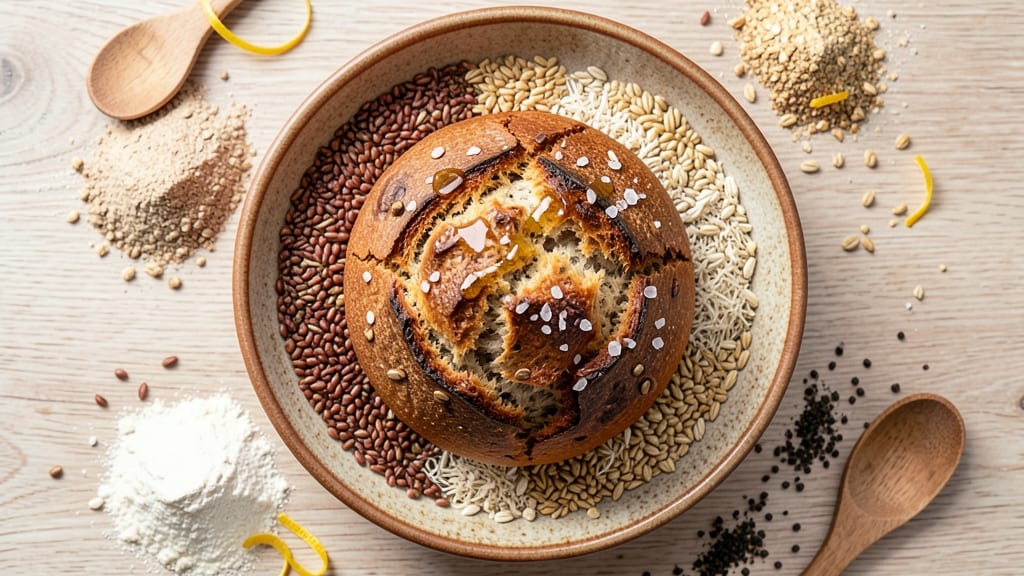
This 7 grain flour bread recipe transforms simple ingredients into a nutrient-dense loaf with a satisfying chew and nutty depth—perfect for health-conscious bakers who crave texture.
The blend of whole grains (wheat, rye, barley, oats, and more) creates a heartier, slower-release carbohydrate than white flour, while the earthy flavors shine when toasted with butter or paired with soups.
I developed this recipe after years of experimenting with ancient grains, and the result is a foolproof method that yields a beautifully crusty exterior and tender crumb every time.
The secret lies in the dough's hydration and fermentation. Unlike quick breads, this recipe relies on a longer rise time (or an overnight cold proof for convenience) to develop maximum flavor and digestibility.
The grains absorb moisture differently, so we'll use an autolyse step to hydrate the flour thoroughly before adding yeast and salt—this ensures a smooth, elastic dough that shapes beautifully. For those short on time, a 30-minute no-knead option works just as well, though traditional kneading yields the best texture.
What you'll end up with is a nutrient-packed loaf that's rich in fiber, protein, and B vitamins—ideal for sandwiches, toast, or serving alongside hearty stews.
The crust develops a satisfying crunch when baked at high heat, while the interior remains soft and slightly dense, with pockets of air from proper fermentation. This bread keeps well for 5-7 days at room temperature or frozen for up to 3 months, making it a pantry staple worth perfecting.
Whether you're a beginner or an experienced baker, this recipe adapts to your schedule. Use a Dutch oven for a crispy crust, or bake in a loaf pan for a more uniform shape.
The possibilities are endless—try adding seeds or herbs to the dough for extra flavor. Let's get started on your most wholesome loaf yet.
Ingredients for 7 grain flour bread
Seven whole grains, precise hydration, and patient fermentation create this nutrient-dense loaf with unmatched earthy complexity.
| Ingredient | Amount | Notes |
|---|---|---|
| Whole Wheat Flour 🌾 | 1 ½ cups | For structure and fiber content |
| Rye Flour 🌾 | ¾ cup | Adds earthy depth and chew |
| Barley Flour 🌾 | ½ cup | Enhances nutty flavor profile |
| Oat Flour 🌾 | ½ cup | Contributes tender crumb texture |
| Spelt Flour 🌾 | ½ cup | Ancient grain for subtle sweetness |
| Buckwheat Flour 🌾 | ¼ cup | Boosts protein and earthy notes |
| Millet Flour 🌾 | ¼ cup | Lightens texture and adds crunch |
| Active Dry Yeast 🍞 | 2 ¼ tsp | Ensures proper fermentation |
| Diamond Crystal Kosher Salt 🧂 | 1 ½ tsp | Balances flavor development |
| Honey 🍯 | 2 tbsp | Natural sweetener for yeast activation |
| Extra-Virgin Olive Oil 🫒 | ½ cup | Enhances dough elasticity |
| Warm Water 💧 | 1 ½ cups | 105°F for optimal yeast activation |
| Flaxseeds 🌿 | 1 tbsp | Optional for added fiber and nutrition |
| Sesame Seeds 🌾 | 1 tbsp | For decorative crust enhancement |
The flours form the foundation—each grain contributes unique texture and flavor. Bob's Red Mill carries excellent pre-milled options, but grinding your own at a natural foods store ensures fresher taste. Rye and buckwheat demand slightly longer hydration, so the autolyse step becomes critical. For the yeast, Saf-Instant works perfectly without proofing time. The honey should be raw and unfiltered for optimal enzymatic activity, while the olive oil should be extra-virgin with a fruity aroma—none of that rancid-tasting stuff. If sourcing individual flours proves challenging, King Arthur's Ancient Grains Blend offers a ready-made solution that still requires supplementation with buckwheat and millet for authenticity.
Substitutions require careful consideration. Whole rye flour can replace rye at 1:1, though texture will differ slightly. For buckwheat, amaranth flour works at half the amount but lacks the same earthy bite. The honey can be swapped for maple syrup at equal volume, though fermentation may proceed marginally slower. Olive oil substitutions? Avocado oil maintains neutral flavor, while walnut oil adds richness but alters the final profile. For those avoiding gluten, certified gluten-free oat flour can replace 25% of the wheat flour, though structure will suffer. The flaxseeds are entirely optional but recommended for their omega-3 content—ground fresh yields maximum benefits, while pre-ground works in a pinch.
Proper storage extends this bread's shelf life dramatically. Wrap the cooled loaf in a clean kitchen towel for the first 24 hours to prevent moisture loss, then store at room temperature in a paper bag for up to 5 days. For longer preservation, slice and freeze portions in airtight containers for 3 months. The crust develops maximum crispness when toasted directly from frozen. For reheating, wrap slices in foil and warm at 350°F for 5 minutes—this preserves moisture better than microwave methods. The grains' natural oils make this bread particularly prone to staling, so toasting within 2 days of baking yields the best results.
Why You'll Love This Recipe
- No-Fuss Mixing: Honestly, this bread comes together in one bowl—no stand mixer, no kneading marathon. Just toss those flours (whole wheat, rye, barley, oat, spelt) with water, a pinch of salt, and let the dough rest while you make dinner. The grains do the heavy lifting.
- Earthy Depth: That blend of rye and barley? It’s like a warm hug in every bite—nutty, slightly sweet, with a chewy texture that sticks around. I’ll be real: it’s the kind of bread that makes you pause mid-slice just to savor it.
- Weeknight Swiss Army: Use it for toast with avocado, tear it into croutons for salads, or freeze slices for quick grilled cheese later. My kids even ask for it plain—yes, even on a Tuesday night—because it’s that universally good.
- Budget Bread: A loaf costs me pennies compared to store-bought, and it lasts forever. The oat flour adds a satisfying weight, so it doesn’t dry out fast, and I’ve had this same batch feed my family for days. Practical? Absolutely. Delicious? Ridiculously.
Step-by-step instructions for 7 grain flour bread
Mastering this nutrient-rich loaf requires patience and precise technique to balance the unique properties of each grain.
Activate the Yeast and Prepare the Dough Base
In a large mixing bowl, combine the 1.5 cups warm water (between 105°F and 110°F) with the 2 tbsp honey and 2.25 tsp active dry yeast. Let this mixture sit for 10-15 minutes until it becomes frothy and bubbles form at the surface. This confirms the yeast is active and ready to work.
While waiting, whisk together all the dry ingredients in a separate bowl: the 1.5 cups whole wheat flour, 0.75 cup rye flour, 0.5 cup barley flour, 0.5 cup oat flour, 0.5 cup spelt flour, 0.25 cup buckwheat flour, 0.25 cup millet flour, and 1.5 tsp kosher salt. The buckwheat and millet flours will add subtle earthiness while the oat flour contributes a delicate sweetness to balance the rye's intensity.
Combine Wet and Dry Ingredients
Gradually add the dry flour mixture to the yeast mixture, stirring continuously with a wooden spoon or dough whisk. The dough will be thick and shaggy at first—this is normal with multiple grain flours. After about 3 minutes of mixing, add the 0.5 cup extra-virgin olive oil and 1 tbsp flaxseeds. The oil enhances elasticity while the flaxseeds add nutritional value and subtle nuttiness.
Transfer the dough to a lightly oiled surface and knead for 8-10 minutes by hand until it becomes smooth and elastic. You'll notice the dough is stickier than traditional bread dough due to the high moisture content from the oat and rye flours. If it feels too dry, add 1 tablespoon of warm water at a time until it reaches the proper consistency.
First Rise and Shaping
Lightly oil a large mixing bowl and place the dough inside. Cover with a damp kitchen towel or plastic wrap and let it rise in a warm place for 1.5 to 2 hours, or until it has doubled in size. You'll know it's ready when the dough springs back slowly when pressed gently with a finger—this indicates proper gluten development despite the dense flours.
Once risen, punch down the dough to release air and shape it into a round loaf on a parchment-lined baking sheet. For extra flavor, sprinkle the 1 tbsp sesame seeds evenly over the top before the final rise. The sesame seeds will add a delicate crunch and visual appeal to the finished loaf.
Second Rise and Baking
Cover the shaped loaf again and let it rise for another 45 minutes to 1 hour until it has puffed noticeably. Preheat your oven to 375°F with a Dutch oven or heavy baking stone inside for 30 minutes to ensure even heat distribution. The Dutch oven creates steam that helps develop the bread's crust and crumb structure.
Carefully transfer the dough (still on its parchment) into the preheated Dutch oven. Bake covered for 30 minutes, then remove the lid and bake for an additional 15-20 minutes until the crust is deep golden brown and sounds hollow when tapped on the bottom. The internal temperature should reach 190°F at the center.
Cooling and Storage
Remove the bread from the oven and let it cool on a wire rack for at least 1 hour before slicing. The cooling process allows the internal structure to set properly, preventing a gummy texture. The crust should be firm and crisp while the interior remains moist and slightly dense due to the whole grains.
For best results, store the bread wrapped in a clean kitchen towel in an airtight container at room temperature for up to 3 days. The flavors will continue to develop over time, with the rye and buckwheat contributing their characteristic depth. For longer storage, freeze slices wrapped in plastic for up to 3 months.
Pro Tips For Making 7 Grain Flour Bread
- Sift the Oat Flour: Oat flour is the sneaky ingredient that clumps like a stubborn guest at a party. Sift it twice—once before mixing and again when combining with wet ingredients—to avoid dense, heavy bread. I learned this after my first batch turned out like a brick, and trust me, you don’t want that.
- Hydrate the Rye First: Rye flour soaks up moisture like a sponge, so mix it with your yeast and warm water 10 minutes before adding the rest of the flours. This prevents a dry, crumbly dough and gives the yeast a head start—especially important when you’re working with five different flours that all behave differently.
- Skip the Over-Kneading: Seven-grain dough is delicate, and you’ll wreck the texture if you treat it like wheat-only bread. Knead just until the dough comes together (about 5 minutes by hand), then let the gluten relax during the first rise. Overwork it, and you’ll end up with a chewy loaf instead of a light, airy one.
- Proof in a Warm Spot: Your oven isn’t just for baking—use it to create a proofing environment. Turn it on to its lowest setting (around 70°F/21°C), place a bowl of hot water inside, and let the dough rise there. The humidity keeps the rye and barley from drying out, and the warmth speeds up fermentation without overproofing. (Yes, even if you’re impatient like me.)
Perfect pairings for this dish
Breakfast Pairings
This hearty bread makes an excellent breakfast companion when toasted with grass-fed butter and a drizzle of local honey. I love pairing it with scrambled eggs and avocado slices for a protein-rich start to the day.
The nutty grains complement the creamy avocado perfectly, while the crust adds satisfying texture. For a sweet option, top with almond butter and sliced banana—the earthy flavors balance the natural sweetness beautifully. 🍳
Soup and Stew Partners
Serve warm slices alongside hearty soups like lentil soup or minestrone—the dense crumb soaks up broth beautifully without falling apart. I often pair it with roasted vegetable soup and a sprinkle of Parmesan cheese for extra richness.
For stews, the bread's sturdy texture holds up perfectly to beef bourguignon or mushroom ragout. The grains' natural sweetness contrasts wonderfully with savory sauces. 🍲
Cheese and Charcuterie Boards
This bread elevates any charcuterie spread with its nutty depth and sturdy sliceability. I recommend pairing it with aged cheddar, brie, and sharp gouda for a cheese-focused board. Add prosciutto, genoa salami, and marinated olives for a balanced Italian-inspired spread.
The grains' earthiness complements the saltiness of cured meats perfectly. For a lighter option, include whipped feta and roasted red peppers. 🧀
Sandwich and Panini Potential
Use thick slices for gourmet sandwiches—the dense texture holds fillings beautifully. My go-to combination is turkey breast, avocado, tomato slices, and herb cream cheese on extra-virgin olive oil-toasted bread.
For paninis, layer with mozzarella, roasted peppers, and pesto, then press in a panini maker for 3-4 minutes on medium-high heat. The crust becomes perfectly crisp while the interior stays tender. 🥪
Dessert Accompaniments
Toast slices and serve with dark chocolate ganache or whipped mascarpone> for a sophisticated dessert. The nutty grains balance the sweetness beautifully. I also love pairing it with fresh berry compote and a sprinkle of toasted hazelnuts for a lighter option.
For coffee lovers, serve warm slices with espresso and a dusting of cinnamon—the bread's earthy notes complement the bitterness perfectly. ☕
Global Flavor Combinations
For international flavors, try pairing with Mediterranean spreads> like hummus and tzatziki, or Asian-inspired> combinations with miso soup and pickled vegetables. The bread's versatility makes it perfect for fusion dishes—think Japanese curry> with a side of steamed rice, or Mexican-style> with black beans and salsa.
The grains' neutral yet complex flavor profile adapts beautifully to global cuisines. 🌍
Nutrition facts
Frequently asked questions
Why does my 7-grain dough feel so sticky?
The multiple grain flours (especially oat and rye) absorb moisture differently than white flour, creating a stickier dough. This is normal! The autolyse step helps hydrate the flour properly, and using a lightly oiled bowl for rising prevents sticking. If needed, wet your hands slightly when handling the dough to prevent tearing.
Can I make this bread without a Dutch oven?
Yes! Use a heavy baking sheet or stone instead. For extra crust development, place a metal bowl filled with water in the oven during baking to create steam. Alternatively, bake in a loaf pan for a more uniform shape, but expect slightly less crispness on the crust. The bread will still be delicious!
How do I store leftovers to keep them fresh?
Wrap the cooled loaf in a clean kitchen towel for the first 24 hours to prevent drying. Then store in an airtight container at room temperature for 3-5 days. For longer storage, freeze slices in plastic wrap for up to 3 months. Toast directly from frozen for best texture!
What if my dough doesn't rise properly?
Check your yeast first—it may be expired. Ensure your water is between 105°F-110°F (too hot kills yeast, too cold slows it). Place the dough in a warm spot (like a turned-off oven with a light bulb inside) for rising. If using cold proofing, extend the time to 12-16 hours in the fridge.
Can I add seeds or nuts to this recipe?
Try adding 1 tbsp chia seeds, sunflower seeds, or walnuts to the dough for extra crunch and nutrition. For best results, toast seeds/nuts first and add them during the final shaping. Just reduce another grain flour by 1 tbsp to maintain balance.